From Drawing Board to Last Joint: Delivering High-Spec Modular Paving That Stands the Test of Time

There’s a big gap between a tidy CAD drawing and a finished paved surface that still looks sharp five winters later.
On paper, modular paving schemes are clean. Grids line up. Colour bands meet perfectly. Levels look effortless. Then reality steps in – live sites, awkward ground conditions, British weather doing its usual thing. Delivering high-spec modular paving isn’t just about laying blocks neatly. It’s about process. Discipline. Decisions made early that pay off quietly over years.
And if that sounds a bit dramatic for paving… well, spend time on a commercial site in Derby or Nottingham where a failed surface is being ripped up after three years. You’ll see why getting it right first time matters.
It Starts Long Before the First Block Is Laid
People tend to associate modular paving with installation day. Pallets arrive. String lines go up. Plate compactors hum away.
But high-spec delivery begins much earlier.
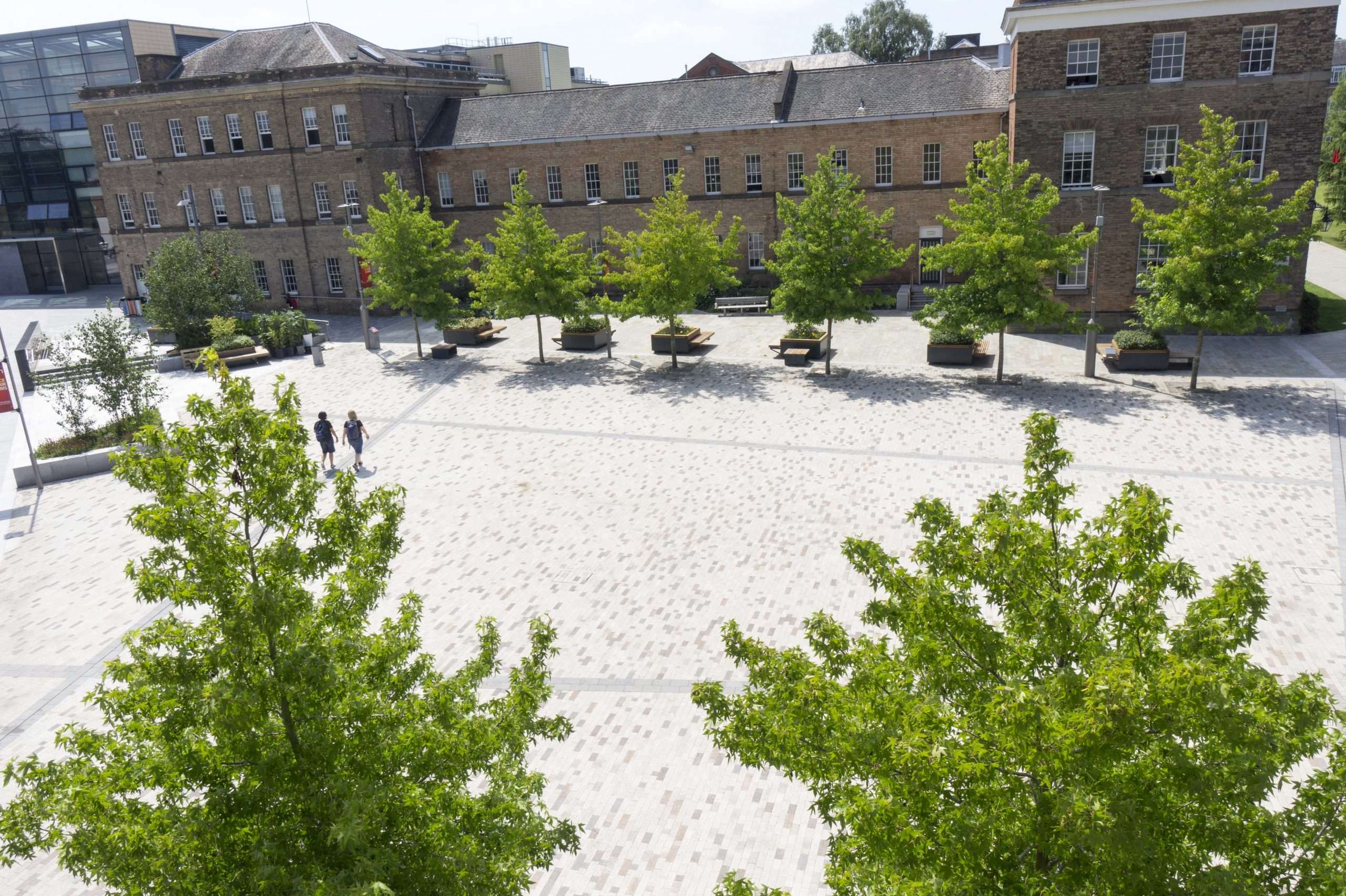
Concept stage is where intent is set. Are we designing for pure pedestrian traffic? Mixed-use with occasional vans? Full service access for HGVs? A plaza outside offices in Sheffield will behave differently to a retail forecourt in Chesterfield.
If loading isn’t clarified at the outset, specifications become guesswork. And guesswork is expensive.
Design teams that collaborate early – architects, engineers, contractors – avoid most of the headaches that appear later. It’s not glamorous work. It’s conversations about thickness, sub-base depth, edge restraint detailing. The sort of thing that doesn’t feature in brochures.
Still essential.
Translating Concept into a Buildable Specification
Drawings can be ambitious. Sweeping curves, complex patterns, tight tolerances. All achievable – in theory.
In practice, a buildable specification has to consider:
- Ground conditions
- Access constraints
- Drainage strategy
- Construction phasing
- Budget realities
I’ve seen beautifully conceived paving layouts that didn’t account for underground services. Suddenly, levels shift, drainage lines move, and the pattern needs tweaking. Not the end of the world. But it requires flexibility.
And this is where experienced teams make a difference. Those providing specialist hard landscaping and paving services tend to spot practical issues early – adjusting details before they become site problems.
Prevention beats patching. Every time.
Ground Conditions – The Unseen Variable
Let’s talk about British ground. Because it’s rarely uniform.
Clay-heavy soils across parts of the Midlands behave differently to sandy subgrades near the Lincolnshire coast. Shrink–swell movement, water retention, frost heave – all factors that influence how a modular system performs.
A high-spec installation isn’t defined by the surface alone. It’s defined by how well the ground is prepared.
Typical build-up in commercial modular paving schemes might look like this:
| Layer | Typical Material | Function |
|---|---|---|
| Surface | Concrete or natural stone modular units | Wear layer and visual finish |
| Bedding | Sharp sand or mortar | Load distribution and levelling |
| Sub-base | MOT Type 1 or engineered aggregate | Structural support |
| Geotextile | Separation membrane | Prevents contamination |
| Formation | Compacted subgrade | Base layer |
Adjustments happen depending on loading and site conditions. Heavier traffic? Increase sub-base depth. Poor ground? Stabilisation may be required.
Cutting corners here – even by 25mm – can compromise longevity. And once a surface starts to dip, it rarely corrects itself.
Procurement and Material Selection
Specification is one thing. Procurement is another.
High-spec modular paving often involves tight colour matching, consistent batch production, and reliable supply schedules. Delays can disrupt phasing. Inconsistent batches can create visual banding.
That’s not always obvious at first glance. Under certain light, though – low winter sun across a plaza – tonal variations jump out.
Good procurement planning reduces those risks. Ordering full project quantities together where possible. Confirming production tolerances. Checking slip resistance ratings against British Standards.
Details matter. They always do.
Setting Out – Where Precision Becomes Visible
Once materials are on site, setting out defines success.
Even minor misalignments can magnify across large open areas. A 5mm deviation at the start of a 30-metre run can become visually obvious by the end.
String lines. Laser levels. Careful checks.
High-spec paving demands patience. Rushing this stage leads to creeping joint widths and awkward cuts at edges.
And speaking of edges – edge restraints are critical. Without robust kerbing or haunching, the entire system can shift under load. Particularly in commercial settings where service vehicles occasionally mount the surface.
Invisible strength, visible consequence if ignored.
Managing Live Commercial Environments
Here’s the tricky bit.
Many high-spec modular paving installations occur in active environments – town centres, retail parks, business campuses. You’re not working in a vacuum. You’ve got pedestrians, shop deliveries, weather disruptions.
Phasing becomes an art form.
Sections are cordoned off, completed, reopened. Access routes maintained. Sometimes night working is required to avoid peak disruption.
It can be a bit of a faff. But careful sequencing preserves programme timelines and stakeholder goodwill.
And in my experience, well-managed phasing often determines whether a project is remembered positively or… less so.
Quality Control on Site
Anyone can lay paving. Delivering high-spec paving consistently is another matter.
Quality control checkpoints typically include:
- Sub-base compaction testing
- Level verification
- Joint width consistency
- Alignment checks
- Surface tolerance measurement
British Standards provide guidance on permissible tolerances. But aiming merely for minimum compliance isn’t enough in premium schemes.
High-spec installations aim tighter.
Because uneven surfaces don’t just look poor – they collect water. They create trip hazards. They undermine the design intent.
I’ve seen surfaces that were structurally sound yet visually flawed due to minor level discrepancies. It’s frustrating. And preventable.
Drainage Integration – Quiet but Crucial
Water management deserves its own section.
In the UK, annual rainfall averages around 885mm nationally. In parts of the North West, it’s significantly higher. That’s a lot of water moving across paved areas.
Falls must be subtle yet effective. Drainage channels integrated cleanly. Permeable systems designed correctly if specified.
High-spec installations don’t rely on guesswork for drainage. They account for it from concept stage onward.
Because standing water erodes bedding layers. It weakens joints. It shortens lifespan.
Frequently Asked Questions on High-Spec Modular Installations
How long does a typical commercial modular paving installation take?
Programme length depends on scale and phasing. Smaller retail forecourts might take weeks. Large civic plazas can extend over several months. Phasing in live environments often adds time.
Is modular paving suitable for heavy vehicle access?
Yes – provided the structural build-up reflects anticipated loads. Thickness and sub-base depth are key variables.
What maintenance should be expected post-completion?
Routine sweeping, periodic joint re-sanding, occasional block replacement if damaged. Modular systems are inherently maintainable.
Do high-spec schemes significantly increase costs?
Upfront costs may be higher due to enhanced detailing and materials. Lifecycle costs often justify the investment through reduced remedial works.
Circling Back to Concept
It’s tempting to view modular paving as a finishing trade. Something that caps off a project.
But really, it’s a structural and aesthetic system intertwined from the outset.
Concept drawings influence load paths. Pattern changes can reinforce service routes. Material transitions can double as movement joints.
When design and engineering align, the finished surface feels effortless.
When they don’t… well, the problems surface eventually.
Small Details That Make Big Differences
Jointing sand quality affects long-term stability. Slightly undersized units create cumulative misalignment. Inadequate compaction results in minor settlement that becomes noticeable over time.
High-spec delivery is about eliminating those small weaknesses before they compound.
Even weather plays a role. Laying during prolonged heavy rain can compromise bedding integrity. Freezing conditions affect mortar curing. Scheduling must consider the British climate.
You can’t control the weather. But you can plan around it.
Completion – More Than Just Handover
Reaching completion isn’t simply about ticking off a snag list.
Final inspections should review:
| Checkpoint | Purpose |
|---|---|
| Surface tolerance | Ensure even finish |
| Drainage performance | Confirm no ponding |
| Joint integrity | Verify stability |
| Edge restraint | Prevent lateral movement |
| Visual consistency | Maintain design intent |
Aftercare advice is equally important. Clients need to understand maintenance requirements to protect their investment.
Because high-spec paving isn’t “fit and forget”. It’s robust, yes – but not immune to neglect.
What High-Spec Really Means
High-spec doesn’t just mean expensive materials.
It means clarity at concept stage. Collaboration during design. Precision in setting out. Discipline during installation. Thorough inspection at completion.
It means the surface still looks right after five winters, two Christmas markets, and countless delivery vans.
That’s the real measure.
Final Thoughts – Delivery Defines Reputation
From concept to completion, modular paving installations demand attention at every stage. Not just when the blocks are being laid, but when lines are being drawn, specifications written, and procurement schedules agreed.
Commercial environments in places like Nottingham, Sheffield, or Derby aren’t forgiving. Surfaces are scrutinised daily by the public.
So delivering high-spec modular paving isn’t about chasing perfection for its own sake. It’s about protecting investment. Supporting safe access. Creating spaces that remain functional and visually coherent for years.
Get the groundwork right. Respect the detail. Manage the process properly.
And the finished surface? It quietly does its job.
Sorted.

Killingley Insights is the editorial voice of NT Killingley Ltd, drawing on decades of experience in landscaping, environmental enhancements, and civil engineering projects across the UK.