Long-Term Hedgerow Management: How to Maintain New Hedgerows for Lasting Habitat and Landscape Value

Planting a hedgerow is the easy bit. Or rather – it feels like the main event, because it’s the visible, tangible act. Lorry of whips. Team of planters. Row of tree guards. Job done, press release written, photographs taken. And then everyone goes home and the hedgerow is left to it.
The problem is that what happens in the ten, twenty, thirty years after planting determines whether it becomes the ecologically valuable landscape feature it was supposed to be, or a scrappy line of overgrown hawthorn that’s lost its structure, gapped out at the base, and contributed less than it could have to anything.
Hedgerow management is one of those skills that’s been somewhat lost from British farming and land management over the past few decades – partly because the workforce that knew how to do it aged out, partly because mechanical flailing became the dominant approach and crowded out the more skilled alternatives, and partly because nobody was paying for good management when adequate management was cheaper. That’s changing, slowly, as agri-environment payments increasingly reward quality rather than just presence.
The Establishment Years – Getting It Through the First Five
Newly planted hedgerows don’t need cutting for the first two to three years. The instinct to tidy them up – to make the new planting look intentional rather than like something that just grew there – should be resisted. The plants need to put on height and girth before any cutting regime begins. Cutting too early reduces the vigour of the plants, delays establishment, and can set back a hedgerow’s development by several years.
What the establishment years do require is weed control. Competitive grass and rank vegetation around the base of new whips is the main killer in years one and two – not the plants themselves, but the competition smothering them. The planting strip should be kept clear of rank vegetation immediately around the base of each plant, either by spot herbicide application, mulching, or hand weeding. This is unglamorous work. It’s also the thing that most separates hedgerows that establish well from those that don’t.
Replacement planting in year two is worth building into the programme. Some whip mortality is normal – typically five to fifteen percent depending on site conditions and planting quality – and gaps left unfilled become permanent weaknesses in the hedgerow structure. Walking the new hedge in late spring of the first year, identifying whips that didn’t survive, and replacing them the following autumn while the surrounding plants are still small enough not to have closed around the gap keeps the hedge structure even.
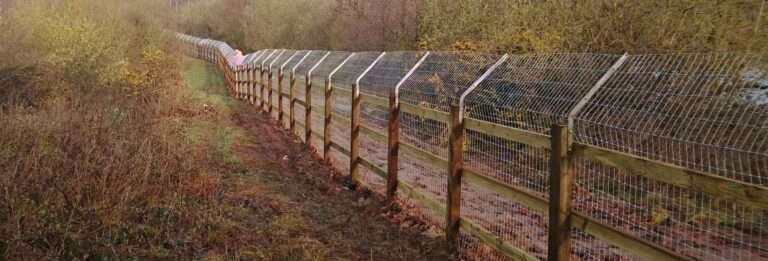
Tree guards and protection stakes need checking regularly during the establishment period too. Guards that have been dislodged, damaged, or had vegetation growing through them stop doing their job. On sites with rabbit or hare pressure, a single night’s browsing on an unprotected plant can undo a whole growing season.
Formative Management – Years Three to Seven
Once the hedge has established – plants are growing well, height is developing, gaps have been filled – formative management can begin. The objective at this stage is to encourage the hedge to thicken from the base rather than becoming a leggy, top-heavy structure that’s dense at the top and gappy underneath.
Cutting the sides of the hedge in these years – reducing lateral growth to encourage bushing out – builds the dense basal structure that a mature hedgerow needs for stockproofing, for ground-nesting bird cover, and for small mammal habitat. A hedge left to grow unchecked develops into a line of trees rather than a hedgerow; regular lateral trimming maintains it as a true hedge structure.
Top growth can be left uncut during the formative years to encourage height development, or lightly cut to encourage branching. The right approach depends on the objective – a stockproof hedge for an agricultural boundary needs to reach a functional height as quickly as possible; a hedgerow primarily for wildlife and landscape value might benefit from a more relaxed approach to height development that allows individual plants to develop their natural form for longer before cutting begins.
The base of the hedge – the grassy margin on each side of the shrub row – should be managed as a distinct habitat feature, not simply mown as an extension of the adjacent field or amenity grass. A wide, uncut or infrequently cut grass margin supports invertebrates, provides small mammal runs and nesting cover, and contributes to the hedgerow’s overall habitat value considerably more than a closely mown strip. I find this is the element that gets least attention in hedgerow management plans and makes more difference to the ecological outcome than most people realise.
Mature Hedgerow Management – Getting the Cutting Regime Right
Annual cutting of mature hedgerows – the standard practice on a lot of agricultural land – is one of the most ecologically damaging things you can do to them. It removes the berry and fruit crop before it’s been consumed by birds and mammals. It prevents flowering, which means no nectar and no seed production. It keeps the hedge in a state of permanent early regrowth without ever allowing it to develop the structural complexity that makes it valuable.
Rotational cutting – cutting each section every two or three years rather than annually – makes a substantial difference. Sections not cut in a given year can flower, set fruit, and provide overwinter food and cover. The hedge develops more structural variation, with sections at different stages of regrowth providing diverse habitat. Under the current SFI and Countryside Stewardship scheme requirements, rotational cutting on a two or three-year cycle is a standard condition of management payments – which tells you something about how far from this ideal conventional practice had drifted.
Cutting timing is as important as frequency. The Wildlife and Countryside Act 1981 prohibits the cutting of hedgerows during the nesting season, broadly defined as March to August – and for good practical reason, since active nests will be present throughout that period. Outside the nesting season, late winter cutting – January and February – gives the berry and fruit crop its best chance of being fully consumed before the hedge is cut. Cutting in September and October removes the autumn berry crop early and loses a significant proportion of its wildlife value.
Our hedgerow management and maintenance programmes are built around rotational cutting schedules that meet agri-environment scheme requirements, comply with wildlife legislation, and keep hedgerows in the kind of condition that actually delivers on their ecological potential over time.
Hedgerow Laying – the Traditional Management Technique Worth Reviving
Hedge laying is probably the traditional management technique most associated with British hedgerows, and it does something that mechanical cutting can’t: it completely renews a hedgerow that’s become overgrown, gappy, or top-heavy, while retaining the original root systems and producing a dense, stockproof, ecologically rich result within a few growing seasons.
The process involves partially cutting through the main stems of the hedge plants and bending them at a low angle – laying them – along the hedge line, interwoven with upright stakes. The partially cut stems, still connected to their roots, continue to grow from the laid position and produce vigorous new growth that fills the gaps and creates a dense, interlocking structure. Done well, a laid hedge is stockproof within two to three growing seasons and remains in good condition for twenty years or more before the next laying cycle is needed.
Regional laying styles differ – Midland style, Welsh style, Devon style, Yorkshire style – reflecting local traditions and the different livestock they were designed to contain. The Midland style, with its characteristic clean-cut stakes and binders along the top of the laid stems, is the most widely practised in the English Midlands. Finding experienced hedge layers who know the regional style is worth the effort for hedgerows being laid as part of an agri-environment scheme or where the traditional landscape character is part of the objective.
Management Summary by Hedgerow Stage
| Stage | Age | Management Priority | Key Actions |
|---|---|---|---|
| Establishment | Years 1-3 | Weed control and protection | Spot weed control around plants; check guards and stakes; replace failed plants in year two |
| Formative | Years 3-7 | Build basal structure; encourage bushing | Light lateral trimming; leave top growth or cut once to encourage branching; manage base margin |
| Developing | Years 7-15 | Establish cutting regime; develop structure | Rotational cutting on 2-3 year cycle; allow fruiting sections; begin formative tree selection |
| Mature | Years 15-30+ | Maintain condition; prevent overgrowth or dieback | Continued rotational cutting; hedgerow laying where needed; ongoing tree management; scrub control in margins |
| Renovation | As required | Restore structure to gapped or overgrown sections | Hedge laying; coppicing of overgrown sections; gap filling with new whips; base restoration |
Monitoring and Condition Assessment
For hedgerows created as part of BNG schemes, agri-environment agreements, or conservation covenants, monitoring is a formal requirement. Condition surveys against defined criteria – species diversity, structural continuity, management evidence, base vegetation – need to be carried out at specified intervals and the results reported to the relevant authority or responsible body.
But monitoring has value beyond formal compliance. A simple annual walkover – noting gaps, recording evidence of browsing pressure, checking that management has been carried out as planned – catches problems when they’re still minor. A section that’s gapping out, identified in year three, can be filled at low cost. Identified in year ten, when surrounding plants have closed around the gap and it’s shaded at the base, it’s a more difficult and expensive problem to fix.
Keeping a record – photographs, brief condition notes, a dated log of management activities – takes very little time and provides the baseline that makes subsequent condition assessments meaningful. It also demonstrates to scheme administrators that the hedgerow is being actively managed, which is exactly what they want to see.
Frequently Asked Questions
How often should a new hedgerow be cut once established?
Every two to three years for ecological management, cutting outside the nesting season – ideally in late winter. Annual cutting is ecologically damaging and should be avoided on hedgerows managed for wildlife value. On hedgerows subject to agri-environment or BNG management requirements, the cutting frequency and timing will be specified in the management plan and form part of the scheme conditions.
When is the right time to start hedge laying on a newly planted hedgerow?
Hedge laying is typically appropriate once the main stems have reached a sufficient diameter to lay without snapping – usually after ten to fifteen years of growth, depending on species and site conditions. Hawthorn and blackthorn reach a layable diameter faster than field maple or hazel on most sites. Laying too early, before the stems are substantial enough, produces a less robust laid structure that may not close as effectively. The objective is stems of roughly thumb thickness at the laying point, with good root establishment beneath.
What should I do if large sections of the hedge have died back or gapped out?
First, identify why – drought, waterlogging, disease, browsing pressure that wasn’t controlled, or just establishment failure. The cause determines the remedy. Where the gap is small (one to three plants), infilling with new whips during the dormant season is usually sufficient. Larger gaps may need more substantial intervention – clearing out dead material, improving drainage or soil conditions if waterlogging is the cause, reinstating protection from browsing, and replanting. On severely gapped hedgerows, a full condition assessment and management plan is worthwhile before deciding on the approach.
Does long-term hedgerow management require specialist contractors?
Routine mechanical cutting can be carried out by any competent agricultural contractor with appropriate equipment. Hedge laying requires specialist skill and should be carried out by trained and experienced layers – the National Hedgelaying Society maintains a register of trained layers by region. Ecological condition surveys and BNG monitoring require appropriate ecological competence. On agri-environment or BNG schemes with formal monitoring requirements, it’s worth being clear about who is carrying out each element and whether their competence meets the scheme requirements.
The Long View
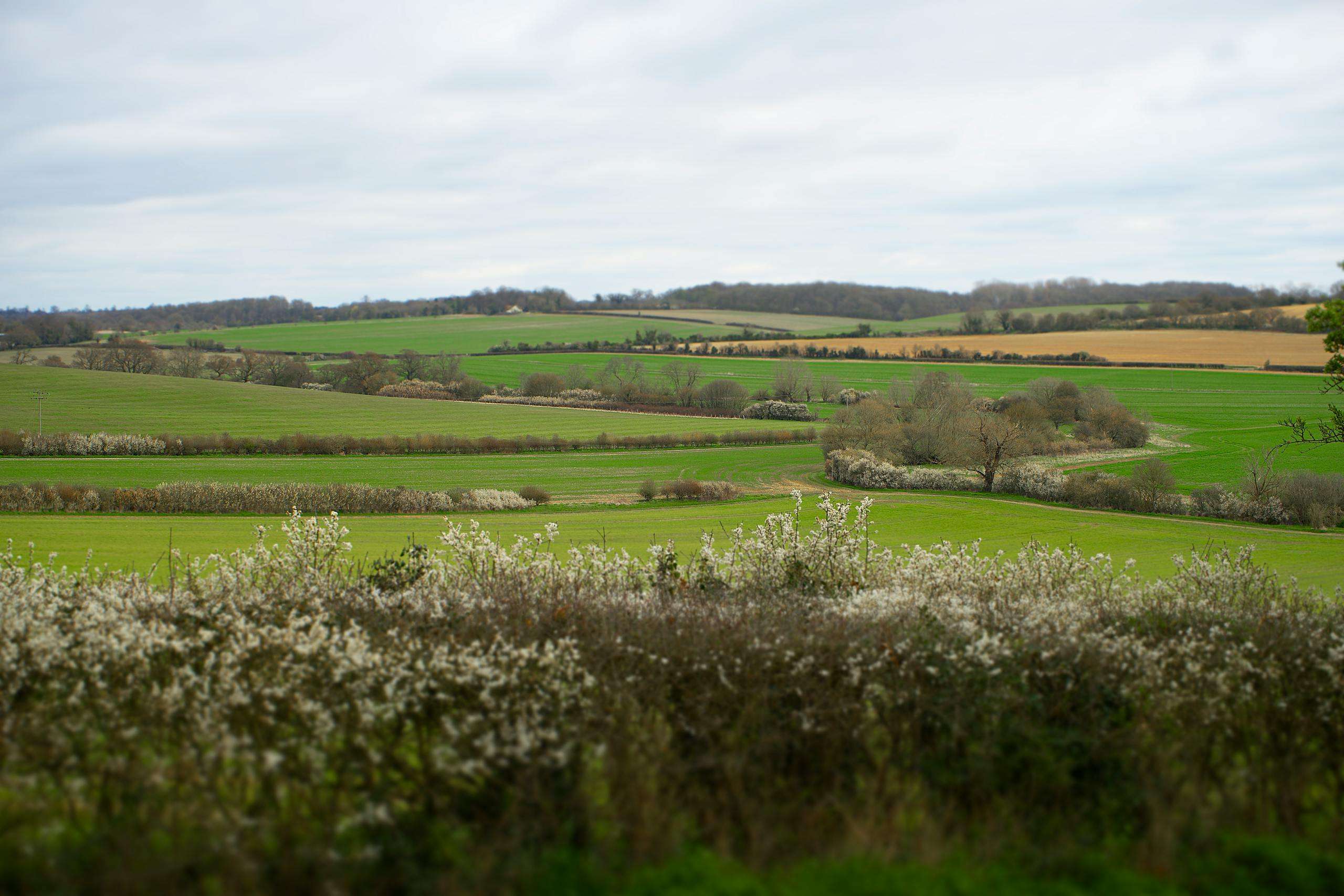
A hedgerow planted today, managed well, could be providing ecological value in a hundred years’ time. That’s not hyperbole – Britain’s oldest hedgerows have been doing exactly that, continuously, since before the Norman conquest. They’re still there because the management continued, the structure was renewed when it needed to be, and someone – generation after generation – made the decision that the hedgerow was worth maintaining.
The management decisions made in the first decade of a new hedgerow’s life set the trajectory for everything that follows. Weed control and gap filling in the establishment years. Formative cutting that builds structure rather than removing it. A rotational cutting regime once the hedge is established. Laying when the structure needs renewal. None of it is technically demanding. All of it requires doing it at the right time, in the right way, consistently.
That consistency, more than anything else, is what turns a row of planted whips into a functioning, ecologically valuable hedgerow. And eventually, given long enough, into something that looks like it was always there.

Killingley Insights is the editorial voice of NT Killingley Ltd, drawing on decades of experience in landscaping, environmental enhancements, and civil engineering projects across the UK.