On-Site vs Off-Site BNG: How to Choose the Right Approach for Your Development

The statutory hierarchy for Biodiversity Net Gain is clear enough in principle: on-site delivery first, off-site second, statutory credits as a last resort. In practice, most developments end up using a combination – some gain achieved within the development footprint, the remaining shortfall purchased off-site. Working out the right balance between those two routes is one of the more consequential design decisions on any BNG-affected development, and it’s one that benefits from being made early rather than late.
The instinct on a lot of schemes is to push as much gain as possible off-site, treating it as a cost line rather than an opportunity. That’s sometimes the right call. But it’s not always the cheapest option, and it’s rarely the option that produces the best ecological outcome. Understanding the trade-offs is what allows the decision to be made properly.
What On-Site BNG Delivery Involves
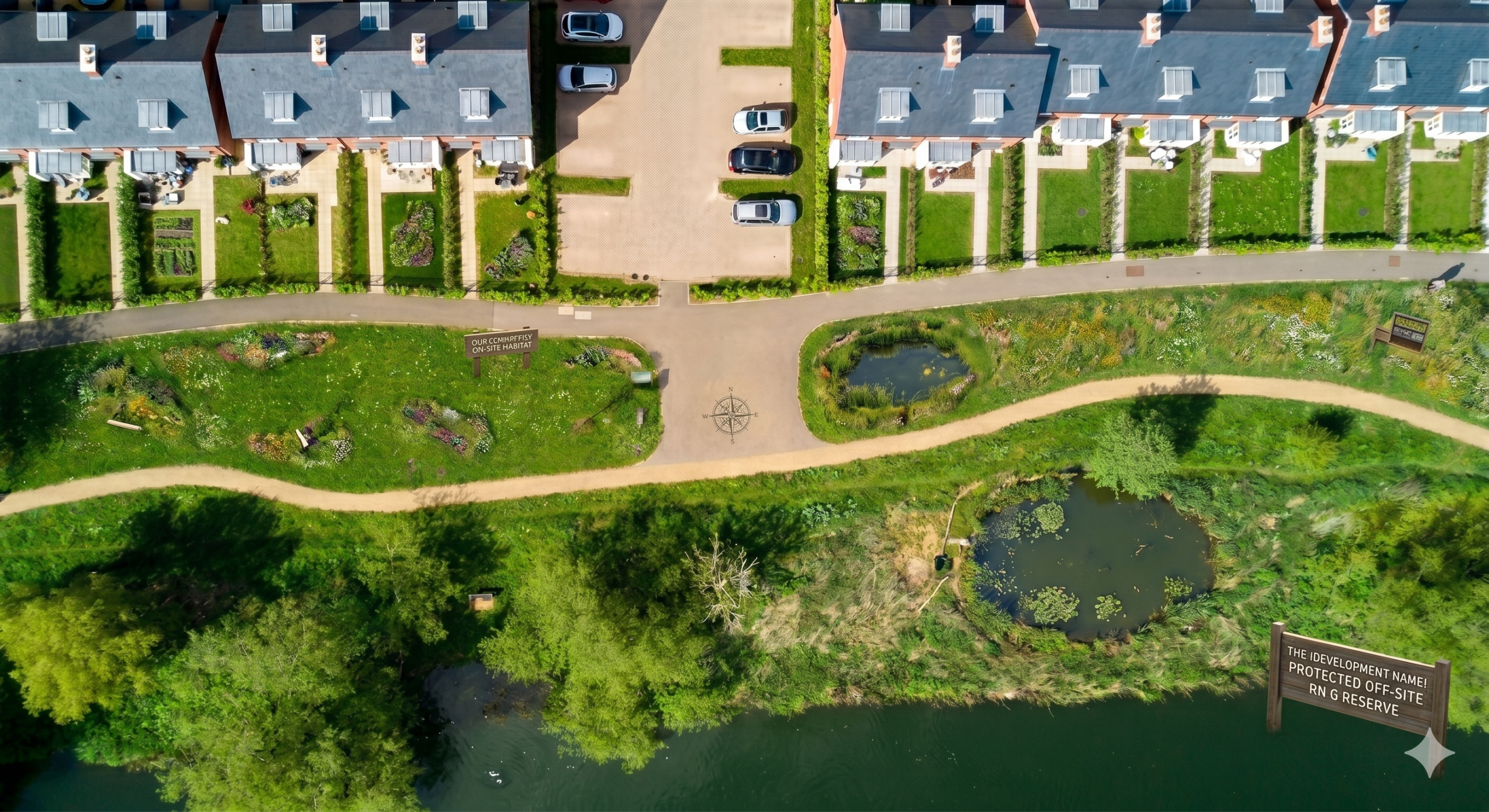
On-site BNG means delivering habitat creation, enhancement, or retention within the development site boundary – the red line. That habitat generates biodiversity units at full spatial value (no risk multiplier reduction), it forms part of the development’s green infrastructure, and it contributes to the amenity and ecological quality of the scheme for future occupants and the surrounding community.
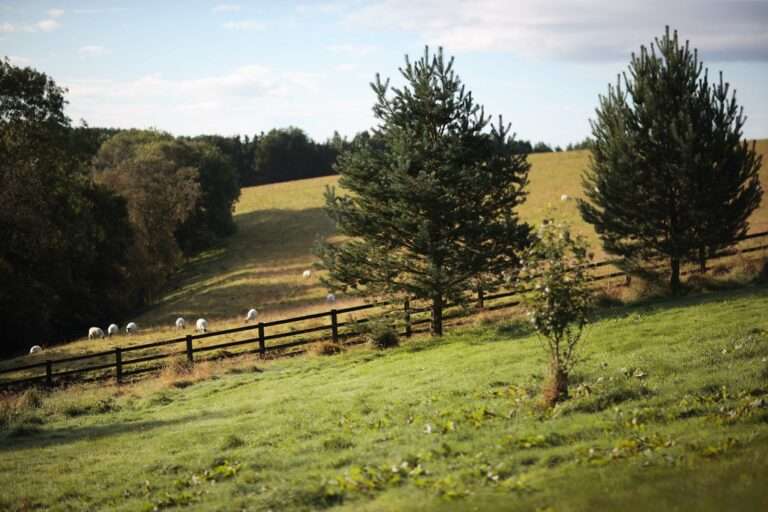
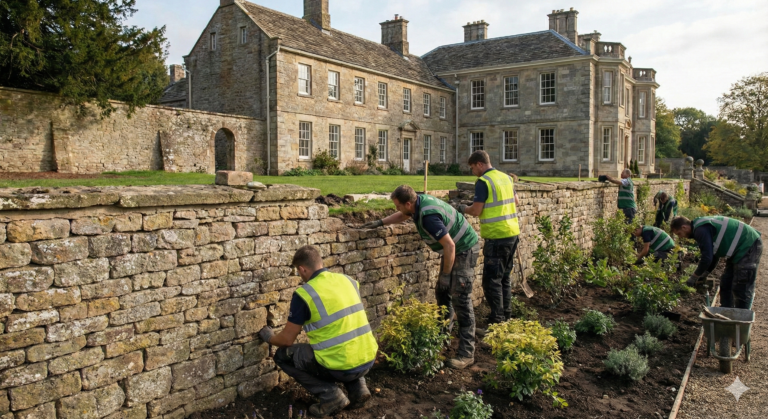
On a residential development, on-site delivery might include: species-rich grassland in public open space, native hedgerow along site boundaries, a sustainable drainage pond designed for ecological value, wildflower strips along footpath margins, native tree planting, and green roofs on buildings where layout allows. A commercial scheme might include extensive green roof provision, landscaped biodiverse planting in car park margins, and naturalised drainage features.
The constraint is land. On a dense urban site, or where every square metre of developable land is accounted for in the scheme, finding space for meaningful habitat creation competes directly with built area. That competition is real and shouldn’t be dismissed, but it’s sometimes overstated. Open space that planning policy requires anyway – public open space standards, play areas, SuDS drainage features – can frequently be designed to generate biodiversity units without reducing the developable footprint. It’s a design question, not just an area question.
What Off-Site BNG Delivery Involves
Off-site BNG means purchasing biodiversity units from a registered off-site habitat provider – a landowner who has committed land to habitat creation or enhancement for the purpose of selling the resulting biodiversity units to developers. The habitat gain site is registered on the national biodiversity gain site register, the management plan is agreed with the local planning authority or Natural England, and a conservation covenant or planning obligation secures the 30-year management commitment.
Statutory biodiversity credits – purchased directly from Natural England – are the other off-site route, available as a last resort where off-site providers aren’t accessible or sufficient. Credits are deliberately priced above market rates for off-site units to incentivise actual habitat delivery over payment in lieu. Using statutory credits should genuinely be a last resort rather than a convenient shortcut.
Off-site units are subject to a spatial risk multiplier in the metric that reduces their credited value depending on distance from the development and strategic significance of the location. Units from a gain site immediately adjacent to the development may be credited at close to full value; units from a gain site in a different local authority area, with no particular strategic significance, may be credited at a significantly reduced rate – meaning more units need to be purchased to cover the same shortfall.
The Cost Comparison – What the Numbers Look Like
Off-site biodiversity unit prices vary by habitat type, location, and provider. The market is still relatively immature and prices reflect that – there’s a wide range, and transparency is variable. Broadly speaking, habitat unit prices in the off-site market have been running at anywhere from £8,000 to £25,000 or more per unit depending on the habitat type and location. Statutory credits are priced higher still – up to £42,000 per unit for high distinctiveness habitat types.
On-site delivery doesn’t have a straightforward per-unit cost in the same way, because the habitat is delivered as part of the development’s landscaping and open space – costs that would be incurred regardless of BNG. The incremental cost of designing that landscaping to generate biodiversity units rather than just amenity value is often considerably lower than purchasing equivalent units off-site. Getting that incremental cost right requires knowing what the on-site landscape budget is and how much of that budget can be directed towards habitat quality rather than purely amenity.
| Factor | On-Site Delivery | Off-Site Units | Statutory Credits |
|---|---|---|---|
| Cost per unit | Variable; often lower as part of landscaping budget | Typically £8,000 to £25,000+ per unit | Up to £42,000 per unit (high distinctiveness) |
| Spatial risk multiplier | Full value – no reduction | Reduced depending on distance and strategic significance | Fixed; not multiplier-adjusted |
| Design integration | Part of development scheme; contributes to amenity | Separate from development; no amenity benefit to scheme | No direct site benefit |
| Management responsibility | Developer or management company for 30 years | Off-site landowner; secured by covenant | Natural England manages strategic habitat fund |
| Planning hierarchy position | First preference | Second preference | Last resort |
| Availability | Constrained by site area and layout | Depends on local market; variable | Always available; priced to discourage use |
When Off-Site Makes More Sense
There are genuine situations where off-site delivery is the right primary approach, not just a fallback. Dense urban regeneration sites with minimal open space – a city centre apartment scheme, a town centre retail conversion – may simply not have the land area to deliver meaningful on-site habitat regardless of design ingenuity. Attempting to squeeze on-site habitat into a genuinely constrained site can produce a result that’s ecologically marginal and aesthetically poor. Off-site delivery in a strategically appropriate location is a better outcome for biodiversity than token on-site planting that doesn’t function as habitat.
Sites where the development involves loss of high-distinctiveness habitat that can’t be adequately replaced on-site are another scenario. Losing medium distinctiveness woodland and attempting to replace it with low distinctiveness grassland within the development footprint produces a unit deficit that on-site habitat creation can’t readily overcome – off-site woodland creation in an appropriate location is a more ecologically meaningful response.
Programme constraints sometimes drive off-site use more than ecological logic – a developer who needs planning consent quickly and can’t wait for on-site habitat to be established and surveyed may use off-site units to meet the requirement while on-site habitat develops. That’s pragmatic rather than ideal, but it’s a legitimate approach within the framework.
The Local Nature Recovery Strategy Connection
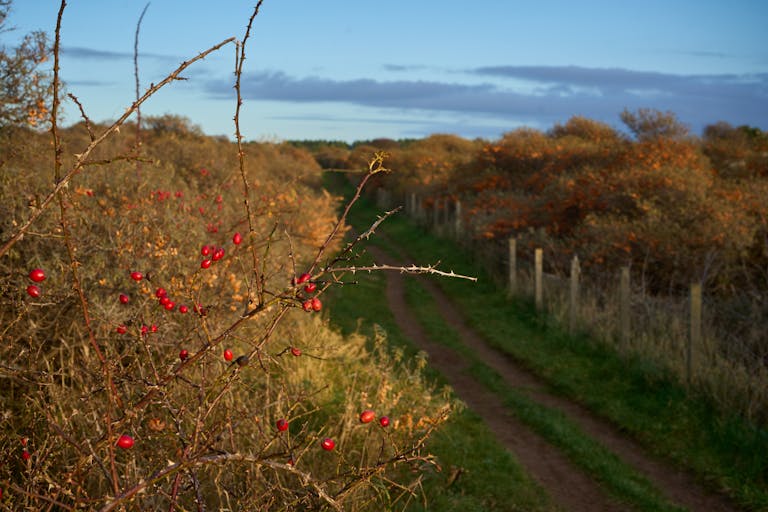
Local Nature Recovery Strategies (LNRS), being developed by upper-tier local authorities across England, identify priority habitats and locations for nature recovery at a local and landscape scale. Off-site habitat creation that aligns with LNRS priorities – located where the LNRS identifies strategic need – attracts a higher spatial multiplier in the metric than off-site habitat with no particular strategic significance.
For developers sourcing off-site units, this creates an incentive to identify providers whose land is in locations identified as strategically important by the relevant LNRS. It’s not always possible to match the two, particularly in areas where the off-site unit market is thin. But where it is possible, the higher multiplier means fewer units need to be purchased to cover the same shortfall – which has a direct effect on cost.
Our biodiversity net gain planning solutions work through the on-site and off-site options for a specific scheme – running the metric under different design scenarios to establish the most cost-effective combination, identifying suitable off-site providers where needed, and producing the documentation the local planning authority requires to discharge the BNG pre-commencement condition.
The 30-Year Management Question
Whichever route is used, the 30-year management commitment is non-negotiable. For on-site habitat, that means a management company or the developer’s estate management structure needs to be responsible for maintaining and monitoring the habitat for the full period. For off-site units, it’s the gain site landowner’s responsibility, secured by covenant.
On larger residential developments, the management company structure that maintains communal areas is the obvious vehicle for on-site BNG management – but it needs to be explicitly set up for that purpose, with the ecological management plan built into the management company’s obligations rather than left as an assumption. Management companies that don’t know they’re responsible for maintaining species-rich grassland to the standard required by the BNG condition tend not to do it.
On commercial developments, the occupier or their facilities management contractor holds the ongoing responsibility. Again, that needs to be built into occupier obligations from the outset – ideally through lease terms or building management specifications – rather than relying on goodwill that may not survive the first change of occupier.
Frequently Asked Questions
Can I use both on-site and off-site delivery on the same scheme?
Yes, and most larger schemes do. The typical pattern is on-site delivery for the habitat that can be integrated into the development layout efficiently, with off-site units purchased to cover any remaining shortfall. The metric calculates the total on-site unit gain and identifies the deficit that needs to be covered off-site. There’s no minimum or maximum split required by the regulations.
How do I find an off-site biodiversity unit provider?
The national biodiversity gain site register is the starting point – it lists registered gain sites with their unit availability, habitat type, and location. Local planning authorities may also hold information on off-site providers in their area. Ecological consultants with BNG experience will typically have knowledge of available providers in the relevant geography. The market is developing but availability is still patchy in some areas, which is worth checking early rather than assuming units will be readily available when needed.
What happens to on-site BNG habitat if the development is sold?
The management obligation transfers with the land. The conservation covenant or planning condition securing the 30-year management requirement is registered against the title and binds subsequent owners. Buyers of developed land need to be made aware of BNG management obligations as part of the conveyancing process – they’re a material consideration that affects the management responsibilities of whoever holds the land.
Can off-site units be in a different local authority area?
Yes, though the further the off-site habitat from the development, the lower the spatial risk multiplier and the fewer units credited per unit purchased. There’s no absolute geographical restriction, but the metric’s spatial multiplier creates an economic incentive to source off-site units as close to the development as practicable. Some local planning authorities have expressed preferences for off-site units within their area, particularly where they’re trying to deliver Local Nature Recovery Strategy objectives – worth checking the LPA’s position on this early.
The Right Answer Depends on the Site
There isn’t a universal right answer on on-site versus off-site BNG delivery. The right approach for a city centre regeneration scheme with minimal open space is different from the right approach for a greenfield housing allocation in the East Midlands. What’s consistent is that the decision should be made on the basis of a proper understanding of the site’s on-site unit potential, the cost of off-site units in the relevant market, and the ecological priorities identified in the Local Nature Recovery Strategy – not on the basis of default assumptions about which route is easier.
Making that decision at pre-application stage, with the metric run under multiple scenarios, consistently produces better outcomes than leaving it to the post-consent Biodiversity Gain Plan discharge stage. The design flexibility is greater, the cost picture is clearer, and the ecological outcome is usually better. Which is, in the end, the point of the whole exercise.

Killingley Insights is the editorial voice of NT Killingley Ltd, drawing on decades of experience in landscaping, environmental enhancements, and civil engineering projects across the UK.