Hedgerow Creation: How to Build Natural Boundaries That Actually Support Wildlife

Britain has lost somewhere in the region of half its hedgerows since the Second World War. The exact figure depends on which survey you trust and how you measure it, but the direction of travel is not in dispute. Fields got bigger, machinery got wider, and kilometres of hedgerow came out to accommodate both. What remained was often managed badly – flailed hard and often, kept narrow and thin, reduced to a line of woody stubs that provided shelter for little and food for less.
The good news – and there is some, which makes a change – is that hedgerow creation is having a genuine moment. Environmental Land Management scheme payments, Biodiversity Net Gain requirements, developer mitigation, and a growing awareness of what hedgerows actually do for landscape connectivity and species abundance have all pushed new hedgerow creation up the agenda. More hedgerow is going in now than has been planted for decades.
Which is great. Though it does rather depend on doing it well.
What a Hedgerow Actually Is – and Why It Matters
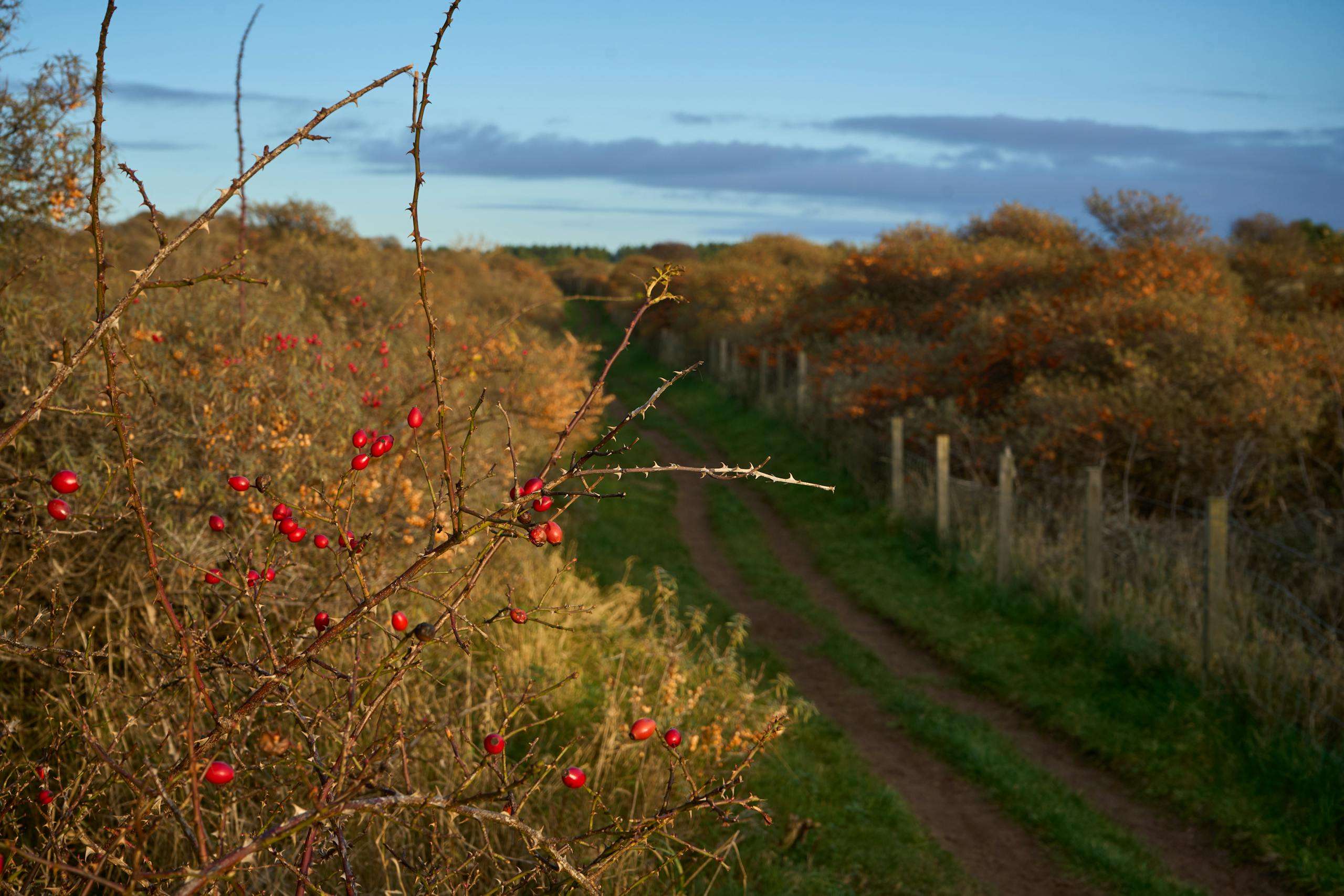
Worth defining the term properly, because “hedgerow” covers a range of things in practice. A single line of hawthorn planted along a field boundary and cut to a metre high every year is a hedgerow, technically. So is a broad, multi-species, multi-layered structure several metres wide with standard trees, a shrub layer, and a grassy base – the kind of hedgerow you find in Devon lanes or along ancient parish boundaries in the Midlands.
Ecologically, those two things are very different. The thin, frequently cut single-species hedge provides some nesting cover and a bit of corridor connectivity. The broad, species-rich, structurally diverse hedgerow with trees is a habitat in its own right – supporting hundreds of invertebrate species, providing nesting and foraging for dozens of bird species, shelter for mammals, food in the form of berry and mast for winter visitors and residents alike. Ancient hedgerows – those with a documented history going back centuries – can support over 600 plant and animal species.
When we talk about hedgerow creation for ecological value, it’s the latter we’re aiming for. Not immediately – a newly planted hedgerow takes years to develop that kind of structural complexity – but that’s the trajectory.
Planning the Line: More Than Just Where the Boundary Is
Where a new hedgerow goes matters almost as much as what’s planted in it. A hedgerow that connects two existing woodland blocks, or links a retained hedgerow network to a new habitat area, delivers considerably more ecological value than one planted in isolation – because connectivity is what allows species to move through the landscape, colonise new habitats, and maintain viable populations.
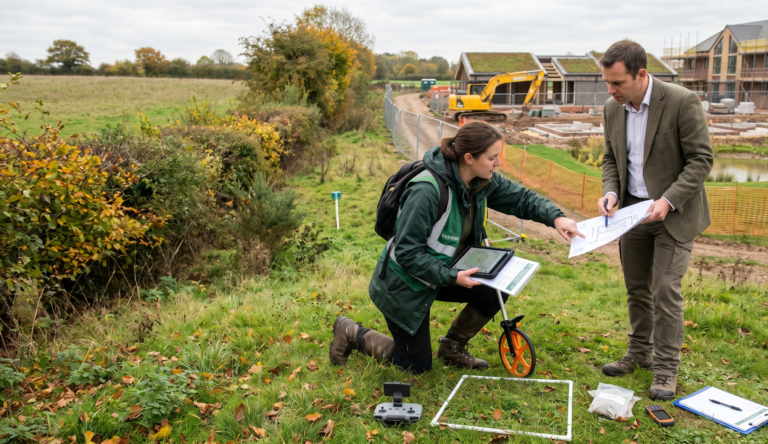
So the first question is: what does this hedgerow connect? If the answer is nothing – it’s a stand-alone boundary with no relationship to surrounding habitat features – it will still have ecological value, but less than if it’s designed as part of a joined-up network. On development sites where hedgerow creation is part of a Biodiversity Net Gain scheme, the spatial relationship to other habitat features should be part of the design from the start.
Orientation matters for some species. South-facing hedgerow banks warm up earlier in spring and hold heat longer in the day – useful for reptiles basking and for early invertebrate activity. A hedgerow with a wide, uncut grassy base on a south-facing bank is a genuinely valuable habitat feature. North-facing hedgerows are cooler and damper, which suits different species. Neither is wrong, but knowing the orientation affects how the base management is designed.
Width is the other planning variable that’s often set too conservatively. A hedgerow planted as a single double row – the minimum viable structure – will close in over time but starts thin and remains narrow. A hedgerow with room for three or four rows of planting, plus a wide unmanaged base on each side, develops structural diversity much faster and holds more ecological value at every stage of development. Where land allows, planting wide is almost always the right call.
The Planting Process in Practice
New hedgerows are typically planted as bare-root whips – small, unbranched young plants lifted from nursery rows during the dormant season and planted without soil around the roots. They’re cheaper than container-grown plants, establish at least as well when planted correctly, and can be handled and planted quickly. The planting window for bare-root stock is roughly November to March, with December to February generally the best period – ground is workable but plants are fully dormant.
Planting density for a new hedgerow is typically five plants per metre in a double staggered row – so ten plants per linear metre of hedgerow. That sounds like a lot, and it is, but hedgerows need that initial density to close up properly, compete with grass and weed growth, and develop the interlocking structure that gives a mature hedgerow its physical character. Planting at lower density to save money on plants tends to produce a hedgerow that never quite closes, allows encroachment of rank grass into the hedge base, and takes much longer to reach useful height and density.
Ground preparation ahead of planting is important and sometimes skimped on. Where grass sward is present, spraying off with herbicide or cultivating the planting strip in the autumn before winter planting removes the competition that would otherwise swamp newly planted whips in their first growing season. On sites with persistent weed problems – particularly couch grass or competitive rank grasses – adequate ground preparation is the difference between a hedgerow that establishes well and one that struggles for years.
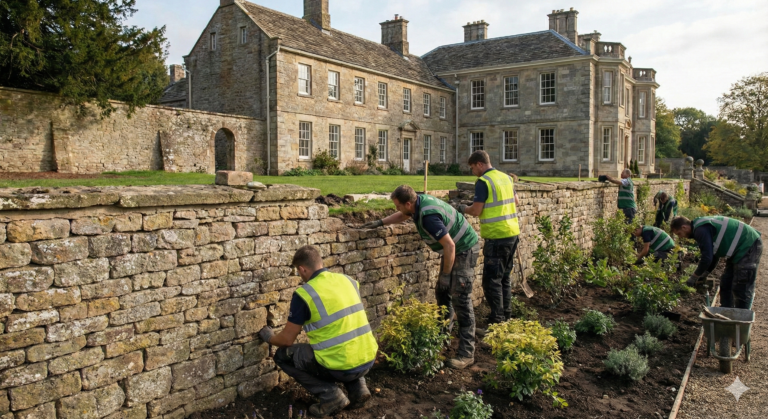
Our hedgerow creation and planting services cover the full establishment process – species selection, ground preparation, planting, and the aftercare programme that gets new hedgerows through the first critical years of establishment. Because planting is only the beginning.
Protection – The Part That Determines Whether It Survives
Newly planted whips are vulnerable. Rabbit browsing can kill a whip outright in a single night. Hare damage is similar. Deer – particularly roe and muntjac – will browse young hedgerow plants repeatedly, preventing any upward growth and eventually killing the plant. On sites with any of these pressures, protection is non-negotiable.
Spiral guards on individual plants are the standard approach for rabbit and hare pressure on smaller or lower-budget schemes. They’re cheap per plant, recyclable (the good ones, anyway – quality varies), and effective against light to moderate browsing pressure. They don’t help much against deer, which can browse over the top of a standard spiral guard with ease.
Deer-height guards – typically 0.6m to 1.2m depending on the deer species present – are more effective but considerably more expensive and more plastic per plant. On sites with significant deer pressure, a perimeter deer fence around the newly planted hedgerow during establishment – removed once the plants are above browse height – is often more cost-effective than individual plant protection at that scale.
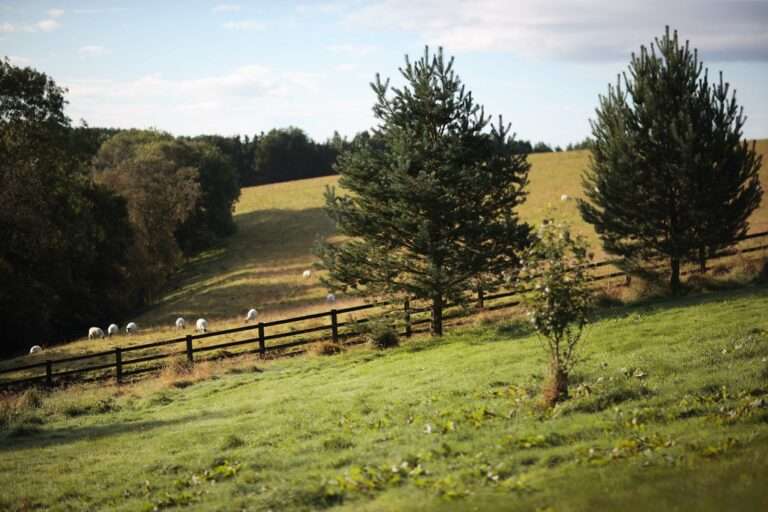
Stock fencing alongside new hedgerow planting is important on agricultural sites where livestock have access. Cattle and sheep will eat, rub against, and physically damage young hedgerow plants. A temporary or permanent stock fence set a metre or two back from the planting line gives the hedge space to establish without livestock pressure, and can be removed or repositioned once the hedgerow has reached a height and density where it provides its own stock barrier.
Hedgerow Trees – An Often-Missed Element
A hedgerow without trees is ecologically poorer than one with them. Standard trees within the hedgerow line – oak, ash (with appropriate consideration given ash dieback), field maple, wild cherry – provide canopy cover, nest sites for species that require larger trees, dead wood habitat as they mature, and mast and fruit that the shrub layer doesn’t produce. They also give the hedgerow its visual character over time.
Traditionally, hedgerow trees were selected from naturally regenerating seedlings within the hedge and allowed to grow on while surrounding shrubs were kept cut. On newly planted hedgerows, trees can be incorporated at planting – larger transplant stock rather than whips, perhaps one tree every fifteen to twenty metres – or identified later as the hedgerow establishes and promising individuals are selected and allowed to grow.
The practical management implication is that sections of hedgerow containing standard trees can’t be mechanically flailed in the conventional way without damaging the tree. Those sections need to be managed around the trees – hand cutting or cutting with a reach arm that avoids the trunk and lower canopy. Factor that into the long-term management plan at the design stage rather than discovering it’s a problem when the trees have been in for five years.
Hedgerow Creation and Biodiversity Net Gain
New hedgerow creation scores well in Natural England’s biodiversity metric. A newly planted hedgerow of native species, in good condition, generates biodiversity units that count towards a developer’s 10% net gain obligation – and because hedgerows are a relatively fast-establishing habitat type compared to woodland or species-rich grassland, they can contribute meaningful unit values within a few years of planting.
The condition criteria matter. A hedgerow assessed as being in poor or moderate condition – gappy, species-poor, or inadequately managed – generates fewer units than one in good or higher condition. That creates an incentive to specify and manage hedgerows properly from the outset rather than planting to minimum standards and hoping for the best. Which is, in a roundabout way, what good practice always recommended anyway.
Here’s a rough summary of what the metric looks at when assessing new hedgerow condition for BNG purposes:
| Condition Criterion | What’s Assessed | Implication for Management |
|---|---|---|
| Species diversity | Number of native woody species present | Multi-species planting from the outset; minimum five to six species for good condition |
| Structural continuity | Proportion of hedgerow that is gappy or broken | Good planting density and aftercare to avoid establishment failures |
| Management regime | Evidence of appropriate cutting frequency and timing | Rotational management; avoid annual cutting of the same sections |
| Base vegetation | Presence of grassy margin and associated flora | Unmanaged or lightly managed base strip retained on both sides |
| Connectivity | Links to other habitat features | Route selection to maximise connection to existing hedgerows or habitats |
| Tree presence | Standard trees at intervals within hedgerow | Incorporate or allow standard trees; manage to allow development |
Frequently Asked Questions
How long does a new hedgerow take to establish?
Three to five years for a hedgerow to close up, provide meaningful shelter, and begin producing berry and flower in quantity. Ten years or more to develop the structural diversity and height of a mature hedgerow. For BNG purposes, hedgerows can begin to generate biodiversity units in relatively good condition within five to seven years of planting if management is right – faster than most other habitat types, which is one of their practical advantages for net gain schemes.
Can I create a new hedgerow anywhere?
Broadly yes, though there are some practical constraints. Very wet or waterlogged ground is difficult for most hedgerow species – only a few tolerate prolonged root saturation. Heavily shaded locations under dense tree canopy won’t support the species mix needed for a thriving hedgerow. And in some locations, planning or highway considerations affect what can be planted close to roads or boundaries. On agricultural land, the position of new hedgerows may affect field drainage arrangements. None of these are showstoppers, but they’re worth assessing at the planning stage.
Is there funding available for hedgerow creation?
Yes. The Sustainable Farming Incentive and Countryside Stewardship schemes both include actions for hedgerow creation and management, with payment rates that can offset a significant proportion of establishment costs on agricultural land. Some local authority and conservation organisation grant schemes also support hedgerow creation in priority landscapes. For development sites, BNG obligations may themselves fund hedgerow creation as part of the mitigation package. Worth checking what’s available for your specific situation before committing to costs.
Do newly planted hedgerows have legal protection?
Not immediately under the Hedgerow Regulations 1997, which protect hedgerows that are at least thirty years old and meet certain ecological or historical significance criteria. But hedgerows created as part of planning conditions, Section 106 obligations, or conservation covenants will have contractual protection tied to those instruments. Hedgerows created for BNG will be protected for the 30-year management period. It’s worth being clear about what protections apply to specific new hedgerows before assuming they can be removed later.
Worth Doing Well
New hedgerow planting is one of those conservation activities that looks simple and turns out to have quite a few details worth getting right. Species selection, planting density, ground preparation, protection from browsing, management in the establishment years – each makes a material difference to whether the hedgerow reaches its ecological potential or muddles along as a thin, patchy boundary that never quite delivers what it promised.
Done well, a new hedgerow is an investment that pays back for generations. Britain’s best hedgerows are hundreds of years old and support more biodiversity per kilometre than almost any other habitat type in the agricultural landscape. The ones being planted now, if they’re given the right start and the right long-term management, have the same potential.
It just takes a bit of patience. And a decent rabbit guard.

Killingley Insights is the editorial voice of NT Killingley Ltd, drawing on decades of experience in landscaping, environmental enhancements, and civil engineering projects across the UK.