Invasive Species on Development Sites: A Contractor’s Guide to Managing Risk

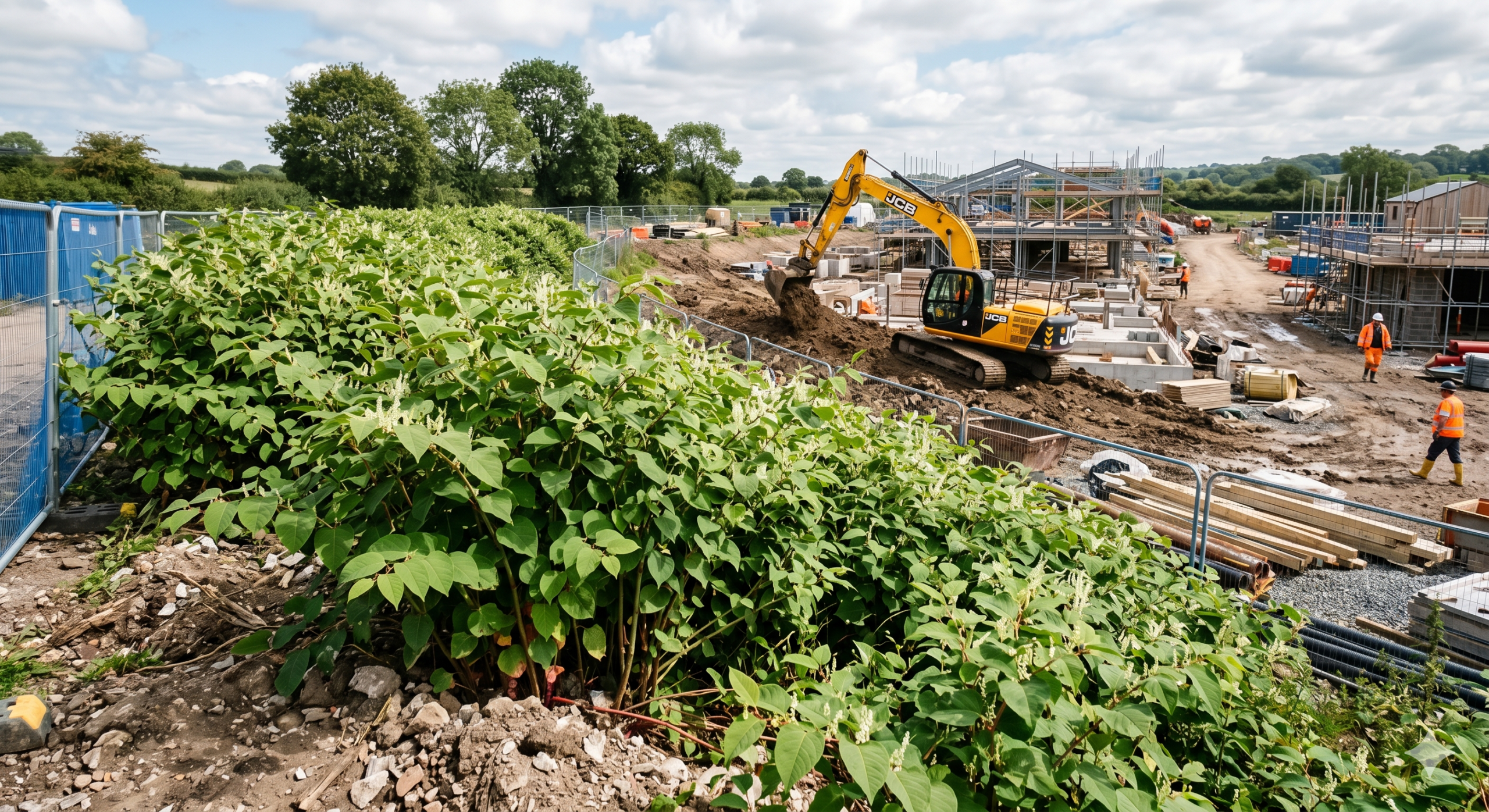
Invasive non-native species on development sites are one of those risks that sits in an uncomfortable space between ecology, law, programme management, and contractor liability. Every party on a development project has some stake in it – the developer who needs the programme to run, the main contractor who has to manage it on site, the groundworks subcontractor who might not know what Japanese knotweed looks like, and the ecologist who advised on it but isn’t on site every day. When something goes wrong – material spread across a site, contaminated spoil sent to the wrong tip, clearance proceeding through a protected stand without a licence – the question of who was responsible tends to become complicated quickly.
Getting the risk properly managed from the outset is considerably less painful than unpicking it afterwards.
The Species You’re Most Likely to Encounter
Not all invasive species carry the same risk profile on development sites. Some are ecologically damaging without creating significant legal or programme complications. Others carry specific legal obligations that directly affect how works must be planned and executed. Here’s a practical overview of the main species contractors need to be aware of:
| Species | Legal Status | Main Risk on Site | Key Contractor Obligation |
|---|---|---|---|
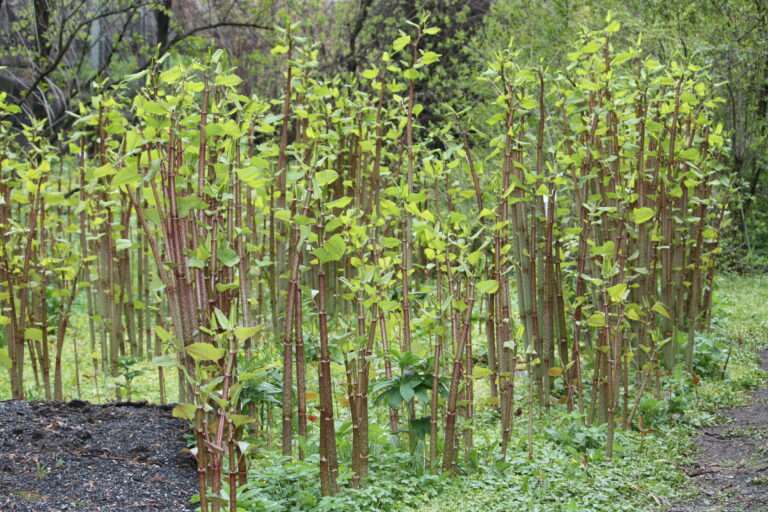
| Japanese knotweed | Schedule 9 WCA 1981; contaminated soil is controlled waste | Spreading rhizome during excavation; controlled waste mishandling | Stop work if found unexpectedly; segregate contaminated spoil; use licensed waste carrier; follow management plan |
| Himalayan balsam | Schedule 9 WCA 1981 | Spreading seed during clearance; dispersal into watercourses | Control before seed set; keep arisings out of watercourses; follow method statement |
| Giant hogweed | Schedule 9 WCA 1981 | Spreading seed and root fragments; serious health and safety risk from sap | Full PPE for any works near plants; do not cut without specialist advice; report presence to site manager immediately |
| New Zealand pigmyweed | Schedule 9 WCA 1981 | Spreading fragments via contaminated water or equipment near ponds and watercourses | Clean plant and equipment after working near aquatic habitats; do not allow spread into water features |
| Rhododendron ponticum | Schedule 9 WCA 1981 in some contexts; not universally controlled | Dense stands can dominate habitats; may carry Phytophthora disease | Follow management plan; chipping on-site may be permitted; check for disease restrictions before movement |
| Floating pennywort | Schedule 9 WCA 1981 | Rapid spread in water features and drainage channels | Do not spread via contaminated equipment; report any presence in site drainage to ecologist |
Giant hogweed deserves particular mention from a health and safety perspective. The sap contains furanocoumarins that cause severe phototoxic burns when skin exposure is followed by sunlight. Contact with the plant – cutting, strimming, brushing against it – combined with sun exposure can produce blistering burns that take weeks to heal and may leave permanent scarring. Workers who don’t know what it looks like and encounter it unexpectedly on a site are at genuine risk. It needs to be in the site induction, not discovered by someone who’s just strimmed through a stand of it.
The Legal Framework Contractors Need to Understand
The Wildlife and Countryside Act 1981, Schedule 9 makes it an offence to plant or otherwise cause any of the listed species to grow in the wild. In a construction context, “causing to grow in the wild” includes spreading rhizome or seed material beyond the existing infestation – whether intentionally or through careless earthworks. The offence doesn’t require intent; it requires only that the spread occurred and that reasonable precautions weren’t taken.
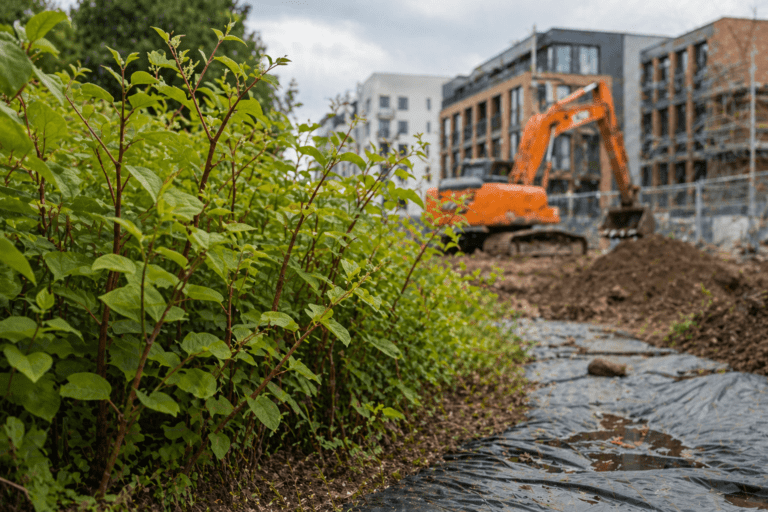
For Japanese knotweed specifically, the Environmental Protection Act 1990 adds the controlled waste dimension. Excavated soil containing knotweed rhizome is controlled waste. Moving it off-site requires a licensed waste carrier and disposal at a licensed facility. Moving it around within a site without adequate precautions to prevent spread creates its own liability. These obligations sit with whoever is carrying out the earthworks – the groundworks contractor – but also with the main contractor who should have ensured a management plan was in place before works began.
The Construction (Design and Management) Regulations 2015 add another layer: principal designers and principal contractors have duties to identify and manage foreseeable risks, which includes ecological risks from invasive species. A pre-construction survey that identifies invasive species, followed by a method statement that addresses them, is the standard way of discharging that duty. A project that proceeds without either isn’t managing the risk – it’s hoping nothing goes wrong.
What a Site Invasive Species Management Plan Needs to Cover
On any site where invasive species are present or suspected, a written management plan – agreed between the principal contractor, the ecological consultant, and the client – is the foundation of risk management. The plan doesn’t need to be a complex document, but it does need to be specific.
At minimum it should cover: which species are present and where, mapped to the site layout; what works are proposed in or near those areas; what controls are in place before those works begin; how contaminated material will be handled and disposed of; what plant hygiene measures apply to machinery working in affected areas; what the site operatives have been briefed on and when; and what the procedure is if a previously unidentified infestation is found during works.
That last element – the discovery protocol – is the one most often left vague. “Stop work and tell the site manager” is the correct answer in every case, but it needs to be in writing so that when it happens, the operative who found it knows exactly what to do and doesn’t improvise a response that makes things worse. Our invasive species management for developers includes both the survey and identification work that informs the plan and the practical on-site support during works where complex management is needed.
Plant Hygiene – Underrated and Often Overlooked
Plant and vehicle hygiene is the control measure that gets least attention on most sites and causes some of the most avoidable spread. An excavator moving from a knotweed-affected area of a site to a clean area carries rhizome fragments on its tracks and bucket. A dumper moving soil from a contaminated stockpile across a site deposits material wherever it goes. A boot that’s walked through a balsam stand carries seeds into areas that were previously clear.
The practical measures are straightforward: a designated exclusion zone around confirmed invasive species stands, marked clearly on the site plan; a defined plant wash-down point before machinery moves from affected to unaffected areas; boot wash facilities at the boundary of any area with confirmed knotweed or balsam; and clear instructions to operatives about not walking through invasive species stands unnecessarily.
None of that is technically demanding. It does require active management from the site team rather than passive compliance. The site manager needs to know the location of invasive species stands, to have communicated the hygiene requirements to relevant operatives, and to be checking that the measures are being followed. That oversight doesn’t happen automatically – it needs to be an assigned responsibility rather than an assumption.
Unexpected Finds During Works
Pre-construction surveys don’t find everything. Rhizomes extend beyond the visible canopy of Japanese knotweed stands. Himalayan balsam seeds germinate in disturbed ground during works. A stand that was outside the survey area turns out to be within the working zone once grading begins. Unexpected invasive species finds during works are common enough that every site with any invasive species risk should have a clear discovery protocol, not just a plan for the known infestations.
When something unexpected is found: works in that area stop. The site manager and the ecological consultant are notified. The extent of the find is assessed before works resume. If it’s Japanese knotweed, the contaminated spoil management plan is extended to cover the newly found area. If it’s a species that wasn’t in the original management plan, the plan is updated before work proceeds.
This is the sort of thing that’s obvious in principle and frequently doesn’t happen in practice because programme pressure is real and stopping work to deal with an unexpected plant identification feels disproportionate. It isn’t. The consequences of spreading knotweed rhizome across a site and then discovering it in areas that were previously clean are considerably more expensive and time-consuming than a brief pause to assess and plan.
Contractual Risk Allocation
Invasive species management creates liability questions that are worth clarifying in contracts before works start rather than in disputes after something goes wrong. Who bears the cost of additional management if Japanese knotweed is found in areas that weren’t identified in the pre-construction survey? Who is responsible for ensuring the waste carrier documentation is correct? If spread occurs during works, who bears the cost of remediation?
Standard forms of contract handle these situations differently, and bespoke provisions in subcontract packages may allocate risk in ways that aren’t immediately obvious. Main contractors who include invasive species risk in their pre-construction risk registers, with clear allocation of responsibility in their subcontract terms, are considerably better placed than those who discover the question for the first time when there’s a dispute in progress.
Frequently Asked Questions
Who is responsible for invasive species management on a construction site?
Shared responsibility, with different aspects sitting with different parties. The client or developer is responsible for commissioning pre-construction surveys and ensuring a management plan exists. The principal contractor is responsible for implementing that plan, ensuring it’s communicated to all relevant operatives, and managing any unexpected finds during works. Subcontractors carrying out works in affected areas are responsible for following the method statement and plant hygiene requirements. The ecological consultant is responsible for providing technically accurate advice and, where engaged for on-site supervision, checking that the plan is being followed.
Does invasive species presence need to be disclosed in construction contracts?
Pre-contract surveys that identify invasive species are part of the site information that should be disclosed to tendering contractors. Withholding known invasive species information from contractors who then encounter it unexpectedly creates a risk of claims for additional cost and time. Disclosure allows contractors to price the risk appropriately and plan their method statements accordingly – which is better for everyone than a surprise during the works phase.
Can invasive species management be carried out by the groundworks contractor or does it need a specialist?
For herbicide treatment – which requires a PA1/PA6 pesticide certificate as a minimum and, near water, specific product training and EA consent – specialist application is strongly advisable. For mechanical removal and controlled waste management of Japanese knotweed spoil, competence and knowledge of the requirements is what matters more than specialist contractor status specifically – though many sites use specialist invasive species contractors for both peace of mind and the insurance backing they typically provide. For Himalayan balsam pulling and cutting, this is something a trained and briefed groundworks team can carry out, provided they understand the timing and arisings management requirements.
What records should be kept during invasive species management on a construction site?
Site diary entries recording any invasive species encountered, the management action taken, and by whom. Waste transfer notes for any controlled waste (Japanese knotweed contaminated soil) leaving the site. Records of any herbicide applications including the product used, application rate, location, date, and operative certificate number. Plant wash-down records if these have been specified in the management plan. Photographs of invasive species stands before and after management are useful supporting evidence. These records form the audit trail that demonstrates due diligence if the management is ever questioned.
Risk Managed, Not Risk Avoided
Invasive species on development sites aren’t avoidable – brownfield land in particular carries a realistic expectation of encountering them. What is avoidable is the programme disruption, legal exposure, and remediation cost that comes from encountering them without a plan. The difference between a site that manages invasive species well and one that manages them badly isn’t the presence of the species – it’s the preparation.
Survey before works start. Plan for what’s found. Brief the team. Document what happens. Respond properly when something unexpected turns up. That process isn’t complicated and it isn’t expensive relative to the risks it manages. It just needs to actually happen rather than being assumed to be someone else’s problem.

Killingley Insights is the editorial voice of NT Killingley Ltd, drawing on decades of experience in landscaping, environmental enhancements, and civil engineering projects across the UK.