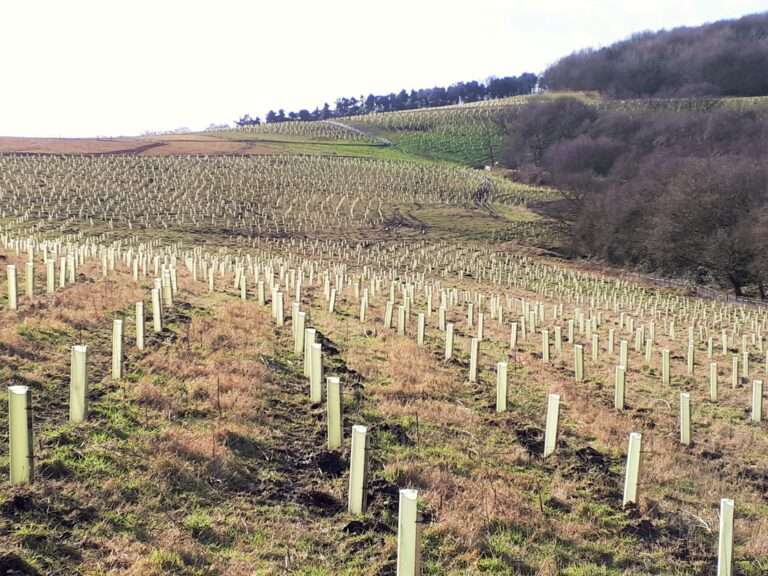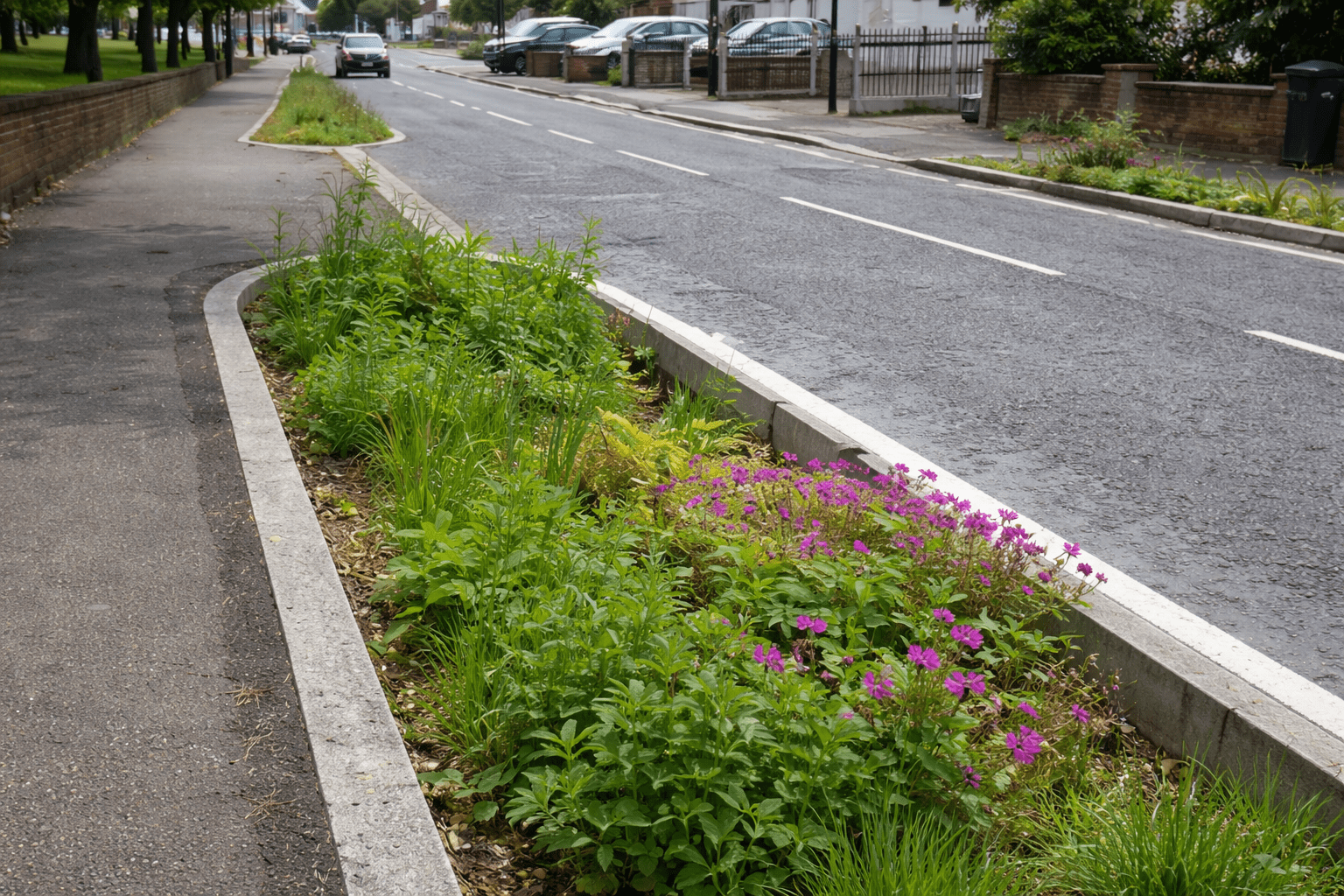
Integrating Ecology, Drainage and Public Realm in Infrastructure Landscapes That Really Work

Big infrastructure landscapes don’t fall apart because someone chose the wrong tree.
They fall apart because ecology was designed in isolation, drainage was treated as a technical afterthought, and public access was bolted on once everything else was fixed. On paper it all looked fine. On site, not so much.
I’ve seen schemes where planting failed because SuDS flows weren’t properly understood. Others where footpaths cut straight through habitat corridors because nobody joined the dots early enough. And plenty where maintenance teams quietly cursed the day the drawings were signed off.
This piece is about how those three strands – ecology, drainage, and public realm – are brought together on large, infrastructure-led projects. Not as separate disciplines politely co-existing, but as one integrated system that has to function under pressure. Traffic, weather, budgets, programme changes. The usual.
It’s not elegant. It’s practical. And when it works, nobody notices. Which is sort of the point.
Infrastructure landscapes are systems, not spaces
At scale, landscapes stop being “areas” and start behaving like systems.
Water moves. People move. Wildlife moves too, whether you’ve planned for it or not. Trying to design any one element without understanding the others is where things start to creak.
Drainage shapes planting success. Planting influences infiltration. Access routes affect habitat continuity. Maintenance access affects all of it.
Once you see that interdependence, the design approach changes.
Slowly. Sometimes reluctantly. But it changes.
Ecology can’t live in the margins anymore
Ecology used to be something that happened around the edges. Buffer strips. Off-site mitigation. A few boxes ticked.
That doesn’t hold up on major infrastructure projects.
Linear schemes in particular – roads, rail, flood works – slice through landscapes. They fragment habitats unless deliberate steps are taken to reconnect them. That means ecological thinking has to be embedded, not appended.
Some practical realities come with that:
- Habitat corridors need to align with drainage routes
- Planting palettes must tolerate wet and dry cycles
- Access routes can’t sever movement paths
Ignore any of those and the mitigation looks good on paper but performs badly in reality.
And yes, I know, ecology reports often arrive late. But that’s a sequencing issue, not an inevitability.
SuDS isn’t just drainage with plants added
Sustainable drainage has been around long enough now that we should be past the basics. Yet SuDS still gets treated as a technical system to be hidden behind planting.
That’s backwards.
On large infrastructure landscapes, SuDS often is the landscape. Basins, swales, attenuation areas, wetlands. They define landform and dictate what can grow where.
Which means designers need to ask awkward questions early:
- What water levels fluctuate seasonally?
- Where does sediment accumulate?
- Which areas will be saturated more often than expected?
Planting that ignores those questions rarely survives more than a couple of seasons.
I find the best SuDS-led landscapes are those where drainage engineers and landscape teams actually talk to each other. Radical idea, I know.
Public realm has to work on bad days too
It’s easy to design access routes that work on a sunny afternoon.
It’s harder to design them for a wet November morning with heavy traffic nearby and maintenance vehicles needing access.
Public realm in infrastructure landscapes isn’t about placemaking in the traditional sense. It’s about safe, legible movement through complex environments.
That usually means:
- Clear separation between people and vehicles
- Robust surfaces that cope with water and wear
- Routes that don’t conflict with ecological zones
Get that balance wrong and something suffers. Usually ecology or safety. Sometimes both.
Integration happens at interfaces, not in reports
Lots of documents talk about integration. Fewer projects actually achieve it.
The real integration work happens at interfaces. Where a swale meets a footpath. Where a habitat corridor crosses an access road. Where maintenance needs overlap with public use.
Those moments require judgement. And often compromise.
On one scheme I worked on, a planned footpath alignment would have cut straight across a wetland designed for attenuation. Looked tidy on the plan. On site, it would have turned into a muddy mess within months.
The solution wasn’t complex. Reroute slightly. Accept a longer walk. Protect the system.
Small decisions. Big consequences.
Maintenance is the silent design partner
Maintenance teams don’t usually get a seat at the design table. They probably should.
In large infrastructure landscapes, long-term management determines whether integration holds or unravels. SuDS features need desilting. Planting needs managing. Access routes need inspection.
Designs that ignore maintenance reality tend to be value-engineered later. Or quietly altered once the defects period ends.
Neither outcome improves ecology or public experience.
Designing with maintenance in mind isn’t about dumbing things down. It’s about honesty.
Coordination across disciplines is where time is saved
People assume integration slows projects down.
In practice, it often does the opposite.
When ecology, drainage, and public realm are coordinated early, clashes reduce. Redesigns reduce. Late-stage compromises reduce.
That’s why integrated delivery of a large infrastructure landscape service matters on complex schemes, particularly where ecological mitigation, SuDS infrastructure, and public access all have to coexist within tight corridors. Treating them as one system rather than three competing requirements tends to keep programmes intact and outcomes more resilient.
It’s not magic. It’s just joined-up thinking.
Phasing complicates everything, but it’s unavoidable
On big schemes, nothing arrives fully formed.
Ecology might be installed early to meet seasonal constraints. Drainage might come in phases as earthworks progress. Public access might be temporary for years.
Designs that assume a neat sequence struggle. Designs that accept overlap cope better.
That means thinking about:
- Temporary routes that won’t damage habitats
- Interim drainage solutions that don’t undermine planting
- Early ecological works that won’t be destroyed later
All doable. None automatic.
UK context matters more than people admit
British climate, planning expectations, and public scrutiny shape how integration plays out.
Heavy rainfall tests SuDS more often than models predict. Public rights of way complicate access planning. Biodiversity Net Gain requirements add another layer to ecological strategy.
What works elsewhere doesn’t always translate neatly.
Which is why UK-specific experience counts on infrastructure landscapes. Local soils, weather patterns, and regulatory frameworks all influence outcomes.
You can’t copy-paste your way through it.
A quick reality check on performance
Here’s a blunt comparison that crops up repeatedly:
| Approach | Likely Outcome |
|---|---|
| Ecology treated separately | Fragmented habitats |
| SuDS designed in isolation | Failing planting |
| Public realm added late | Safety conflicts |
| Integrated early planning | Resilient systems |
Nothing surprising there. Just easy to ignore when deadlines loom.
Common questions that come up
Can SuDS and public access really coexist?
Yes, but only with clear design intent and boundaries.
Does ecology always restrict access?
No. It shapes it. Subtle difference.
Is integration more expensive?
Usually not. Late redesigns are.
Who should lead integration?
Depends on the scheme, but someone has to own it.
A small tangent worth mentioning
Weather again. Always weather.
Integrated systems are more exposed to it. Swales flood. Paths get wet. Planting struggles.
Designs that acknowledge that reality and allow for it age far better than those chasing perfect aesthetics.
Perfection doesn’t last. Robustness does.
Circling back, because it’s easy to drift
Integrating ecology, drainage, and public realm isn’t about ticking three boxes. It’s about recognising that they influence each other constantly on large infrastructure projects.
Separate them and you create conflict. Bring them together and the landscape starts to behave as a system rather than a collection of features.
That shift in mindset is where most of the value lies.
Conclusion: integration is less about design, more about discipline
The hardest part of integration isn’t technical. It’s organisational.
It requires teams to talk earlier. To accept constraints. To compromise before problems become expensive.
When ecology, drainage, and public realm are designed as one, infrastructure landscapes perform better, last longer, and attract fewer complaints. They cope with weather. With use. With time.
And in the background, quietly, they do their job.

Killingley Insights is the editorial voice of NT Killingley Ltd, drawing on decades of experience in landscaping, environmental enhancements, and civil engineering projects across the UK.