Where Tar and Chip Works Best: Rural Roads, Country Estates, and Access Routes That Need a Practical Surface

Drive through rural Derbyshire, or across a working farm in Lincolnshire, or up the approach to a country estate in the Cotswolds, and you’ll see tar and chip underfoot more often than you might expect. It doesn’t announce itself the way tarmac does. It blends. The aggregate takes on the regional character of whatever stone is local. On a wet October morning it looks like part of the landscape rather than an imposition on it.
That naturalness isn’t the main reason it gets specified – cost and practicality drive most decisions – but it’s a genuine advantage in settings where a smooth black surface would look wrong. And there are quite a few of those.
So where does tar and chip actually perform well? And where should you think twice about it?
Rural and Farm Access Roads
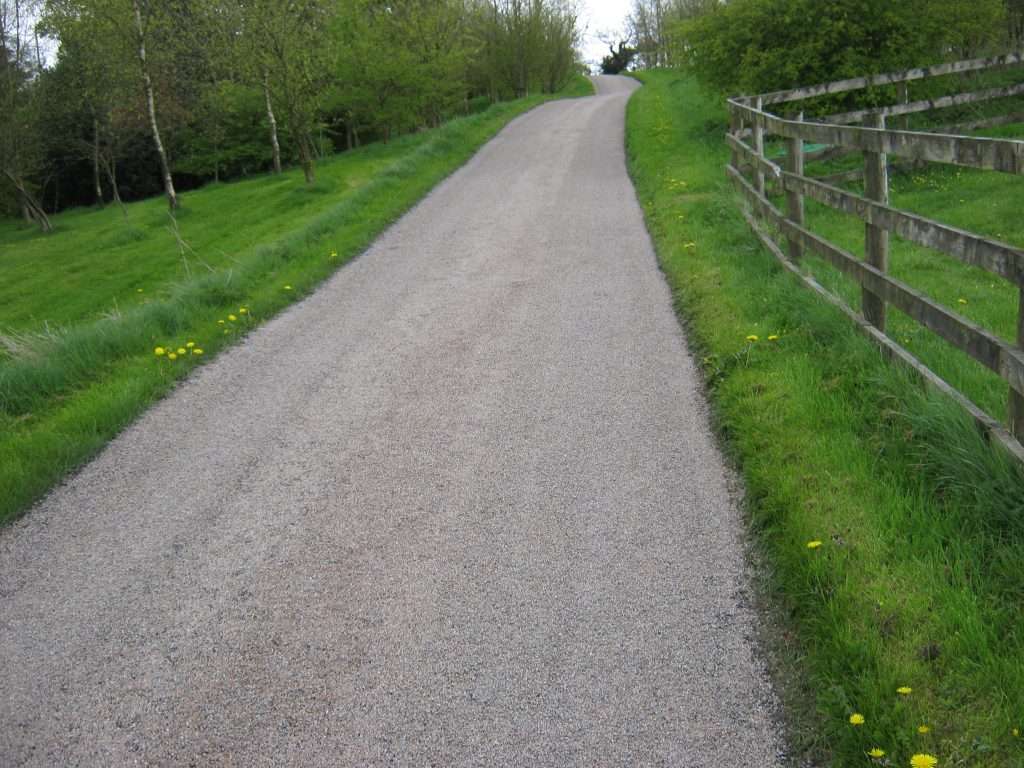
This is probably the strongest application. Farm access roads, private tracks across agricultural land, access routes to rural properties – these tend to share a set of characteristics that tar and chip handles well. They’re often long, meaning cost per square metre matters more than it would on a short driveway. Traffic is typically light to medium, with occasional heavier vehicles (agricultural machinery, delivery lorries) rather than sustained heavy use. And the aesthetic case for something that looks at home in a rural landscape is stronger than it is on an urban or suburban road.
A 500-metre farm track that was previously mud, hardcore, and optimism can become a properly surfaced, year-round access route at a cost that’s genuinely achievable within a farm capital budget. The drainage characteristics are worth noting too – the textured aggregate surface sheds water well, and on tracks with modest crossfall, standing water is considerably less of an issue than it is on smooth tarmac where the camber isn’t quite right.
Gritting and salting behaviour is also relevant for agricultural settings. Tar and chip surfaces don’t deteriorate under salt the way some surfaces can, and the rough texture provides useful grip in icy conditions without the surface needing to be treated as heavily. That matters on a farm track that gets used at 5am in January when nobody’s yet gritted anything.
Country Estate and Private Driveway Applications
Long private driveways – the sort leading to a farmhouse in the Peak District or a manor property in Northamptonshire – are another strong fit. The combination of lower cost than tarmac, a natural aggregate appearance that doesn’t jar against stone walls and mature plantings, and good durability under the modest traffic of a residential property makes a compelling case.
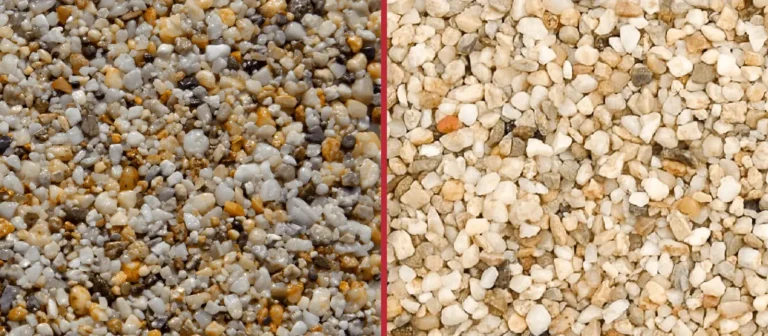
Aggregate selection matters here more than on a utilitarian track. A warm-toned aggregate – golden flint, buff limestone, or a local stone where available – can read as part of the property rather than a surface laid over it. On listed buildings and properties in conservation areas, planning officers sometimes prefer the natural aggregate appearance of tar and chip to the hard-urban character of plain tarmac, though that’s worth checking in advance rather than assuming.
Circular driveways need some thought. The shear stress from slow, tight turning movements – the kind of low-speed rotation that happens on a turning circle outside a front door – puts more strain on the surface than straight-line movement does. It can displace chippings over time at the turning point. Not a reason to rule tar and chip out, but a reason to specify a slightly finer aggregate and a higher binder application rate in those zones, and to be realistic about the maintenance that turning areas may need over the years.
Car Parks on Rural and Heritage Sites
Visitor car parks at country houses, National Trust properties, holiday parks, golf clubs, and similar rural leisure venues are a natural application. These sites often want a surface that reads as informal and sympathetic to the setting rather than urban-commercial. They typically experience moderate, intermittent traffic rather than the sustained, channelled flow of a commercial car park. And cost-effectiveness on a large area matters when the car park is a facility cost rather than a revenue generator.
Drainage performance is a particular advantage on larger car parks. Tar and chip surfaces, combined with appropriate crossfall, manage surface water well and reduce the risk of standing water that makes car parks unpleasant in the sort of heavy autumn rain that tends to coincide with peak visitor season at heritage sites. In areas where sustainable drainage system (SuDS) requirements apply, a permeable sub-base design beneath a tar and chip surface can contribute to the drainage strategy.
There’s a practical note here about vehicles with kickstands – motorcycles particularly. The aggregate texture of a newly installed tar and chip surface can make kickstand stability less reliable than it would be on tarmac, particularly in warm weather when the binder softens slightly. Not a common issue, but worth mentioning if a venue hosts motorcycle events.
Where Tar and Chip Is Less Suited
Honesty requires covering the contexts where it’s not the right choice. Tar and chip has genuine limitations and pretending otherwise doesn’t help anyone choose correctly.
Urban and suburban residential settings are generally better served by tarmac or block paving. The visual character of tar and chip – textured, aggregate-dominant – suits rural and semi-rural contexts. In a street of tarmac driveways in a Nottingham suburb, a tar and chip surface looks out of place rather than distinctive. Horses for courses.
Heavy, sustained vehicle traffic is another caveat. Our tar and chip for driveways and access roads works well for light to medium traffic – private vehicles, occasional light commercial, agricultural machinery at reasonable frequency. Regular HGV traffic, bus routes, or any application where heavy vehicles are making the same movements repeatedly will stress a tar and chip surface more than a well-specified tarmac or concrete pavement, and it will need more frequent re-dressing as a result.
Steep gradients with regular braking and acceleration are also harder on the surface than level routes. The shear forces involved when vehicles brake sharply or accelerate on a slope can displace chippings and damage the bitumen layer over time. On driveways with gradients over about 1 in 8, extra care in specification is warranted – higher binder rate, smaller aggregate, possibly a different surface type altogether depending on the steepness and the anticipated traffic.
A Quick Site Suitability Summary
| Application | Suitability | Notes |
|---|---|---|
| Farm and agricultural access tracks | Excellent | Cost-effective over long distances; good for mixed light and occasional heavy use |
| Rural private driveways | Excellent | Natural appearance; choose aggregate colour to complement the setting |
| Country estate approach roads | Excellent | Aggregate selection important; blend with landscape character |
| Rural visitor car parks | Very good | Good drainage performance; informal appearance suits heritage and leisure sites |
| Golf club access and car parks | Very good | Sympathetic appearance; moderate traffic levels suit the product well |
| Suburban domestic driveways | Moderate | Works technically but may look out of place; tarmac or block paving often preferred |
| Tight turning circles | Moderate – needs care | Specify finer aggregate and higher binder rate; accept more frequent maintenance |
| Steep gradients (>1:8) | Poor to moderate | Shear forces displace chippings; consider alternative surface or enhanced specification |
| Roads with regular HGV traffic | Poor | Heavy sustained traffic degrades surface faster; tarmac more appropriate |
That table is a guide rather than a rule. Every site has specific characteristics that affect the right choice – local climate, ground conditions, the exact traffic pattern, the available budget for both installation and ongoing maintenance. A proper site assessment takes all of that into account rather than picking a surface type from a generic list.
The Regional Character of Aggregate
One thing I genuinely enjoy about tar and chip work in the East Midlands and surrounding areas is how much local stone affects the character of the finished surface. Derbyshire gritstone chippings produce a surface that looks completely at home in the Peak District. Lincolnshire limestone gives a lighter, warmer tone that suits the broad landscape of the Wolds. It’s not something most clients think about at the quoting stage, but choosing an aggregate that reflects the local geology – rather than just defaulting to standard grey limestone from wherever it’s cheapest – makes a real difference to how the finished surface sits in its surroundings.
It’s a minor detail in the context of the whole job, and it doesn’t affect performance at all. But on the right site, it’s the difference between a surface that looks sorted and one that looks like it could be anywhere. Worth the conversation at the design stage.
Frequently Asked Questions
Can tar and chip be used on public roads?
Surface dressing – the same basic process – is used extensively by local highway authorities for road maintenance across the UK. As a private surface treatment, tar and chip is used on private roads, unadopted roads, and estate roads that aren’t maintained by the local authority. It’s not typically specified for new adopted roads (which need to meet Highways Authority standards), but for private and unadopted routes it’s well-established.
How does tar and chip perform in the wet?
Well. The aggregate surface provides significantly better wet-weather grip than smooth tarmac, which is one of the practical reasons it suits rural roads and access tracks where conditions can be variable. Skid resistance is genuinely higher than a standard smooth finish. Surface water disperses reasonably quickly on a properly cambered or crossfallen surface.
Is it noisy underfoot or under tyre?
Slightly more tyre noise than smooth tarmac, yes. On a rural access track, that’s irrelevant. On a private driveway close to a bedroom window, the additional tyre noise from vehicles arriving late at night might be worth considering – though in practice, most people don’t find it a significant issue at normal residential speeds.
Can I choose a specific aggregate colour to match my property?
Yes, within the range of what’s commercially available and what makes economic sense given the project size. Specialist or imported aggregates are available in a wide range of colours and textures, though the cost premium over standard limestone or granite chippings can be significant. For smaller areas, that premium may be worth it. For a long farm track, it probably isn’t. Worth discussing at the quoting stage with a clear sense of the budget.
The Right Surface in the Right Place
Tar and chip isn’t a universal answer. No surface material is. But in the applications where it works well – rural roads, farm tracks, estate driveways, informal car parks – it’s a genuinely practical, cost-effective, and visually appropriate choice that’s been doing the job reliably for generations.
The key is matching the surface to the site rather than defaulting to whatever was used on the last project. A long rural access track that would cost a fortune in tarmac can be properly surfaced in tar and chip for a realistic budget. A suburban driveway that needs to look tidy and uniform probably wants tarmac or block paving. Knowing which is which, and why, is what makes the difference between a surface that lasts well and one that creates problems two winters in.

Killingley Insights is the editorial voice of NT Killingley Ltd, drawing on decades of experience in landscaping, environmental enhancements, and civil engineering projects across the UK.