Fitting Utility Diversions Into Bigger Schemes: How They Work With Technical Earthworks and Urban Regeneration

I’ve always thought utility works are a bit like the backstage crew of a theatre show. Everyone sees the scenery, the lighting, the finished polished thing, but behind it you’ve got people frantically shifting things around to make sure the whole thing doesn’t fall apart. Utility diversions feel like that. Essential yet invisible, slotted into the gaps between groundworks, drainage installation, and road building.
Funny thing is, most people walking past a regeneration scheme think the fancy paving or new road layout is the big story. If only they knew.
Introduction
You know that moment when a project plan shows all the phases lining up neatly? Those little bars on a Gantt chart sitting side by side or overlapping slightly. Looks charming. But once you add in utility diversion work, everything becomes more like one of those knot puzzles you get in Christmas crackers. Groundworks need clear space. Drainage needs gradients. Roads need formation layers. Utilities? They want their own corridors and clearances.
The trick isn’t to force them into place. It’s blending them so project flow feels natural rather than squeezed.
Sometimes the biggest win is simply making sure the crews aren’t tripping over each other. I’ve seen telecom contractors turn up on a site in Derby only to find a drainage crew three metres deep with shoring already in. Wrong week. Wrong sequence. Everyone annoyed.
There’s also the small matter of long lead times. Some statutory providers move gently. Others move glacially. So you weave diversion planning into the early earthworks strategy, even if you don’t yet know exactly what’s buried where. And if you want more on the core process itself, the main details live on our page about service and utility diversion work.
Right. On with it.
Why Utility Diversions Sit at the Heart of Earthworks Planning
Sometimes I think it’d be easier if every UK town had a clean grid under the surface, like graph paper. But no. Our infrastructure grew in fits and starts, one decade laying clay pipes, the next decade adding electric, then fibre, then somebody bodges a joint box in the 80s. Modern urban regeneration inherits that patchwork.
Earthworks teams start excavating and suddenly you find:
- A surface water pipe running too shallow for new road levels
- A low voltage cable zigzagging diagonally across a new kerb line
- A sewer built on a weird gradient because an old building sat in the way once
And each of these little discoveries changes the dig sequence.
Ground levels and diversion alignment
New drainage routes often dictate the shape of the earthworks. Diversions need to sit at legal depths and with proper clearance from other services, meaning you sometimes adjust the soil build-up to keep everything compliant.
I remember one scheme near Chesterfield. The project wanted a new cycle lane, but an electricity cable sat right in the way, too shallow and too stubborn. We ended up shifting the entire verge build-up to give it a proper service corridor. Not ideal, but it kept the programme ticking.
Soil stability and trench safety
Earthworks teams care about soil types. Diversion crews care about them too. Sandy, granular soils collapse easily. Clay holds shape but sticks to everything. That odd mix you get in reclaimed land near canals? A nightmare to bench out safely.
Sometimes you see people staring into a trench wondering if the shoring will hold once the rain starts. British weather loves a joke.
How Diversions Align With Drainage Installation
Drainage is the backbone of most regeneration schemes. Get it wrong and the whole project goes sideways. Utility diversions need to bend around drainage routes, not the other way round.
Inverts, gradients, and clashes
Drainage works rely on precise gradients. If a sewer needs to drop a certain depth over twenty metres, you can’t let a telecom duct sit exactly where that run wants to go. So drainage designers and utility coordinators have to talk early instead of lobbing drawings over the fence at each other.
Funny thing is, telecom ducts cause more clashes than people expect. They’re small but annoyingly placed. Like the TV remote that always ends up under the sofa cushion.
Manholes and chambers
New drainage chambers often land close to existing utility alignments. You’ve got to check access, cover levels, and future maintenance routes. Imagine building a perfect chamber only to block a telecom engineer’s access box for the next ten years. It happens.
Temporary diversions during deep drainage works
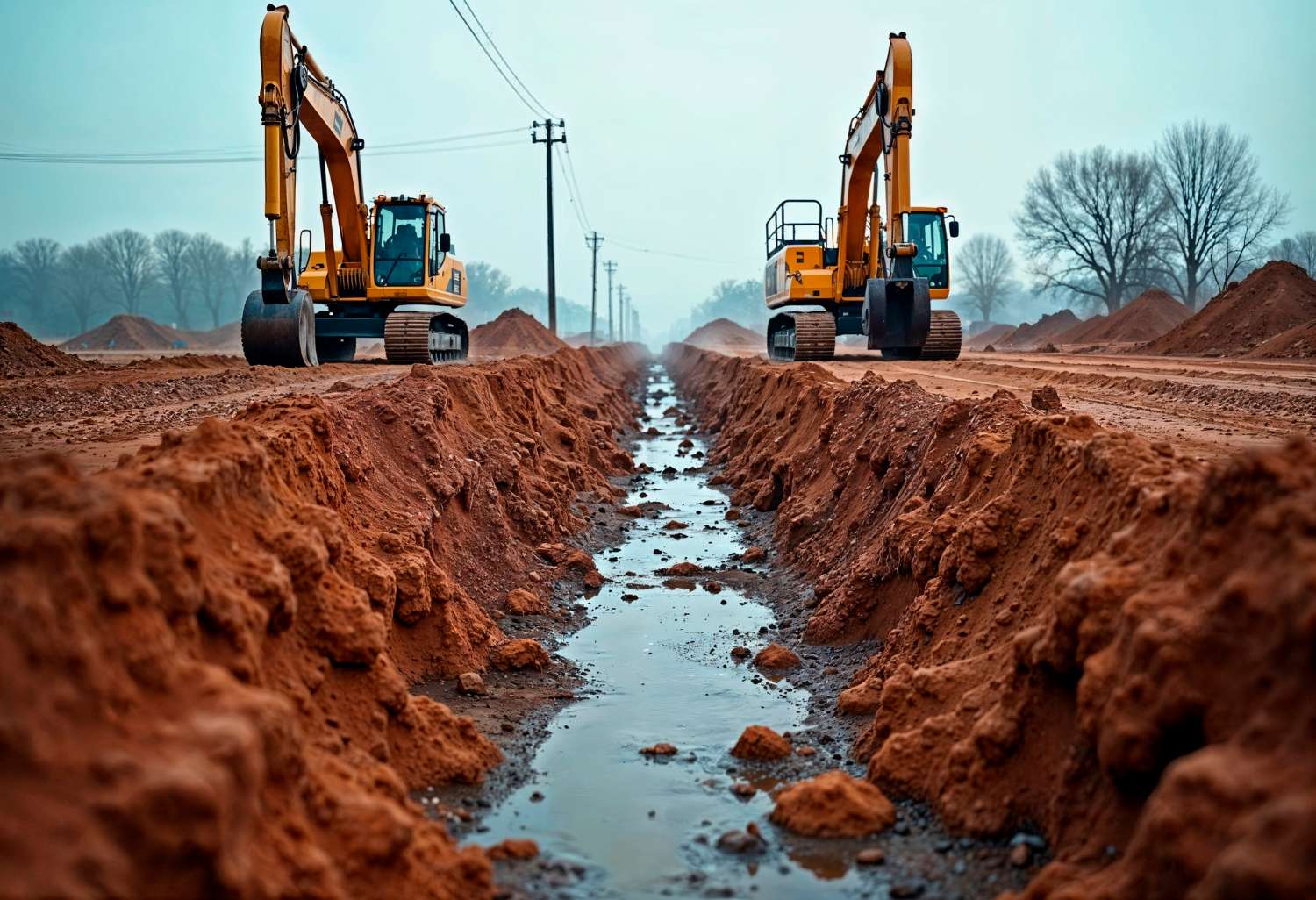
Deep drainage digs can expose or undermine existing pipes. You sometimes need temporary water or gas bypasses to keep services live while you excavate deep. It’s a bit nerve-racking when a temporary pipe runs beside a 3m excavation. You end up fussing over sandbags and protective barriers like a parent checking a child’s bike helmet.
Fitting Diversions Into Road Construction Frameworks
Road construction comes in layers. Formation level, sub-base, binder, surface course. Each one needs clean space.
Utility diversions affect:
- Kerb locations
- Footway widths
- Carriageway camber
- Duct crossings
- Street lighting feeds
- Traffic signal loops
And the timing matters. Leave diversions too late and the surfacing teams can’t start. Do them too early and heavy kit churns up newly installed pipes.
A small walk-through scenario
Picture a high street upgrade in Nottingham. The plan is to widen pavements, add cycle routes, install new drainage gullies, plant street trees, and improve crossings. On paper, it flows nicely.
Then you lift the paving.
Suddenly you’ve got:
| Existing Service | Issue Found | Necessary Adjustment |
|---|---|---|
| Fibre duct | Sitting too high | Full diversion to new footway corridor |
| Water main | Conflicts with new gully spacing | Re-route around tree pits |
| Electricity cable | Running diagonally | Straighten ducting and lower depth |
| Telecoms | Unrecorded branch line | Trial hole and redesign of route |
This isn’t rare. It’s almost routine. Each clash adjusts the sequence of road works.
Integrating Diversions Within Urban Regeneration Planning
Urban regeneration projects bring different pressures. You’re not just dealing with ground levels or drainage. You’re juggling pedestrians, business access, public transport, heritage assets, and tight working windows.
Tight spaces and historic layouts
Cities like York or parts of Leicester have services sitting at wildly inconsistent depths. Some shallow. Some deep. Some encased in old concrete from the 1960s. Trying to create a neat boulevard or plaza around that becomes an exercise in patience.
Phasing around footfall
You can’t close streets whenever you like. High footfall routes need split phasing, night works, or even temporary raised walkways. So utility diversions thread through the edges of those phases.
Public realm finishes
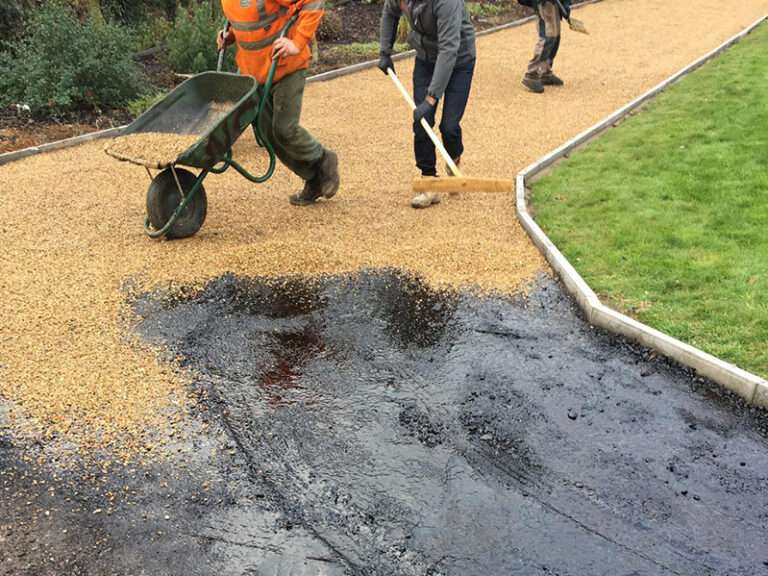
High-quality finishes sit right above deeply complicated service corridors. Granite setts, resin-bound surfaces, planting beds. Crews have to dig, place, compact, and reinstate around these delicacies. One snag with a diversion route and the fancy paving waits another fortnight in the depot yard.
Business continuity pressures
Shops don’t want power outages at lunchtime. Offices don’t want broadband cut during the workday. Hairdressers? They guard their water supply like it’s gold.
So regeneration teams often rely on micro-phasing to slot diversions between trading hours.
Sequencing Diversions Into Groundworks Packages
Groundworks teams crave certainty. They want to dig, form, stabilise, and move on. Utility diversions can derail that if they aren’t woven into the programme from the start.
Sub-base and formation levels
Utilities need clear separation from load-bearing layers. If a diversion sits too high, you might weaken the road base. Too low and you mess with drainage depth.
Stabilisation works
Projects that use soil stabilisation or lime/cement treatment need utility zones kept clear. You don’t want a stabilised layer locking in a pipe or duct that might need relocation later.
Trench reinstatement
Groundworkers hate reinstating temporary trench patches three times because utility crews didn’t finish together. Proper sequencing fixes this. Or tries to.
Technical Earthworks Meet Utility Logic: The Hidden Friction
Sometimes the friction comes from competing demands.
- Earthworks want speed.
- Utilities need precision.
- Drainage needs predictable gradients.
- Road construction wants steady progress.
- Urban regeneration wants tidy finishes and public access.
You see how it becomes a four-way tug of war.
One scheme in Sheffield springs to mind. Ground levels needed shaving down by nearly half a metre, but a telecom duct sat at 300mm depth, basically in the wrong century. We ended up planning a series of stepped diversions. Slightly odd solution, but sorted the levels and kept the telecom route legal.
FAQs About Integrating Utility Diversions With Earthworks
Do utility diversions need to be finished before groundworks start?
Not always. Some routes can shift while earthworks begin elsewhere. But for main service corridors, early completion is safest.
How do you prevent clashes between drainage and utilities?
Through layered coordination. Trial holes, updated CAD models, flexibility, and plenty of site walks.
Can diversions run beneath new roads?
Yes, but with proper depth, ducting, and access chambers.
Are temporary diversions common?
Very, especially in regeneration schemes where you can’t simply shut off supplies.
Is it possible to build around utilities instead of moving them?
Sometimes. Protection slabs, bridging, or adjusted levels can help. But not always worth the complexity.
Practical Tips For Smooth Integration
I was going to frame these as a tidy list, but that feels too neat for how the real world behaves. So here they are, scattered as they come to mind.
- Walk the site early. And often. Paper plans lie more than you’d think.
- Keep drainage designers and utility coordinators talking, not emailing politely.
- Protect temporary supplies like they’re fragile. Because they are.
- Avoid installing diversions just before heavy plant movements.
- Label ducts. Then label them again. Someone will thank you later.
- Try not to plan diversions on Mondays or Fridays. Providers change schedules at the drop of a hat.
- Do trial holes even if someone swears they “already checked that bit”.
Feels random, but it’s exactly how sites work.
A Day on a Site Where Everything Aligns
Just for contrast, imagine a regeneration scheme in Manchester where the stars align.
- Diversions for water and electricity completed early
- Drainage routes surveyed and free of clashes
- Road levels agreed before kerbs arrive
- Temporary telecom feed holding steady
- Earthworks teams carving formation levels without discovering a rogue clay pipe
- Businesses pre-warned and fine with noise before 10am
It’s rare. But when it happens, you feel like the project is almost polite.
Conclusion
Fitting utility diversions into technical earthworks and urban regeneration isn’t glamorous. It’s complicated, slow in places, oddly fast in others, occasionally muddy, occasionally brilliant. What makes it work is coordination. Early, messy, ongoing coordination between the crews in trenches, the designers at desks, the statutory providers sending cautious emails, and the regeneration teams trying to make the end product look effortless.
If you get it right, nobody notices. And that’s the whole goal.

Killingley Insights is the editorial voice of NT Killingley Ltd, drawing on decades of experience in landscaping, environmental enhancements, and civil engineering projects across the UK.