Coordinating Utilities Repair Works with Hard Landscaping Projects: How to Avoid Rework, Delays, and Costly Mistakes

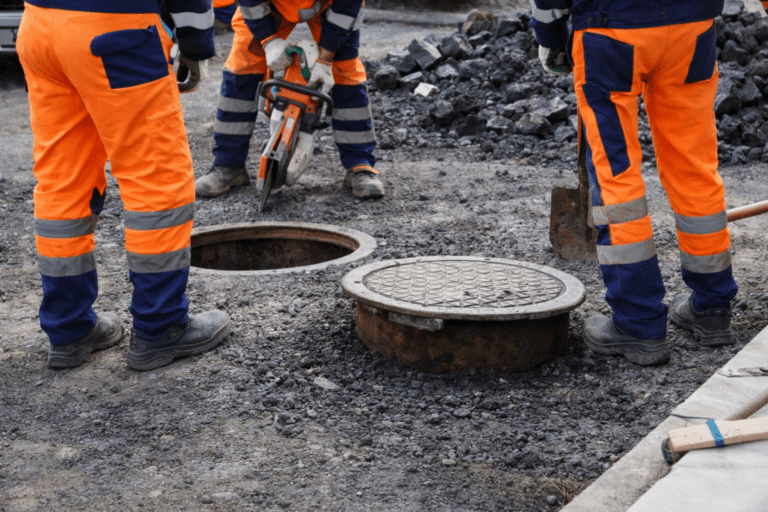
Coordination sounds boring, doesn’t it. A bit corporate. A word that appears in meeting minutes and then quietly disappears when spades hit the ground. But when it comes to utilities repair works and hard landscaping projects, coordination is the difference between a site that runs smoothly and one that limps along, patched, delayed, and quietly haemorrhaging budget.
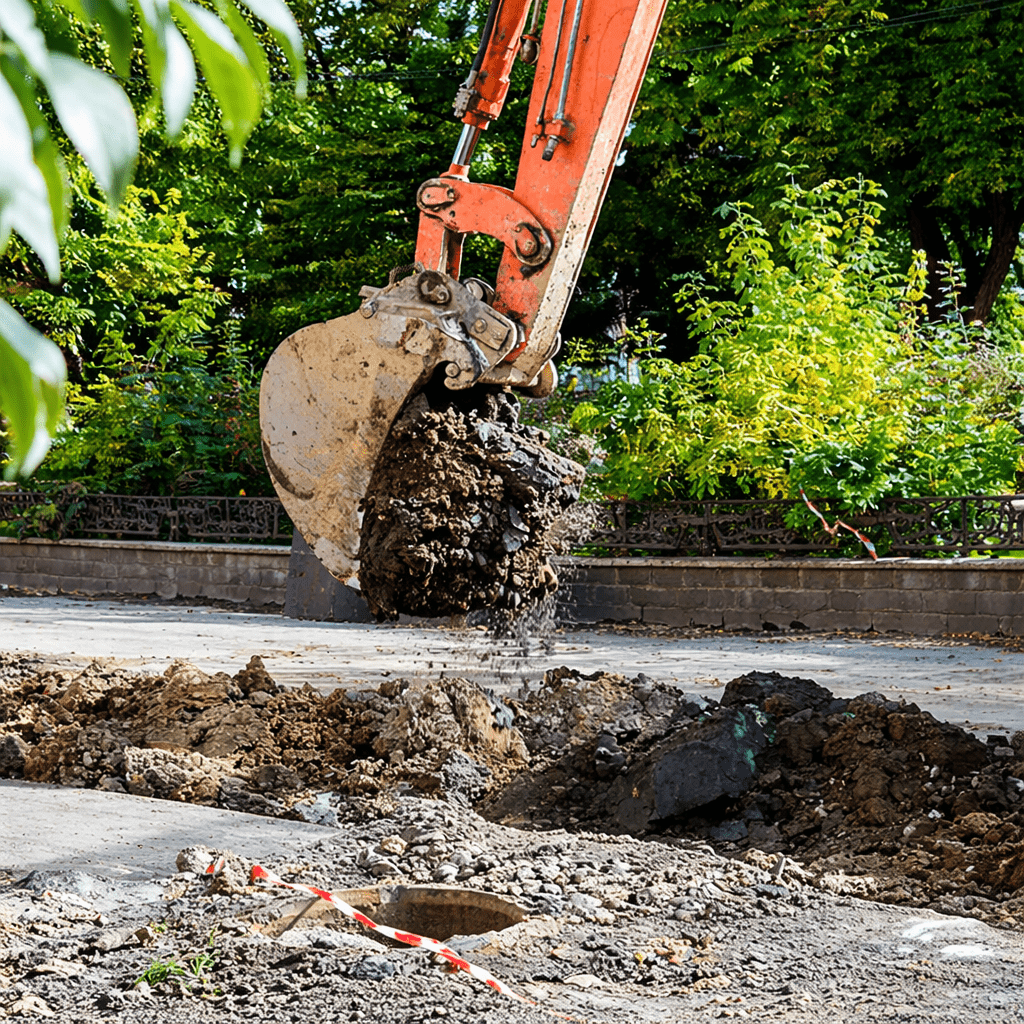
I’ve lost count of how many times I’ve seen a beautifully finished hard landscaping scheme dug up again because someone forgot a duct run. Or a utility repair rushed in late, leaving a surface that never quite settles. You know the type. Looks fine for a month, then dips, cracks, or collects puddles like it’s trying to start a pond.
This isn’t about blame. It’s about sequencing. Timing. And getting the right people talking before the concrete sets.
So let’s talk about coordinating utilities repair works with hard landscaping projects. Not in a glossy brochure way. In the real, muddy-boots, weather-turns-on-you, “why didn’t we spot this earlier?” way that most UK sites recognise instantly.
Why coordination is where projects quietly succeed or fail
Hard landscaping is usually the visible end of a project. Paths, car parks, courtyards, kerbs, steps, paved areas. It’s what clients see. It’s what gets photographed. It’s what people complain about when it’s wrong.
Utilities repair works sit underneath all that. Often unseen. Often out of mind. Until they’re not.
The problem is that utilities don’t politely finish before landscaping begins. They overlap. They change. Drawings get updated. Surveys miss things. Someone discovers an old drain that “wasn’t on the plan”.
Without proper coordination, hard landscaping becomes reactive. Surfaces are laid tentatively. Repairs get phased awkwardly. Or worse, finished areas get broken out and redone. Again.
It’s not dramatic. It’s just inefficient. And inefficiency adds up.
The classic mistakes everyone recognises
Let’s be honest. These crop up everywhere.
- Landscaping starts before all utility routes are confirmed
- Temporary reinstatement quietly becomes permanent
- Multiple contractors working in isolation
- Responsibility for final reinstatement is vague
- Surfaces are designed without considering future access
I was going to say this only happens on rushed jobs… but no, that’s not quite right. It happens on well-funded projects too, just with better excuses.
Understanding the overlapping timelines
One of the trickiest parts is that utilities repair works don’t neatly fit into a Gantt chart. They’re reactive by nature. A water main repair can’t wait for a paving schedule. A cable diversion might depend on approvals that drag on.
Hard landscaping, meanwhile, wants continuity. A clear run. Weather windows. Dry ground. Predictable sequencing.
Trying to bolt one onto the other without planning is a bit like laying carpet before the plaster’s dry. You can do it. But you probably shouldn’t.
Coordination means accepting overlap and planning for it, rather than pretending it won’t happen.
Early involvement makes life easier later
Here’s something I find genuinely helpful. Bringing utilities specialists into the conversation early. Not once the design’s finished. Not once materials are ordered. Early.
That doesn’t mean overcomplicating things. It means asking practical questions:
- Where might future access be needed?
- Which areas are most likely to be disturbed?
- Can surfaces be designed to allow easier lifting or repair?
Block paving instead of continuous concrete in service-heavy zones, for example. Or designing joint lines that align with likely trench routes.
Small decisions. Big knock-on effects.
Designing hard landscaping with utilities in mind
Hard landscaping doesn’t exist in isolation. Or at least, it shouldn’t.
In housing developments, think of driveways crossed by service routes. In town centres, pedestrian areas sitting above layers of telecoms and drainage. In industrial estates, yards criss-crossed by decades of upgrades.
Designing surfaces that acknowledge what’s below them makes coordination easier later. That might mean:
- Modular surfaces where future access is likely
- Clear service corridors kept free of permanent features
- Avoiding unnecessary depth where utilities run shallow
Is it perfect? No. But it’s better than pretending nothing will ever need repairing.
Sequencing utilities repair works properly
Sequencing isn’t glamorous, but it’s where projects either glide or grind.
Ideally, major utility installations and repairs happen before final surfacing. Obvious, right? Yet it’s often compromised by programme pressure or late changes.
When that happens, coordination becomes about minimising damage. Planning access routes. Agreeing reinstatement standards upfront. Making sure the person repairing the surface knows exactly what finish is required, not just “make it safe”.
This is where integrated utilities and hard landscaping solutions come into their own. One team, one standard, one understanding of how the surface should end up looking and performing.
It removes a lot of crossed wires. Literally and figuratively.
Communication beats paperwork every time
Risk assessments. Method statements. Drawings. All important. All necessary.
But nothing replaces a proper site conversation.
A five-minute chat between the utilities team and the landscapers can prevent weeks of rework. Clarifying levels. Agreeing cut lines. Flagging fragile features. Mentioning that one awkward corner where water always seems to sit.
Paperwork captures intent. Conversation captures reality.
Managing reinstatement standards across trades
One of the quieter coordination issues is reinstatement quality. Different trades have different ideas of what “good enough” looks like.
A utilities contractor might focus on making an area safe and compliant. A landscaper is looking at finish, alignment, colour, texture. Neither is wrong. They’re just aiming at different targets.
Agreeing reinstatement standards early helps bridge that gap. What materials. What tolerances. What finish. Who signs it off.
Without that clarity, you get patchwork results. And patchwork never looks intentional.
Temporary works that don’t become permanent problems
Temporary reinstatement has its place. Plates. Cold-lay patches. Barriers. Everyone uses them.
The coordination issue is what happens next. Or doesn’t happen.
Temporary works need tracking. Clear ownership. A plan to replace them with permanent finishes at the right time. Otherwise, they linger. Become accepted. Then quietly fail.
I’ve seen projects where no one could quite remember who was meant to come back and finish a repair. That’s when coordination has really slipped.
Weather, because this is the UK
You can plan beautifully. Then it rains for three weeks.
Utilities repair works and hard landscaping are both sensitive to weather. Wet ground affects compaction. Cold affects curing. Heat affects asphalt.
Coordinating the two means building in flexibility. Knowing when to pause. When to switch tasks. When to accept that forcing a finish today will cost more tomorrow.
It’s frustrating. But pretending weather doesn’t matter is worse.
Urban sites versus rural ones
Coordination challenges change depending on location.
In dense urban areas, utilities are layered and congested. Access is tight. Phasing is critical. Public interfaces add pressure.
In rural or semi-rural sites, space helps, but distances increase. Existing services can be poorly recorded. Ground conditions vary wildly.
Different problems. Same need for coordination.
A simple comparison of coordinated vs uncoordinated approaches
| Aspect | Coordinated approach | Uncoordinated approach |
|---|---|---|
| Surface quality | Consistent, planned finish | Patchy, mismatched repairs |
| Programme impact | Predictable sequencing | Reactive delays |
| Cost control | Fewer reworks | Repeated reinstatement |
| Responsibility clarity | Clear ownership | Blurred accountability |
| Long-term performance | Durable surfaces | Early failures |
Not complicated. Just disciplined.
FAQs that come up on real projects
Should utilities always be finished before landscaping starts?
Ideally, yes. In practice, not always possible. Coordination is about managing overlap, not pretending it won’t happen.
Who should be responsible for final reinstatement?
It should be agreed upfront. One party. One standard. No assumptions.
Is it worth redesigning surfaces to allow future access?
Often, yes. Especially in service-heavy areas. It saves disruption later.
Does coordination really save money?
In my experience, yes. Not instantly. But over the life of the project, definitely.
When coordination is ignored
Let’s flip it briefly. What happens when coordination doesn’t happen?
Repeated digs. Uneven surfaces. Complaints. Snag lists that never quite clear. Arguments about who’s responsible. And eventually, someone paying to redo work that was supposedly finished.
It’s rarely one big failure. It’s lots of small ones piling up.
Pulling it together without tying it up neatly
Coordinating utilities repair works with hard landscaping projects isn’t about perfection. It’s about foresight. Communication. And accepting that underground services and surface finishes are inseparable, whether we like it or not.
You don’t need endless meetings. You don’t need heroic planning. You need the right people involved at the right time, talking about the practical stuff.
Levels. Materials. Access. Sequence.
Get those aligned and everything else becomes… not easy, but easier. And on a British site, with British weather and British constraints, that’s probably as good as it gets.

Killingley Insights is the editorial voice of NT Killingley Ltd, drawing on decades of experience in landscaping, environmental enhancements, and civil engineering projects across the UK.