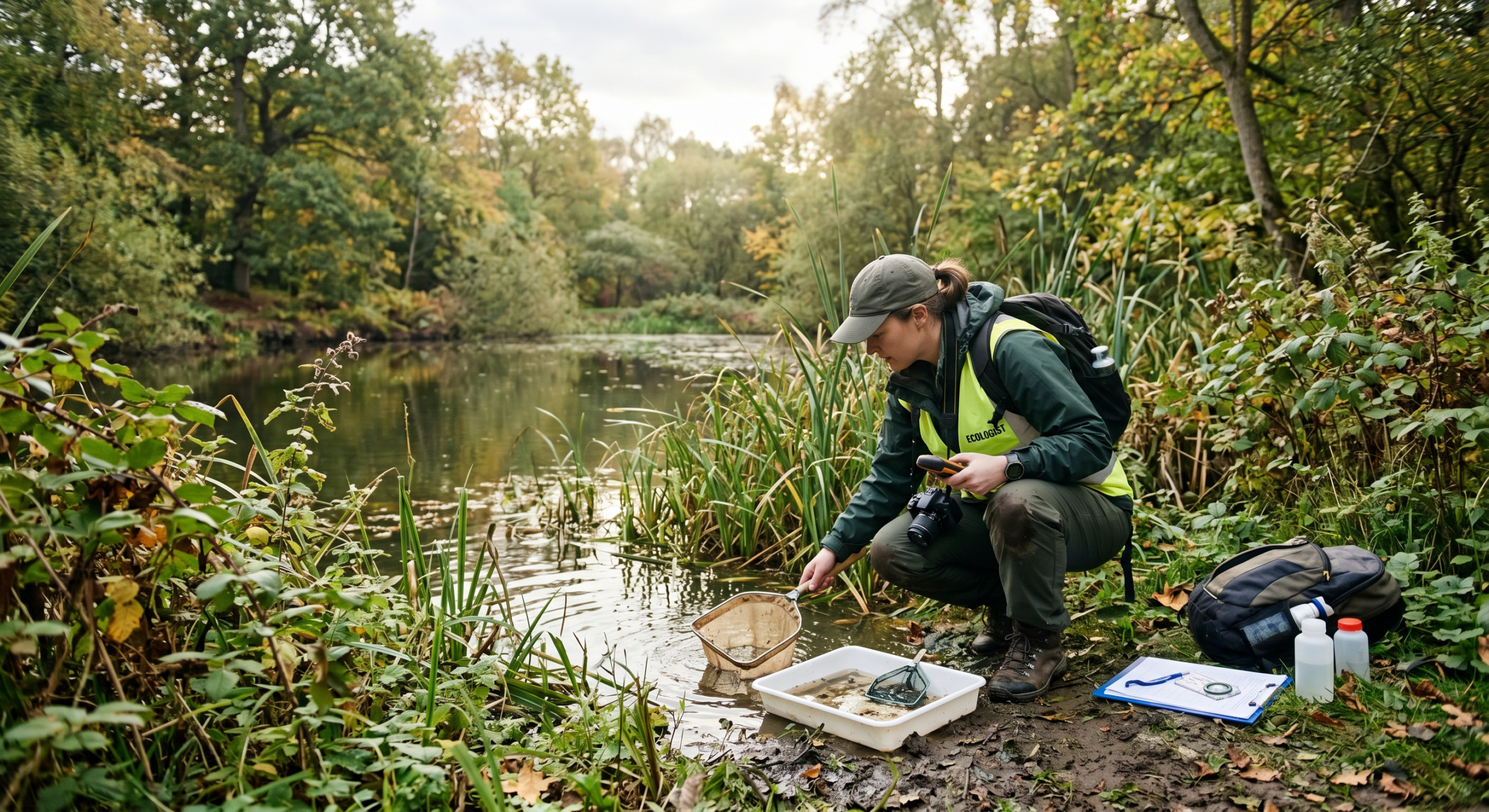
Phase 2 Ecological Surveys: What Triggers Them, What They Involve, and What to Expect

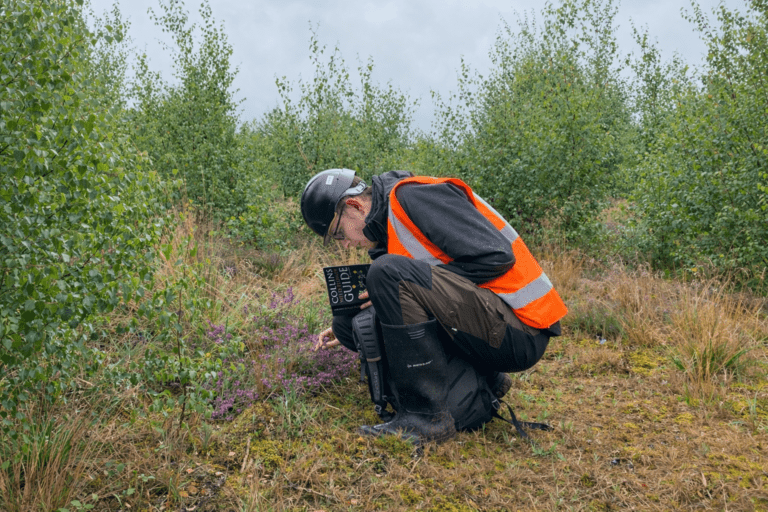
Phase 2 surveys are where ecological assessment gets specific. Phase 1 identifies potential – the habitats, the features, the desk study records that suggest a protected species might be present. Phase 2 goes out and finds out whether it is. Or isn’t. Both outcomes are useful, and both are considerably more useful than not knowing.
The thing that catches most development programmes out isn’t the surveys themselves – it’s the fact that each species has its own specific survey window, its own methodology requirements, and its own minimum visit numbers. Miss the window and you’re waiting until the same time next year. That’s not a hypothetical problem. It happens on projects regularly, usually because the Phase 1 survey was done too late in the season or the survey recommendations weren’t acted on promptly enough.
Worth understanding what’s involved before it becomes a programme issue.
What Triggers a Phase 2 Survey
Phase 2 surveys are triggered by the Phase 1 report – specifically, by the recommendations section where the ecologist sets out which species surveys are warranted given the habitats and features found on site. Common triggers include:
Buildings or trees with features suitable for bat roosts – holes, crevices, gaps in soffits, loose or missing tiles, ivy cover on walls. Ponds, ditches, or marshy ground within 500 metres of the development footprint, which triggers great crested newt assessment. Hedgerows, scrub, or woodland with dormouse habitat potential. Riparian habitat – banks, margins, watercourses – with water vole potential. Rough grassland, log piles, south-facing embankments with reptile potential. Woodland or dense scrub with breeding bird interest. Buildings with evidence of nesting birds in roof voids.
Desk study records are another trigger route – if a protected species has been recorded within the local area in recent years, the planning authority may require its presence or absence to be assessed even if the Phase 1 survey didn’t flag particularly strong habitat indicators.
Survey Windows and Why They’re Non-Negotiable
Each Phase 2 survey type has a defined optimal window determined by the biology of the target species. Surveys conducted outside these windows either can’t be carried out at all or produce results that aren’t sufficient for licensing or planning purposes. This is where programme planning matters enormously.
| Species / Survey Type | Optimal Survey Window | Minimum Visits | Notes |
|---|---|---|---|
| Bats – preliminary roost assessment | May to September (dusk/dawn surveys) | Typically 2 to 3 visits depending on findings | Buildings and trees; licensed ecologist required for inspection; additional transect surveys may be needed |
| Great crested newt – presence/absence | Mid-March to mid-June (peak: April to May) | 4 visits minimum, at least 2 in peak season | Licensed surveyor required; eDNA method available March to June as alternative to traditional methods |
| Water vole | April to June and September to October | Single visit often sufficient; repeat if inconclusive | Surveys for field signs (latrines, burrows, runways, feeding stations); no licence required to survey |
| Otter | Year-round but best spring to autumn | Single walkover survey usually sufficient | Survey for field signs; holts, spraints, prints; licence required for works affecting holts |
| Reptiles | March to May and August to September | 6 visits minimum over survey period | Artificial refugia placed in advance; surveys on warm mornings; no licence required to survey |
| Dormouse | April to November | 6 visits minimum across season | Nest tubes or boxes placed in advance; licensed handler required if animals encountered |
| Breeding birds | April to July | 2 to 3 visits at different times of day | Common birds schedule sufficient for most planning; more detailed surveys for sensitive sites |
| Badger | Year-round | Single survey often sufficient; repeat if complex | Survey for sett presence, activity, and field signs; licence required for works affecting setts |
The minimum visit requirements aren’t arbitrary – they reflect the level of survey effort needed to produce a statistically defensible conclusion. A great crested newt survey with two visits rather than the required four is not a great crested newt survey that planning authorities or Natural England will accept. It’s a survey that will need to be repeated in full.
Bat Surveys in More Detail
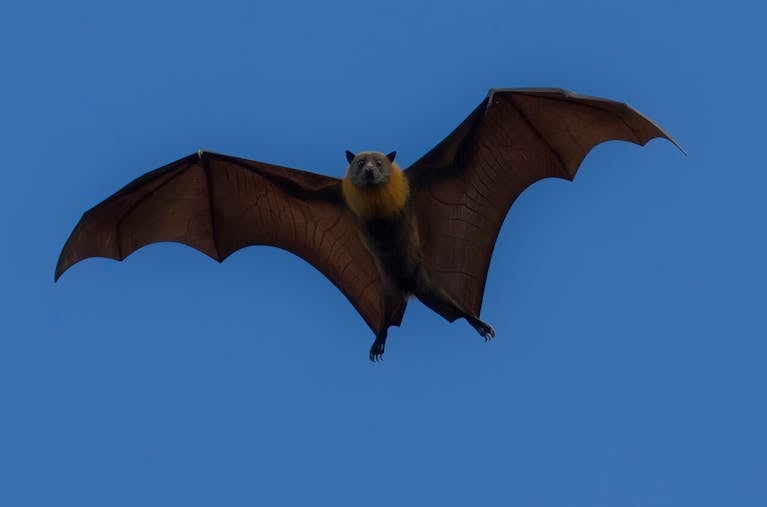
Bat surveys deserve a longer section because they’re the Phase 2 survey most frequently required on development sites and the one with the most internal variation in methodology.
A Preliminary Roost Assessment (PRA) is the standard starting point – the ecologist visits the building or tree in question and assesses it for roost potential based on the features present. If the PRA concludes that roost potential is low and there are no field signs of bat use, no further survey may be needed. If potential is moderate or high, or if field signs are found, dusk emergence or pre-dawn re-entry surveys are required.
Emergence surveys involve the ecologist and typically one or two surveyors positioning themselves outside the building at dusk and recording any bats emerging, their species (using bat detectors), and the exit points used. Re-entry surveys do the equivalent at dawn. At least two surveys are required to confirm a roost – more if the roost type isn’t clearly established after two visits, or if the first surveys were conducted in suboptimal conditions.
Species matter. Common pipistrelle in a roost of a dozen individuals carries different mitigation requirements from lesser horseshoe bats or barbastelle – both of which would trigger more substantial mitigation and potentially a higher level of Natural England licence. Getting the species and roost size confirmed properly at survey stage avoids unpleasant surprises when mitigation is being designed.
Static detector deployment – leaving automated bat detectors in position over multiple nights – is sometimes used to characterise bat activity on a site more broadly, particularly where a development involves habitat loss or fragmentation rather than building demolition. The data from static detectors inform the ecological assessment and the mitigation design.
eDNA Surveys for Great Crested Newts
Environmental DNA (eDNA) surveys have become the standard method for great crested newt detection in many situations, replacing or supplementing traditional survey methods. A water sample is taken from the pond and analysed in a laboratory for traces of great crested newt DNA shed into the water during the survey period. It’s faster than traditional methods – a single visit per pond rather than four – and in many ways more reliable for confirming presence in low-density populations.
The window for eDNA surveys is strictly April to the end of June – outside that window, DNA degrades too rapidly in the water for reliable detection. Within the window, samples need to be collected before dawn or after dusk when newts are most active, and the laboratory analysis takes a week or two to return results. Planning commissioning with that lead time in mind avoids the window closing before results are back.
eDNA confirms presence or absence in the pond. It doesn’t tell you how many newts are present or where the terrestrial population is distributed across the site. Population size class assessment – needed for licensing – still requires traditional methods or the District Level Licensing approach where applicable.
What Happens After the Surveys
Phase 2 survey results feed into one of two outcomes: either the target species is absent, in which case the report says so and that conclusion supports the planning application; or the species is present, in which case the report characterises the population and informs the mitigation strategy.
Confirmed presence of a European Protected Species triggers the need for a mitigation strategy and, where the works would disturb or harm the species, a licence application to Natural England. The three tests for an EPS licence are: the works must be for an overriding reason of public interest (broadly interpreted to include most development); there must be no satisfactory alternative; and the works must not be detrimental to the favourable conservation status of the species. Most development projects satisfy these tests with appropriate mitigation design.
Our Phase 2 ecological survey specialists carry the relevant licences for each of the main protected species groups and can take a project from Phase 2 survey through to licence application and on-site mitigation supervision – which is usually the most efficient approach rather than splitting those elements across different consultants at each stage.
Frequently Asked Questions
Can Phase 2 surveys be carried out at the same time as the planning application?
Yes, and this is usually the most efficient approach. There’s no requirement to have survey results before submitting a planning application – applications can be submitted with surveys underway, and the results submitted as additional information during determination. The risk is that if the surveys produce results requiring significant mitigation design changes, those changes may affect the scheme layout at a late stage. Pre-application survey completion is preferable where the programme allows it.
What if surveys find an unexpected protected species?
Stop and take stock. Unexpected findings – a bat roost in a building that was thought to be unoccupied, great crested newts in a pond that wasn’t flagged in the desk study – require the mitigation strategy to be designed around them before works proceed. That may affect the scheme layout, the programme, or the cost. Finding out during surveys is considerably better than finding out during clearance works, when the legal consequences are immediate.
Do Phase 2 surveys have a validity period?
Yes, though this varies by species and by the nature of the results. Bat roost surveys are typically considered valid for one to three years depending on the roost type and findings. Great crested newt surveys are generally valid for the year of survey, though eDNA results may be accepted for two seasons in some circumstances. Where there’s a significant gap between survey and development, Natural England or the local planning authority may require updated surveys. It’s worth confirming validity with the ecological consultant before assuming older survey results remain current.
Can I carry out Phase 2 surveys on land I don’t own?
Not without the landowner’s permission. This is sometimes a constraint on pre-application survey programmes where ponds or habitat features triggering survey requirements are on adjacent land. In those situations, early engagement with neighbouring landowners is worthwhile. If access cannot be obtained, the ecologist will need to assess the likely impact based on available information and may need to apply a precautionary assumption that the species is present.
Plan the Surveys, Not the Problems
Phase 2 surveys aren’t the obstacle they’re sometimes perceived to be. They’re a defined process with defined windows, defined methodologies, and defined outputs. What makes them a programme problem is when they’re left too late, when the Phase 1 recommendations weren’t properly read, or when the assumption was made that the ecology would be straightforward.
Build the survey windows into the programme from the moment the Phase 1 report comes back with recommendations. Commission surveys promptly – particularly for species with narrow windows in spring. And treat the results, whatever they are, as information that allows the project to be properly planned rather than as an unwelcome complication. Because it’s far less complicated at survey stage than it is at groundworks stage, when the window has passed and the licence hasn’t been obtained and the clearing crew are standing by.

Killingley Insights is the editorial voice of NT Killingley Ltd, drawing on decades of experience in landscaping, environmental enhancements, and civil engineering projects across the UK.