Timber vs Steel Fencing: What Works Best for Commercial and Rural Projects?

Fencing decisions tend to get left until late in a project. Budgets are tight, deadlines loom, someone says “just price timber and steel and we’ll pick one”. Simple, right?
Not quite.
Across commercial developments, highways schemes, agricultural land and even public realm work, the choice between timber and steel fencing can have long-term consequences – on cost, durability, maintenance, appearance, and even planning approval. I’ve seen projects where the “cheaper” option ended up costing more within five years. And others where steel was specified automatically when timber would have been more appropriate.
It isn’t about which material is better. It’s about what’s right for that site, that client, and that lifespan.
And sometimes the answer isn’t what you expect.
Why the Choice Matters More Than People Think
Drive through rural Derbyshire or across a new housing development in Nottinghamshire and you’ll see both materials everywhere. Close-board timber along estate boundaries. Steel palisade around substations. Post-and-rail on agricultural land. Welded mesh on schools and distribution depots.
They all look like “fencing”.
But they behave very differently over time.
A commercial project in Sheffield exposed to wind and pollution won’t experience the same wear as a rural boundary fence near Matlock where livestock lean against it daily. Soil type, drainage, vandalism risk, insurance requirements – all of it plays a part.
Planning conditions can also dictate materials. Conservation areas often favour timber. Infrastructure or utilities sites may require steel for compliance.
And then there’s life expectancy. If a scheme is designed for a 30-year lifespan, that matters.
Timber Fencing – Natural, Flexible, and Surprisingly Robust
Let’s start with timber.
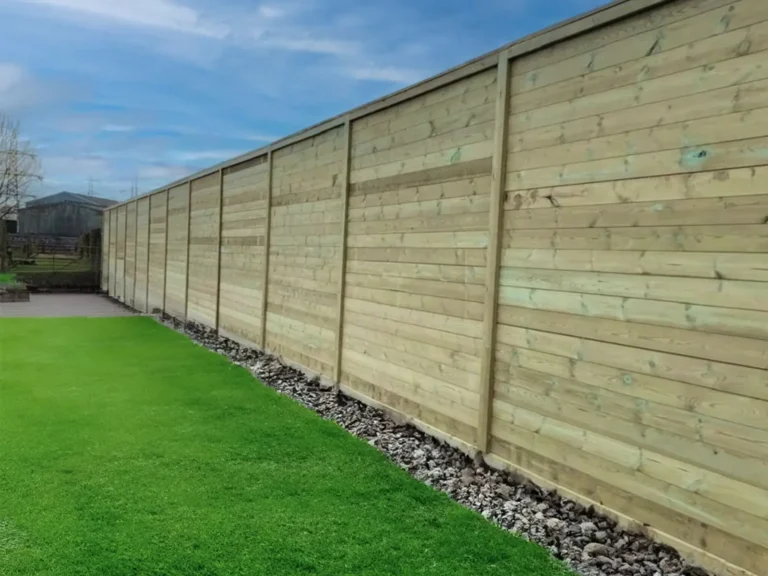
There’s something about wood that just sits better in a landscape, isn’t there? Particularly in rural settings. Timber fencing blends into woodland edges, farmland and public green spaces in a way steel simply can’t.
But aesthetics aside, timber has genuine practical strengths.
Adaptability on Uneven Ground
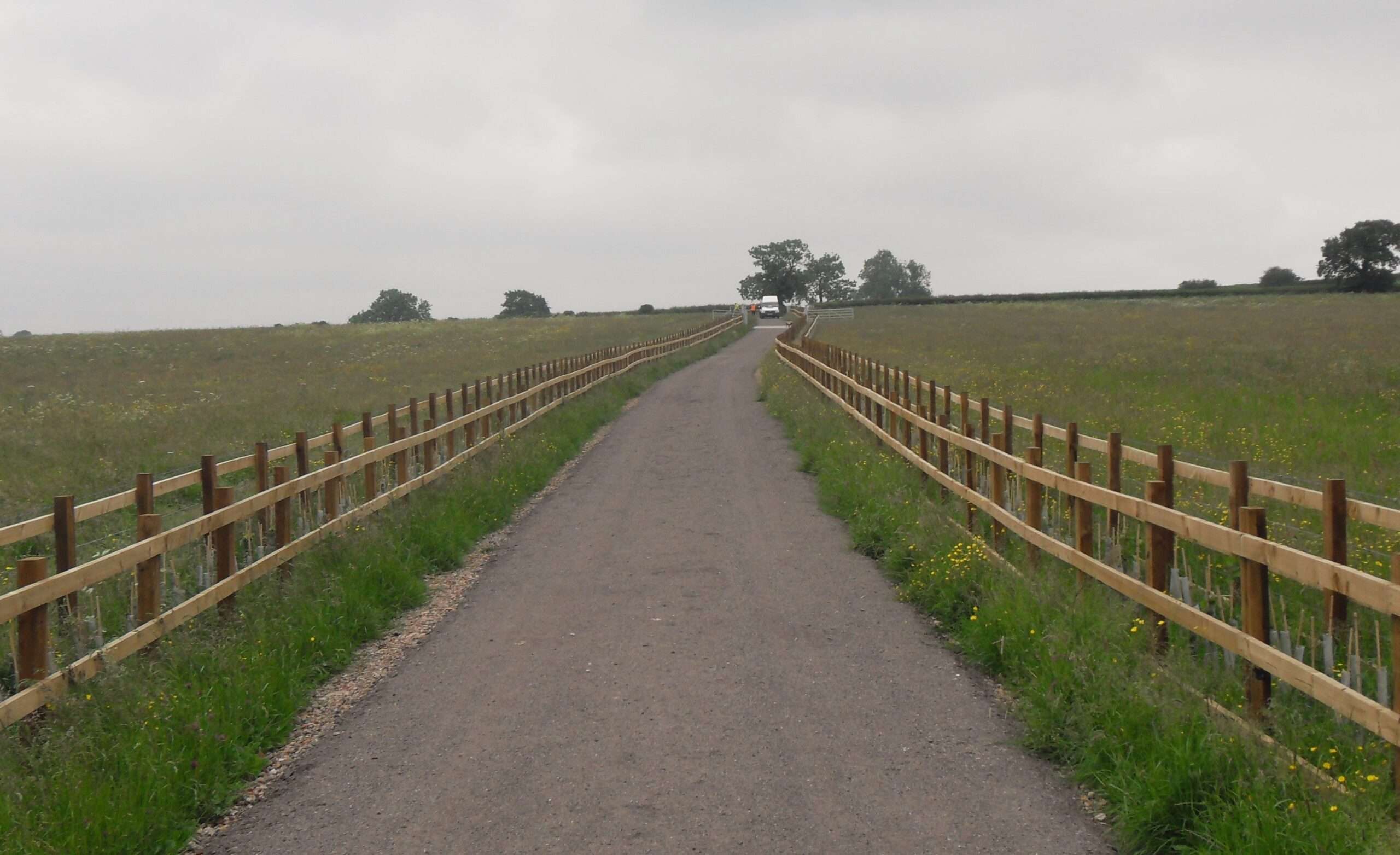
Rural terrain rarely behaves. Slopes, dips, soft ground after rain – you know how it goes. Timber systems, especially post-and-rail or stock fencing with timber posts, can be adjusted more easily on awkward gradients.
Steel systems can do it too, but they often require more precise setting-out.
Cost-Effective for Long Runs
For agricultural or boundary fencing over large distances, timber often offers a lower initial outlay. Particularly for:
- Stock fencing
- Post-and-rail
- Close-board perimeter fencing
That said, it depends on specification. Heavy-duty treated posts and high-quality rails aren’t bargain-basement materials.
Sustainability and Environmental Fit
In environmentally sensitive areas, timber tends to be viewed more favourably. It’s renewable, lower embodied carbon compared to many steel systems, and visually sympathetic.
When integrated within broader soft landscaping schemes, timber fencing complements planting and habitat creation rather than dominating it.
Where Timber Falls Short
Now for the honest bit.
Timber degrades. Eventually.
Pressure treatment extends lifespan considerably – 15 to 25 years isn’t unusual depending on exposure – but ground contact remains the vulnerable point. Wet soil. Repeated freeze-thaw cycles. Livestock pressure.
In commercial settings with high footfall or vandalism risk, timber can be damaged more easily than steel.
And ongoing maintenance isn’t zero. Posts loosen. Boards split. Fixings corrode.
It’s not a dealbreaker – just something to factor in properly.
Steel Fencing – Strength, Security, Longevity
Steel, on the other hand, brings a different kind of confidence. You install it once and, if specified correctly, it stays put.
There’s a reason steel dominates around infrastructure, utilities, schools and industrial estates.
Security Performance
Steel systems – from palisade to welded mesh – offer significantly higher resistance to climbing, cutting and forced entry. For sites where asset protection matters, that’s critical.
Insurance providers often favour steel fencing around commercial premises.
Longevity in Harsh Conditions
Galvanised and powder-coated steel performs exceptionally well in exposed environments. Coastal winds, roadside salt spray, heavy rainfall – it shrugs most of it off.
Where timber might begin to soften or warp after prolonged wet conditions, steel remains dimensionally stable.
Low Ongoing Maintenance
Aside from periodic inspection, steel fencing typically requires minimal upkeep. No rot treatment. No replacement boards. No re-fixing rails.
And for long-term asset management planning, that predictability matters.
Steel’s Limitations – It’s Not Perfect Either
Here’s the awkward bit.
Steel can look… industrial.
On a rural boundary? It can feel out of place. Even softened with green powder coating, it doesn’t quite disappear into the landscape like timber does.
Cost can also be higher upfront. Not always, but often – especially for heavy-duty security systems.
Installation requires accurate groundworks and proper setting-out. If posts are misaligned or foundations poorly prepared, the visual impact is noticeable. Steel is less forgiving.
And in genuinely remote agricultural settings, steel can sometimes be overkill.
Comparing Timber and Steel Fencing Side by Side
Rather than waffle on, here’s a practical comparison.
| Factor | Timber Fencing | Steel Fencing |
|---|---|---|
| Initial Cost | Often lower for long rural runs | Usually higher upfront |
| Lifespan | 15–25 years (treated) | 25+ years with galvanising |
| Maintenance | Moderate over time | Low |
| Security | Moderate | High |
| Aesthetic Fit in Rural Areas | Excellent | Variable |
| Resistance to Vandalism | Moderate | High |
| Environmental Integration | Strong | Limited |
| Installation Flexibility | High on uneven ground | Requires precision |
Of course, tables never tell the whole story. Context is everything.
Commercial Developments – What Tends to Work
Retail parks, business estates, schools, energy sites – these almost always lean towards steel. And for good reason.
Security compliance, durability, and liability concerns push decision-makers in that direction.
But interestingly, mixed approaches are increasingly common.
Perimeter security in steel. Internal boundaries in timber. Decorative timber screens at public-facing edges.
Blending materials can balance performance and appearance – and it avoids that fortress look which planners often dislike.
Rural and Agricultural Projects – Timber Still Dominates
Fields, bridleways, country parks, woodland schemes.
Timber remains the default in most rural environments. It’s sympathetic, practical and repairable. If a tractor clips a post, you replace the post. Sorted.
Livestock fencing in particular benefits from timber’s flexibility. Steel can withstand pressure, but it doesn’t absorb impact in the same forgiving way.
That said, steel strainers are sometimes used within predominantly timber systems. Again – hybrid thinking.
Long-Term Cost – Not Just the Quote Figure
Funny thing is, the cheapest quote isn’t always the cheapest solution.
Consider a 20-year lifespan.
If timber requires partial replacement at year 12 and ongoing minor repairs, the lifecycle cost narrows the gap with steel considerably.
Here’s a simplified lifecycle illustration:
| 20-Year Period Estimate | Timber | Steel |
|---|---|---|
| Initial Installation | Lower | Higher |
| Repairs & Replacements | Moderate | Low |
| Major Refurbishment | Possible | Rare |
| Overall Predictability | Variable | High |
It’s not about pushing one option. It’s about forecasting realistically.
Planning, Compliance and Environmental Considerations
Across the UK, planning departments increasingly scrutinise boundary treatments. Particularly near conservation areas or new housing developments.
Timber often gains easier approval in visually sensitive landscapes.
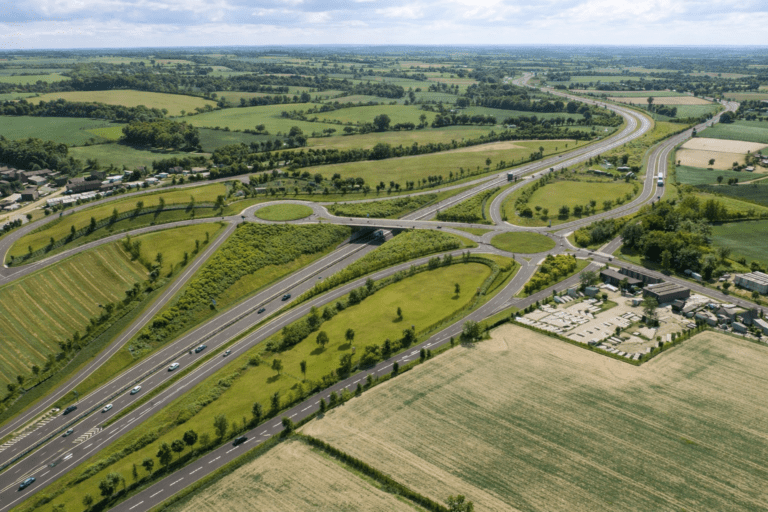
Steel, however, may be mandated around highways infrastructure or high-risk commercial sites.
Early consultation avoids headaches later. I’ve seen projects delayed because fencing details weren’t aligned with planning conditions. Bit of a faff, to be honest.
Integration With Wider Landscaping Schemes
Fencing doesn’t sit in isolation.
Where projects require coordinated timber and steel fencing solutions across commercial and rural zones, it makes sense to review options holistically rather than in isolation.
On large-scale landscaping contracts, it forms part of a wider package – planting, groundworks, ecological enhancements, earthworks and maintenance regimes. And material choice can influence everything from drainage to wildlife movement.
Where projects require coordinated timber and steel fencing solutions across commercial and rural zones, it makes sense to review options holistically rather than in isolation. Different zones. Different priorities. Same site.
Frequently Asked Questions
Is timber fencing environmentally better than steel?
It depends on sourcing. Sustainably certified timber has strong environmental credentials. Steel production has higher embodied carbon, but its longevity and recyclability offset that over time.
Not black and white.
How long does treated timber fencing last in the UK?
Typically 15–25 years depending on exposure, ground conditions and maintenance. Northern sites with high rainfall may see slightly reduced lifespan.
Is steel fencing always more secure?
In most commercial contexts, yes. Welded mesh and palisade systems outperform timber for anti-climb and anti-cut resistance.
Can timber and steel be combined?
Often the best answer. Timber for visual boundaries, steel for secure perimeters. It’s more common than people realise.
So Which Should You Choose?
Annoyingly – it depends.
For high-security commercial environments with long asset lifespans, steel tends to make sense.
For rural boundaries, parks, agricultural land or visually sensitive settings, timber often remains the natural choice.
Hybrid systems frequently provide the best balance.
And sometimes budget dictates the direction, even if the heart says otherwise.
I was going to say there’s a single “right” answer – but there isn’t. Context wins every time.
Conclusion
Choosing between timber and steel fencing for commercial and rural projects isn’t a simple materials comparison. It’s a strategic decision shaped by lifespan, security requirements, planning constraints, environmental fit and long-term maintenance planning.
Timber brings warmth, adaptability and landscape integration. Steel delivers durability, security and low maintenance.
Both have their place.
And when specified properly, both can perform spot on.

Killingley Insights is the editorial voice of NT Killingley Ltd, drawing on decades of experience in landscaping, environmental enhancements, and civil engineering projects across the UK.