Designing Durable Pathways and Bridleways for Public Access and Sustainability

Something I’ve noticed over the years, wandering around country parks and those odd little woodland shortcuts behind housing estates, is how much thought must go into a path before anyone sets foot on it. Sounds obvious, but it’s one of those things you only spot when a job’s been done badly. You’ll know the sort: puddles that stick around for a week, edges that crumble after one winter, a gradient that feels fine on paper but turns into a slip hazard after a bit of drizzle.
Creating pathways and bridleways that last isn’t a matter of chucking down some stone and hoping for the best. There’s the whole business of accessibility rules, local soil conditions, user needs, future maintenance, all that. And there’s also the quieter bits of decision making nobody sees. Why this width. Why this camber. Why this drainage channel. Sometimes there’s a compromise. Sometimes there’s a proper head scratcher and you have to rethink the whole job halfway through.
Anyway, this whole piece is about how to get these routes right. Not perfect. Just right for real use, British weather, and long term sustainability. I’ll get into gradients, materials, surface choices, and that peculiar dance between drainage and durability that every contractor seems obsessed with. If you want the practical, project-based view of it, see our section on pathway and bridleway construction on the main site, especially the part about long term repair costs and surface selection. You’ll find it tucked inside the broader context of pathways and bridleways at Killingley, which goes into more structural detail.
Right then. Let’s wander on.
Why Pathways and Bridleways Matter More Than People Think
Odd thing, paths. They’re everywhere, so they sort of disappear into the background. But if they vanish or degrade, people notice instantly. You get grumbling dog walkers, frustrated cyclists, volunteers roped into emergency repairs, and occasionally a councillor who wants answers because their inbox has filled up overnight. Public access relies on these routes being passable year round. That’s not easy when you consider how soaked half the UK gets every winter. Even places like Derbyshire or Staffordshire, which look dry on a sunny day, turn to soup at the first sign of proper rain.
I find bridleways particularly interesting. Horses behave differently to pedestrians. They compact soil more quickly. They kick out the sides of paths. They track water in odd ways. Designing something suitable for them isn’t just scaling up a footpath. You’ve got to think a little more laterally.
And then there’s accessibility. Lots of older rural routes were never designed for wheelchair users, mobility aids, or even pushchairs. Councils and landowners now need paths that everyone can use, which means gradients you can tackle without feeling like you’re climbing Snowdon, surfaces that don’t rut, and edges that don’t snag wheels.
Feels like a lot. Because it is.
What Makes a Pathway or Bridleway Durable?
Durability is a bit of a moving target. Weather shifts, user numbers rise, soil behaves badly, trees drop roots where you don’t want them. But every durable path I’ve ever seen shares a few traits:
• It drains properly.
• It fits into the landscape instead of fighting it.
• It’s made from the right material for the right setting.
• It has a gradient that respects accessibility guidelines.
• It receives maintenance that isn’t a faff for land managers.
I was going to add something about cost, but that’s implied. If a path fails early, the replacement is usually more expensive than just doing it sensibly upfront.
Section Break: Materials That Actually Work (Not the Ones That Look Good on Day One)
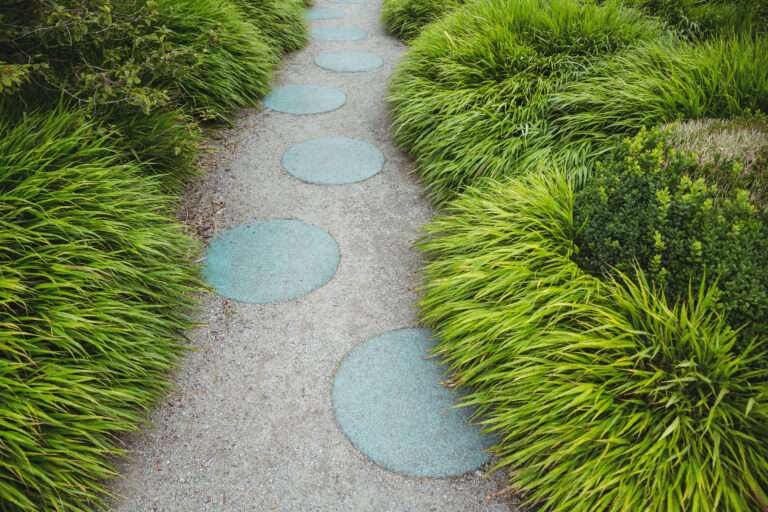
Funny thing is, the materials that work best outdoors are rarely the prettiest. Resin bound surfaces look delightful at first. Gorgeous even. But bridleways don’t take kindly to decorative finishes. Horses cut through anything too soft. Bikes scuff the edges where resin meets soil. And once the surface cracks, water gets in and your maintenance budget starts gasping for air.
A look at common surface types
Here’s a quick table to keep your head straight. It’s not the final word on materials, just a snapshot I’ve seen hold true across parks, estates, canal towpaths, and National Trust-style landscapes.
| Material | Typical Use | Strengths | Weak Points | Notes |
|---|---|---|---|---|
| Type 1 MOT stone | Footpaths, base layers | Cheap, stable, good drainage | Moves if applied too shallow | Needs compaction |
| Type 3 sub-base | Wet areas, sustainable surfaces | Very free draining | Can feel soft underfoot | Great under resin systems |
| Self-binding gravel | Country parks, heritage areas | Attractive, natural | Ruts with heavy traffic | Needs regular rolling |
| Asphalt (bitmac) | Cycle routes, busy footpaths | Very durable | Looks urban in rural areas | Excellent longevity |
| Hoggin | Rural bridleways | Natural look, easy to repair | Poor performance on steep slopes | Needs edging |
| Resin bound surfacing | High use routes | Smooth, accessible | Expensive and can crack | Good when installed properly |
You can argue about the pros and cons depending on your experience. People do. A lot. Some folk swear by hoggin, others say it only works on flat ground with wide drainage margins. In truth, the land tells you what will last. Clay soils behave differently to sandy ones. Shaded woodland paths need more wear resistance because moisture remains long after the rain stops.
I mean, none of this is glamorous. But once you understand what the ground will tolerate, the whole thing gets easier.
Gradients, Accessibility, and the Odd Science of Making a Hill Feel Less Like a Hill
Gradients get people in trouble. I’ve worked with councils who thought a slight incline would be fine because it looked gentle on site. They didn’t factor in how steep something becomes when wet leaves start sliding across it in October. Or how someone using an electric wheelchair feels about a five percent slope that goes on longer than expected.
So, let’s lay out some rough expectations:
| Path User | Comfortable Gradient | Notes |
|---|---|---|
| Wheelchair users | 1:20 or gentler | Steeper slopes allowed for short lengths |
| Cyclists | 1:12 | Can manage more but surface traction matters |
| Horses | 1:10 | Depends on ground conditions |
| General public | 1:12 to 1:16 | People vary, weather matters |
You might get away with steeper in places where there’s no alternative alignment. Nature wins sometimes. But if you can grade a path so it feels like a natural part of the terrain, people enjoy it more. It’s subtle. Barely obvious. And yet, when done right, you’ll get comments along the lines of: that walk felt easy today, didn’t it?
I reckon that’s the hallmark of decent design.
Drainage Patterns Nobody Thinks About Until They Go Wrong
Ah, drainage. I could go on for hours. Every path is essentially a water management system. Water either flows across it, alongside it, through it, or under it. Preferably not under it unless that’s planned. The moment water sits still, frost damage begins. The UK winter cycle of freeze and thaw ruins more paths than wear and tear ever will.
A few thoughts, scattered:
• Crossfall of 2 to 3 percent keeps water shifting sideways.
• French drains work wonders but clog if wrapped in poor geotextile.
• Camber helps on bridleways, especially on clay soil.
• Gullies and culverts need cleaning. People forget. Then routes flood.
• Trees nearby? Expect root heave. Build with flex in mind.
There’s a weird thing with drainage: do it well and nobody notices. Do it badly and the whole route becomes a local Facebook thread of complaints. Human nature, I suppose.
Construction Techniques That Keep Pathways and Bridleways Working Year After Year
Stopping a path from falling apart is more about the hidden bits underneath. The digging depth. The compaction rate. The type of edging used. A high quality surface on a poor base is pointless.
So, a few construction notes worth mentioning:
1. Sub-base depth changes everything
Some sites need 150 mm. Others need 300 mm because soils shift more. I’ve seen contractors try to cut corners here. It never ends well. Usually after the first bout of serious rain.
2. Geotextiles are misunderstood
People think geotextile fabric is optional. On soft ground, it stops the sub-base from sinking into soil. On stiffer ground, it stops fines migrating. Very dull engineering logic, but huge impact on durability.
3. Edging controls shape
Timber edging looks natural but rots too fast unless treated properly. Steel edging lasts ages but feels urban. Concrete edging works anywhere but can look out of place. Pick your compromise.
4. Jointing and rolling surface layers
This bit is almost an art. Self-binding gravel must be rolled wet. Resin needs ideal temperature. Asphalt wants perfect compaction or you get those wheel-track dents after a summer heatwave.
5. Thinking about future maintenance
Not glamorous but essential. Some surfaces are a quick rake and roll every year. Others require full resurfacing every 8 to 12 years. If a parish council can’t afford the upkeep, don’t choose a fussy surface.
Bit of a tangent: paths near rivers behave differently because the water table shifts. If you’ve ever walked along the River Trent near Newark in February, you’ll know what I mean. Ground squelches even on a cold day. Designing for that means open graded stone, extra drainage, and sometimes raised paths.
Public Safety and User Comfort
Comfort matters more than people admit. A path that jolts your ankles feels wrong. One that’s uneven is worse. Bridleways with sudden shifts in level can unsettle horses. Curves need visibility. Blind corners on mixed routes create conflict between cyclists and walkers.
And lighting. People assume rural paths should stay unlit. Fair enough in some cases. But certain public access routes benefit from low-level bollard lighting, especially near car parks or nature reserves used early in the morning. Not every area needs it though. Light pollution is a real thing.
A few questions people ask all the time:
Do pathways need handrails?
Sometimes. Steeper bits near steps or raised boardwalks benefit from them. They also help in frosty conditions.
What about tactile paving?
On accessible routes, yes. It helps visually impaired users tell when they’re joining a crossing or transition point.
Do bridleways need passing places?
On narrow tracks, definitely. Horses need space and so do people who aren’t comfortable walking close to them.
Environmental Considerations That Shape Design
Here’s where sustainability kicks in. Not as a buzzword but as practical land stewardship. The more a path blends into its landscape, the less likely it will cause erosion or habitat fragmentation.
Bits worth considering:
• Avoid cutting deep into banks unless stabilised properly.
• Use materials that match the soil colour where possible.
• Ensure drainage systems don’t redirect water into vulnerable habitats.
• Protect tree roots. They hate compaction.
• Use silt fences during construction.
I’ve seen a few jobs in the Peak District where the wrong material stuck out like a sore thumb. Bright golden gravel on dark peat. Looked odd. Blinded people on sunny days. Environmental groups complained. Contractors had to remove and replace it. Twice the cost for the sake of initial aesthetics.
Community Use and Wear Patterns
Paths used by dog walkers get very different wear patterns compared to commuter cycle routes. Same with bridleways popular with riding schools. You can predict some things:
• Dogs create little divots along edges because they run back and forth.
• Heavy cycling compresses the centre line.
• Horses cause edge erosion and widen the track over time.
• Wheelchairs need stable surfaces that won’t tear under turning wheels.
It’s not about preventing behaviour. It’s about designing for what people will naturally do.
Case Examples From Around the UK
Not actual project names, just composite examples that reflect common issues.
Midlands woodland corridors
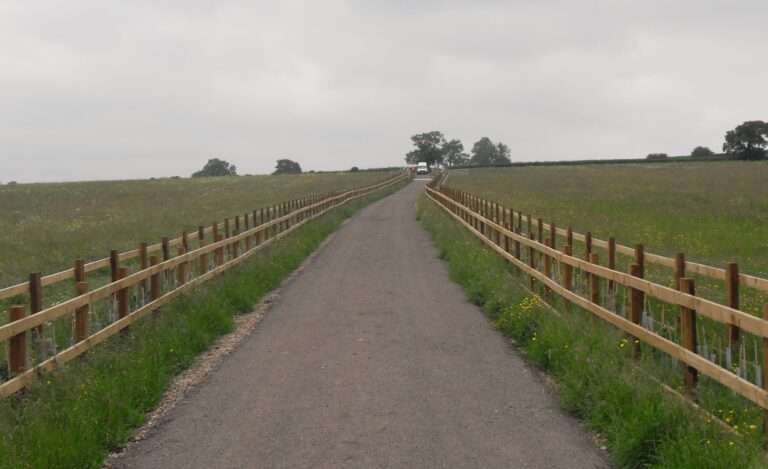
Clay soil. Slippery in winter. The best solution was a Type 1 base with hoggin top and wide drainage channels. Narrow paths failed. Wider ones worked because the edges didn’t crumble.
Sheffield to Rotherham greenway
Lots of cyclists. Asphalt was the clear winner. Anything looser would have scattered. They added low fencing to separate walkers from the fastest riders.
Lincolnshire bridle route
Flat landscape but extremely wet. Used Type 3 with an open drainage margin on each side. Horses loved it. Local walkers said it felt natural underfoot.
Surrey heritage estate
They insisted on self-binding gravel for aesthetics. Looked great but needed rolling three times a year. They accepted the maintenance because it matched the site’s character.
Maintenance Planning Nobody Mentions Until Too Late
Maintenance is where most public access routes succeed or fall apart. A path isn’t finished the day the contractor packs up. It’s only just started.
Some typical intervals:
| Task | Frequency | Notes |
|---|---|---|
| Drain clearance | Twice a year | Essential after autumn leaf fall |
| Surface top-up (gravel) | Every 12 to 24 months | Depends on traffic |
| Resurfacing (asphalt) | Every 8 to 15 years | Longer lifespan with good sub-base |
| Vegetation trimming | 3 to 4 times per year | Users need headroom |
| Edge repairs | As needed | More frequent on bridleways |
Bridleways usually need more side maintenance because horses disturb vegetation faster. Footpaths near schools erode more quickly. Cycle routes accumulate debris. There’s no one-size-fits-all.
How Sustainability Fits In
If a path lasts 20 years with minimal interventions, that’s sustainable. If it uses materials that don’t leach chemicals or create microplastic runoff, even better. There’s a growing trend for recycled content sub-bases, permeable surfacing, and minimal excavation. But, as always, the land decides what’ll work.
You can design for low carbon construction, fewer vehicle movements, local materials, and smarter water flow. Small gains add up. Some councils now track carbon impact of new infrastructure. It’s creeping into mainstream tendering.
FAQs (Informal but Useful)
Is a wider path always better?
Not really. Wider paths feel safer but cost more and disturb more soil. Sometimes they look out of place.
Can you reuse old path materials?
Often, yes. Old asphalt can be crushed and reused as sub-base. Saves money. Cuts waste.
Are horses and cyclists compatible on the same path?
Sort of. But design must allow for speed differences, surface wear, and visibility. Passing places help.
Does weather change the plan?
Absolutely. A dry August survey can deceive you. Visit a site after winter rain. You’ll see the truth.
What about anti-slip surfacing?
Great for timber boardwalks or steep ramps. Overkill for flat gravel routes.
Do paths need signage?
Most do. Even minimalist signs help users understand gradients, bridle rights, or cycle etiquette.
Conclusion
Pathways and bridleways look simple when you’re using them, which probably means they’ve been designed well. When they’re not, you feel it under your boots or wheels straight away. The work sits quietly beneath the surface: drainage channels that never clog, gradients that feel gentle without being flat, materials that suit the soil instead of arguing with it.
What I’ve found, looking at dozens of these projects, is that the best ones respect the landscape. They’re not trying to dominate it or transform it into something it can’t sustain. They follow the natural water flow. They work with the terrain. They give people a comfortable, reliable route without shouting about it.
And that’s the point really. A good path just works. Day after day. Season after season. Barely noticed, which is probably the highest compliment you can give it.

Killingley Insights is the editorial voice of NT Killingley Ltd, drawing on decades of experience in landscaping, environmental enhancements, and civil engineering projects across the UK.