Choosing the Right Plants for Summer and Winter Bedding in Public Spaces (Without Losing Your Mind)

Public spaces are unforgiving. If a planting scheme looks tired, everyone sees it. If it fails, it fails loudly. There’s no hiding a sad-looking bed outside a town hall, a supermarket entrance, or a housing development sign. And yet, plant choice for seasonal bedding is still treated like an afterthought more often than it should be.
Pick something colourful. Hope for the best. Replace it later.
That approach sort of works in private gardens. In public spaces? Not so much. Budgets are tighter, expectations are higher, and maintenance teams have about twelve other things to do before lunch. Choosing the right plants for summer and winter bedding isn’t about trends or personal favourites. It’s about durability, timing, behaviour, and how plants cope with real-world conditions. Mud on boots. Salt spray from roads. Kids cutting corners straight through the bed. Wind tunnelling between buildings. You know the drill.
I’ve found that when plant choice is done properly at the start, everything downstream gets easier. Maintenance, costs, visual impact. All of it. When it’s rushed, you spend the rest of the year firefighting.
So, let’s talk about how to choose bedding plants that genuinely work in public spaces. Summer and winter. The glamorous bits and the dull but important ones too.
First, a Reality Check About Public Spaces
Public planting isn’t the same as a back garden. It just isn’t.
Conditions are harsher. Soil is often compacted, shallow, or full of rubble. Watering is inconsistent. Vandalism happens. Sometimes deliberate, sometimes just people being people. Add British weather into the mix – late frosts, sudden heatwaves, sideways rain – and plant choice becomes less about perfection and more about resilience.
That’s why plant performance matters more than appearance on a label. A plant that looks stunning in a nursery pot but collapses under mild stress is no use at all. Conversely, a slightly boring option that keeps going for months? Gold dust.
I was going to say aesthetics don’t matter… but no, that’s not quite right. They do. They just come second.
Summer Bedding: Plants That Can Take a Knock (And Keep Flowering)
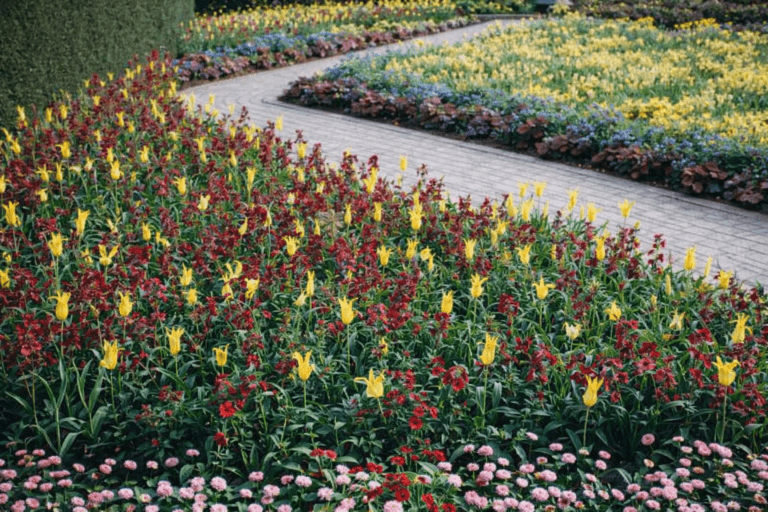
Summer bedding carries the biggest visual burden. This is when public spaces are busiest. School holidays. Outdoor seating. Events. Longer days. People notice planting far more between May and September than at any other time of year.
Which is why summer bedding plants need to do three things well:
- Establish quickly
- Flower for a long time
- Cope with stress without sulking
That last one gets overlooked. Stress tolerance is everything in public spaces.
Annuals vs Perennials (A Quick Detour)
Annuals dominate summer bedding for a reason. Fast growth, big colour, predictable behaviour. You plant them, they perform, they’re done. Perennials can work too, but they require a different mindset and usually more patience.
In highly visible public beds, annuals are still the backbone. They’re easier to control. Easier to replace. Easier to refresh.
Reliable Summer Bedding Plants for Public Areas
Not exciting. Just dependable. And honestly, that’s the point.
| Plant | Why It Works in Public Spaces | Potential Downsides |
|---|---|---|
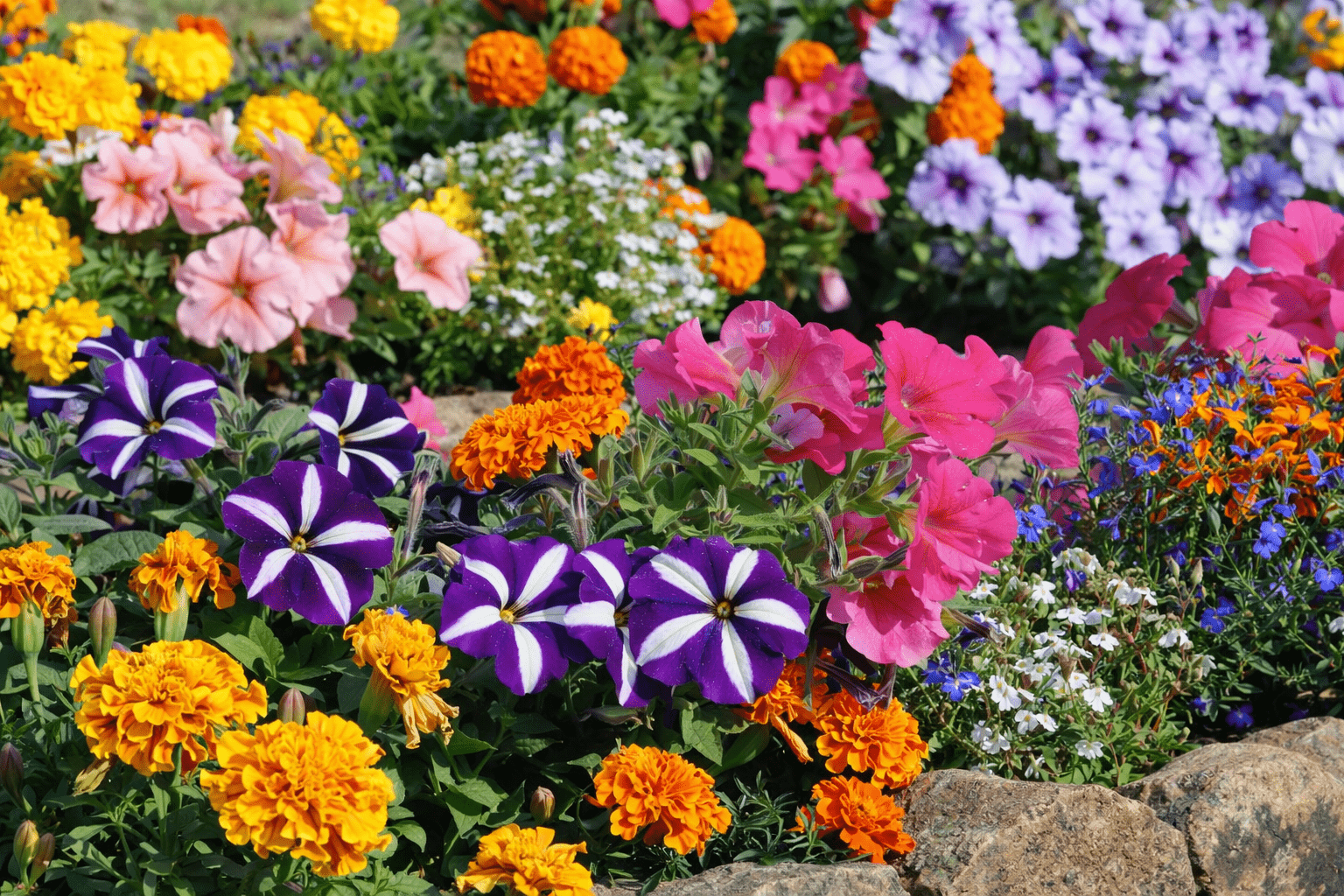
| Begonia | Handles shade, long flowering | Poor drainage causes rot |
| Geranium (Pelargonium) | Tough, drought tolerant | Needs deadheading |
| Tagetes | Pest resistant, bold colour | Can look heavy en masse |
| Petunia | Strong impact, trailing forms | Needs regular watering |
| Impatiens | Good for sheltered shade | Hates cold snaps |
There are others, obviously. But these keep turning up because they behave themselves.
One thing worth noting – mixing plant heights helps beds look fuller for longer. Flat, uniform planting looks great for about three weeks. Then it starts to feel thin. Layering buys you time.
Winter Bedding: Less Glamour, More Responsibility
Winter bedding has a harder job, even though it gets less credit. Its role isn’t to dazzle. It’s to stop spaces looking abandoned.
And that matters more than people realise.
Bare soil in winter looks neglected. Even a simple planting scheme signals care. Continuity. Management. Especially around public buildings or residential estates.
Winter bedding plants need to be chosen with a different lens. Cold tolerance, yes. But also structure, foliage interest, and the ability to sit quietly without constant attention.
Foliage Is Doing Most of the Work
Flowers fade faster in winter. Days are shorter. Light levels drop. Frost happens. Which is why foliage-heavy planting tends to outperform flower-led schemes between November and March.
Think contrast. Texture. Shape. Colour that isn’t reliant on blooms.
Plants with darker leaves often perform better visually in winter beds, especially against pale paving or stone. It’s a small thing, but it makes a difference on grey days. And we have plenty of those.
Winter Bedding Staples That Rarely Let You Down
| Plant | Strengths in Winter Schemes | Notes |
|---|---|---|
| Pansy | Cold tolerant, long flowering | Needs good soil prep |
| Viola | Smaller but tougher than pansies | Easy to mass plant |
| Heuchera | Foliage colour and structure | Doesn’t like waterlogging |
| Ornamental cabbage | Bold texture, frost hardy | Short seasonal window |
| Ivy (low-growing) | Evergreen coverage | Needs careful placement |
Again, not thrilling. But effective.
Designing for Changeover (This Is Where Things Go Wrong)
Plant choice isn’t just about individual seasons. It’s about how summer and winter schemes connect. Or don’t.
I’ve seen winter plants shoved into exhausted soil after summer bedding was ripped out too late. Predictably, they struggled. Then people blamed the plants. It wasn’t their fault.
Good changeovers start months earlier, with plant selection that allows overlap or at least smooth transition. Bulbs under summer bedding. Hardy winter plants introduced before the first frost. Soil improvement planned into the calendar, not treated as an optional extra.
This is where well-planned summer and winter bedding schemes quietly outperform rushed ones. The difference isn’t dramatic on day one. It shows over time. Fewer failures. Less replanting. Better coverage through awkward in-between periods.
Public Space Variables That Should Influence Plant Choice
This is the bit that’s easy to ignore when you’re ordering plants off a list.
Location, Location, Location
Town centres behave differently to housing estates. Retail parks aren’t the same as hospital grounds. A bed outside a leisure centre gets more footfall than one next to an office block.
And then there’s microclimate. Wind tunnels between buildings. Heat reflected off paving. Shade from mature trees. All of it matters.
A south-facing bed in Nottingham city centre will behave very differently to a shaded site in a Derbyshire village. Same plants. Totally different outcome.
Soil Quality (Often Poor, Let’s Be Honest)
Public beds are frequently built on made-up ground. Compacted. Low in organic matter. Drainage all over the place.
Plants that tolerate poor soil are worth their weight in gold here. Improving soil helps, obviously, but plant choice still needs to assume conditions won’t be perfect.
Maintenance Reality
There’s the maintenance plan on paper. Then there’s what actually happens.
Watering schedules slip. Deadheading doesn’t happen weekly. Fertiliser applications get delayed. So plant choice needs to allow for that. Not ideal. Just real.
Sustainability and Public Perception
Sustainability comes up a lot in discussions about bedding. Sometimes with good reason. Sometimes as a stick to beat it with.
Seasonal bedding isn’t inherently unsustainable. Wasteful planting is. There’s a difference.
Choosing robust plants, reducing replacement cycles, integrating perennials and bulbs where possible – these things all help. Peat-free composts too, though they require more careful watering early on.
Public perception matters as well. Residents often expect colour. Removing bedding entirely in favour of shrubs can feel like a downgrade, even if it’s ecologically sound. Balancing expectations with environmental goals is part of the job.
I was going to say there’s a perfect answer here… but no. It’s always a compromise.
Frequently Asked Questions (Because They Always Come Up)
Are bedding plants suitable for all public spaces?
Not always. High-traffic areas with minimal maintenance budgets may be better served with perennial planting or hard landscaping. Bedding works best in focal areas.
How long should summer bedding last?
With good plant choice and basic care, from late May through to early autumn. If it’s failing by July, something’s off.
Is winter bedding worth the effort?
Yes. Visually and psychologically. It maintains a sense of order when everything else looks bleak.
Can the same beds be used year after year?
Absolutely. But soil improvement and rotation matter. Otherwise performance drops off quickly.
A Small Digression About Expectations
People have strong opinions about flowers. More than you’d think.
Some want bold colour everywhere. Others complain it’s too much. Some want “low maintenance”, then complain when beds look restrained. You can’t please everyone.
What you can do is choose plants that behave predictably, look cared for, and don’t demand constant rescue. That tends to keep most people happy. Or at least quiet.
Pulling It Together
Choosing the right plants for summer and winter bedding in public spaces isn’t about creativity alone. It’s about judgement. Understanding how plants behave when conditions aren’t ideal. Accepting limitations. Planning ahead.
When plant choice is done well, everything else flows more easily. Maintenance becomes routine instead of reactive. Budgets stretch further. Spaces look cared for, even in February.
And when it isn’t done well? You spend the year apologising for beds that never quite recover.
Better to get it right at the start.

Killingley Insights is the editorial voice of NT Killingley Ltd, drawing on decades of experience in landscaping, environmental enhancements, and civil engineering projects across the UK.