Strong, Secure and Still Good-Looking: Getting the Balance Right in Modern Fencing Schemes

Fencing used to be simple. Keep livestock in. Keep people out. Mark a boundary. Job done.
Not anymore.
Modern fencing schemes – whether around housing developments in Nottingham, logistics hubs off the M1, country estates in Derbyshire or public parks in Sheffield – are expected to do far more. They need to last. They need to deter. And they need to look right.
That last bit matters more than some engineers like to admit.
Durability, security and aesthetics don’t always pull in the same direction. Push one too hard and something else gives. Steel palisade might tick every security box, but drop it along a heritage boundary and you’ll have planners raising eyebrows. Go too decorative on a commercial site and maintenance teams will curse you in five years.
So how do you balance it? That’s the real question.
Durability – Because Nobody Wants to Revisit It in Five Years
Let’s start with durability. It’s the least glamorous element, yet the one that tends to define whether a scheme was successful.
Across the UK, we don’t exactly enjoy kind weather. Coastal salt air in the North East, persistent rain across the Pennines, freeze-thaw cycles in rural Lincolnshire – fencing systems take a beating.
A scheme that looks spot on at handover can deteriorate surprisingly quickly if material choice doesn’t reflect exposure conditions.
Galvanised steel, properly coated, performs exceptionally well in harsh environments. High-quality treated timber, installed with correct post depth and drainage consideration, can last decades too. But specification matters. Ground conditions matter. Installation quality matters even more.
I’ve seen beautiful fencing around new-build estates in the Midlands start leaning within two winters. Not because timber is flawed – because the ground preparation wasn’t thorough enough.
Durability isn’t just about material. It’s about understanding the site.
Security – It’s Not Just About Height
Security is often measured in metres. Taller equals safer, right?
Not always.
Security performance depends on:
- Anti-climb characteristics
- Resistance to cutting
- Fixing integrity
- Visibility through panels
- Access control points
Schools, substations, commercial depots – they all have different risk profiles. Welded mesh systems, for instance, offer strong anti-climb resistance while maintaining visibility for CCTV. Solid timber screens, by contrast, may reduce visibility and create hiding points.
And here’s where the balancing act begins.
Overly aggressive security design can create an unwelcoming environment. Particularly in public-facing schemes.
There’s a reason many modern developments now favour powder-coated mesh in muted tones. It blends better. It feels less fortress-like. Still secure – just less shouty about it.
Aesthetics – The Quiet Influencer
Some stakeholders downplay aesthetics. They shouldn’t.
Planning authorities across the UK increasingly scrutinise boundary treatments. Especially in conservation areas or on the edge of rural settlements. A poorly chosen fencing system can delay approval.
Visual integration isn’t about making something pretty. It’s about making it appropriate.
Timber post-and-rail along a bridleway in the Peak District feels natural. Steel palisade there would feel intrusive. Conversely, timber along the perimeter of a high-security industrial facility in Rotherham would raise eyebrows for different reasons.
And then there’s residential development. Buyers notice fencing. They notice leaning posts. They notice inconsistent finishes.
It contributes to perceived quality.
You can’t ignore that.
Where the Tension Appears
Here’s the awkward bit.
Durability often pushes you towards heavier materials. Security leans towards steel. Aesthetics sometimes leans towards timber or softer finishes.
So what gives?
In practice, modern fencing schemes increasingly adopt hybrid approaches.
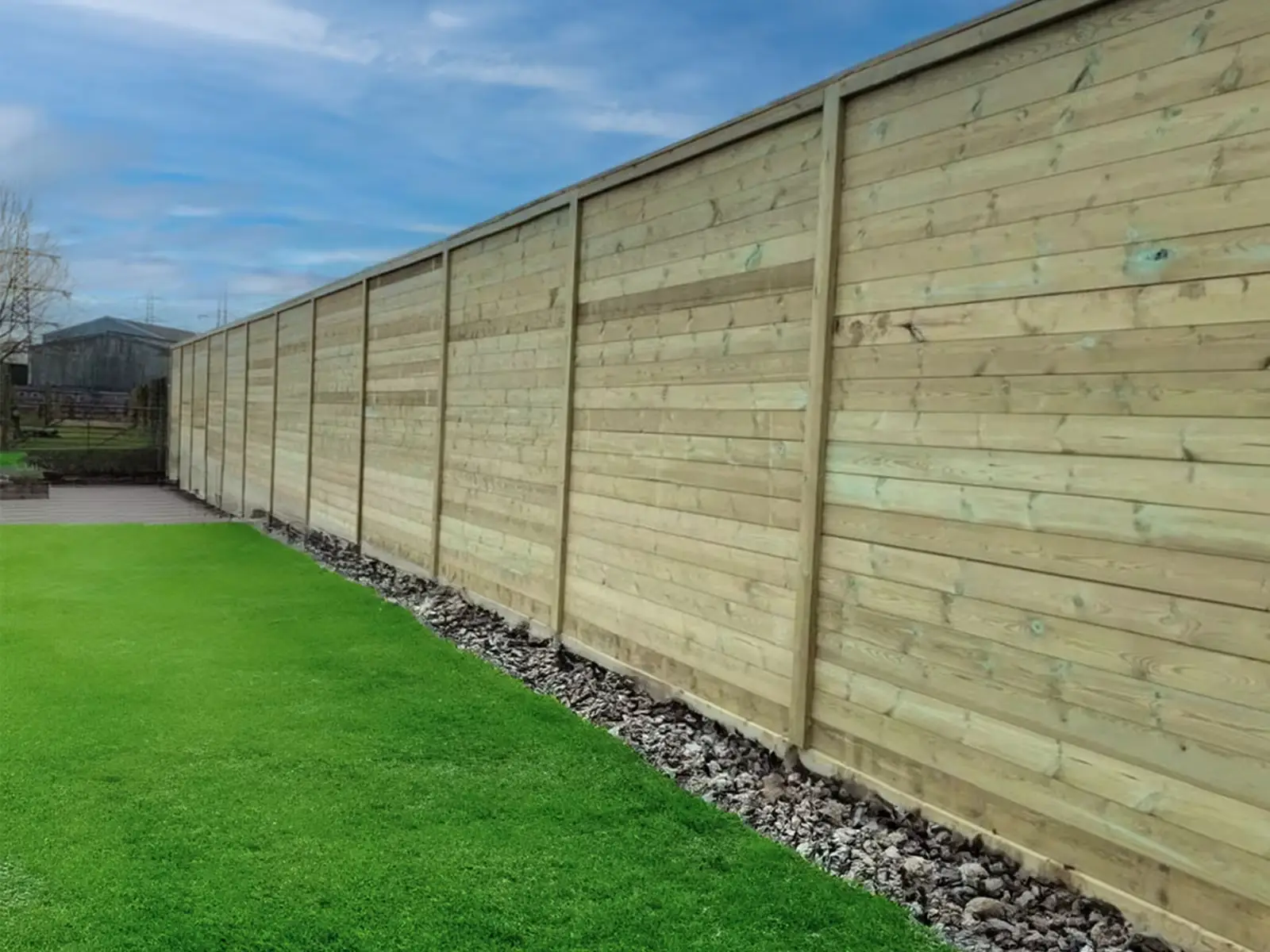
Timber screening panels in public-facing areas. Welded mesh behind planting zones. Steel posts combined with timber infill. It’s not about compromise in a negative sense – it’s about intelligent layering.
Funny thing is, when it’s done well, most people don’t even notice the engineering decisions behind it. They just see something that looks right and feels secure.
Comparing Key Considerations
To keep this grounded, here’s a practical comparison.
| Factor | Timber Systems | Steel Systems |
|---|---|---|
| Visual Warmth | High | Moderate |
| Lifespan | 15–25 years typical | 25+ years |
| Maintenance | Periodic checks | Lower frequency |
| Security Rating | Moderate | High |
| Planning Approval Ease | Often favourable in rural settings | May require justification |
| Vandal Resistance | Moderate | High |
Again, tables simplify things. But they help frame the conversation.
Landscaping Integration – It’s All Connected
Fencing rarely stands alone. It interacts with planting schemes, drainage infrastructure, pathways and lighting.
A well-considered boundary can enhance biodiversity corridors, guide pedestrian movement and reinforce sightlines.
For schemes that demand both resilience and visual sensitivity, investing in professional fencing for landscaping and infrastructure projects ensures durability, security and design intent are considered together from day one.
And in larger schemes – highways improvements, flood alleviation works, commercial infrastructure – fencing forms part of a wider design strategy.
When specifying <a href=”https://www.killingley.co.uk/soft-landscaping/timber-steel-and-agricultural-fencing/”>professional fencing for landscaping and infrastructure projects</a>, decisions need to align with civil engineering constraints as much as visual aspirations.
That means thinking about underground services. Soil stability. Future maintenance access. It’s not glamorous, but it’s crucial.
Real-World UK Context – It’s Not One-Size-Fits-All
A housing development in Chesterfield isn’t the same as a business park outside Leeds. A rural estate near Bakewell doesn’t operate like a logistics centre near Doncaster.
Local context shapes expectations.
In some northern towns, brick walls combined with metal railings remain common in residential frontages. Elsewhere, close-board timber dominates.
Public perception matters too. In higher-density urban areas, visible security measures may reassure residents. In rural villages, heavy security fencing may feel unnecessary and visually harsh.
There’s no universal template. Which makes it interesting – and occasionally frustrating.
Installation Quality – The Hidden Decider
Material debates can distract from a more important factor.
Installation.
Poorly set posts undermine even the most robust steel systems. Incorrectly braced timber strainers compromise wire tension. Fixings matter. Alignment matters.
And then there’s drainage. If posts sit in persistently waterlogged ground without consideration, lifespan shortens dramatically.
In my experience, projects that invest in proper groundwork and supervision outperform those that focus solely on material choice.
It’s less visible. But it’s everything.
Frequently Asked Questions
Is steel always more durable than timber?
In exposed environments, galvanised steel generally offers longer lifespan. However, high-quality treated timber performs very well when installed correctly. Context matters.
Can fencing be both secure and attractive?
Yes – through thoughtful design. Powder-coated mesh systems, timber screening, integrated planting and careful colour choice can soften secure boundaries.
How do planners assess fencing schemes?
They consider visual impact, height, material appropriateness and surrounding context. In conservation areas, traditional materials often gain preference.
Does better fencing increase property value?
For commercial sites, secure boundaries enhance asset protection. In residential developments, consistent, well-maintained fencing contributes to overall appeal.
The Role of Colour and Finish
Oddly enough, colour can shift perception significantly.
Green-coated mesh in rural settings blends into hedgerows. Dark grey steel suits contemporary commercial architecture. Natural timber ages gracefully – assuming maintenance is consistent.
Bright galvanised finishes can appear harsh in certain landscapes. Though they mellow over time.
Little details matter.
Lifecycle Thinking – Because Budgets Aren’t Infinite
Durability and security have cost implications. Heavier steel systems cost more upfront but may reduce long-term maintenance. Timber may require occasional board replacement but cost less initially.
Here’s a simplified lifecycle perspective.
| 20-Year Horizon | Timber | Steel |
|---|---|---|
| Initial Cost | Moderate | Higher |
| Maintenance Cost | Moderate | Low |
| Replacement Risk | Partial elements | Rare |
| Visual Ageing | Natural weathering | Stable finish |
Budget decisions often come down to whether capital expenditure or long-term operational cost takes priority.
And sometimes – let’s be honest – procurement timelines dictate choices more than strategic thinking does.
Finding the Balance
So where does this leave us?
Durability demands robust specification. Security demands resistance and reliability. Aesthetics demands sensitivity and context awareness.
When all three are considered together from the outset, solutions become clearer. When one is treated as secondary, compromises appear later.
I was going to say there’s a formula – but there isn’t. It’s more of a judgement call shaped by experience, local conditions and stakeholder expectations.
What works in Derbyshire farmland won’t necessarily work on a Sheffield industrial estate. What suits a school perimeter might feel excessive around a landscaped business park.
And that’s fine.
Conclusion – Intelligent Compromise, Not Conflict
Modern fencing schemes don’t have to choose between durability, security and aesthetics. They just need to acknowledge that each factor pulls differently.
Robust materials ensure longevity. Thoughtful design protects assets. Sensitive detailing ensures schemes feel appropriate rather than imposed.
When those elements align, fencing becomes part of the landscape – secure, long-lasting and visually coherent.
Quietly doing its job.

Killingley Insights is the editorial voice of NT Killingley Ltd, drawing on decades of experience in landscaping, environmental enhancements, and civil engineering projects across the UK.