Utilities Repair Works in Hard Landscaping: How Surfaces Get Restored Without the Usual Headaches

Hard landscaping has a funny habit of looking indestructible. Block paving. Kerbs. Tarmac. Concrete slabs that feel like they’ve been there since the Romans. Then someone digs a trench for a water main or a cable run, and suddenly the illusion collapses. What’s left is a scar straight through a car park, footpath, courtyard, or access road. Ugly, uneven, and usually annoying for everyone involved.
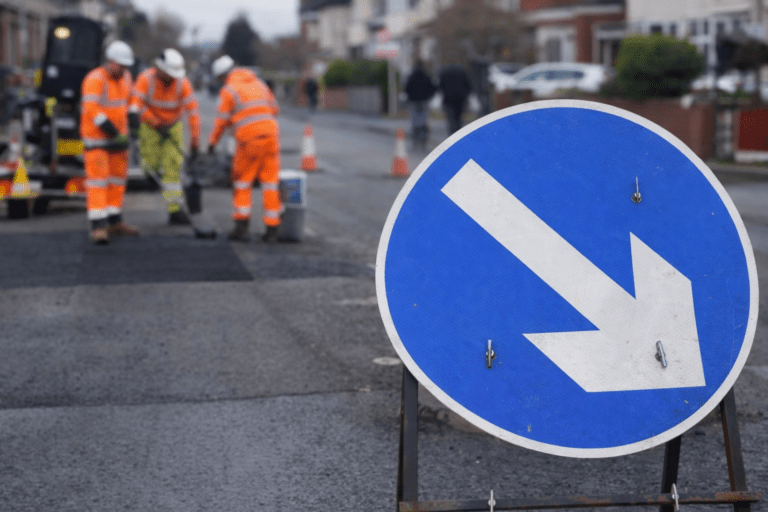
Utilities repair works exist to put that right. Not just to fill the hole, but to reinstate the surface so it looks and performs as if nothing ever happened. Or close enough that no one notices. That’s the goal, anyway.
I’ve seen plenty of sites where the dig was tidy, the service installation spot on, and the reinstatement… well, let’s just say it let the side down. Trip hazards. Patchy finishes. Different colours of tarmac stitched together like a bad quilt. It’s a bit of a faff to sort after the fact, and it costs more than doing it properly first time.
So let’s talk about utilities repair works in hard landscaping. What they involve. Why they matter more than people think. And how they can be done safely and efficiently without turning a simple repair into a long-running headache.
What utilities repair works really cover
People hear “utilities repair works” and assume it’s just about patching a hole. Shovel some material back in, compact it, chuck a bit of tarmac on top, job done. In reality, there’s more to it. Quite a bit more.
Utilities repair works sit at the overlap between civil engineering and hard landscaping. They deal with reinstating surfaces after underground works for:
- Water and drainage repairs
- Gas installations and upgrades
- Electricity and telecoms cabling
- Fibre broadband rollouts
- District heating systems
Each utility has its own requirements, depths, safety constraints, and reinstatement standards. And each surface type reacts differently once it’s been disturbed.
Block paving needs to go back in level, with correct jointing and edge restraint. Tarmac needs proper base layers and compaction or it’ll sink within months. Concrete wants curing time and clean edges. Resin-bound surfaces are a whole different beast altogether.
Miss one step, rush the process, or use the wrong materials, and the surface fails. Sometimes quickly. Sometimes just slowly enough that everyone argues about whose fault it is.
Why reinstatement is often the weak link
Here’s the awkward truth. The underground works get the attention. The reinstatement gets rushed.
Budgets get tight. Deadlines loom. Weather turns. Someone decides the surface repair can be “temporary for now”. And temporary has a habit of becoming permanent, doesn’t it?
In my experience, most surface failures after utility works aren’t caused by poor digging. They’re caused by poor reinstatement. Inadequate compaction. Incorrect layer depths. Skipping edge restraints. Or ignoring drainage paths that were there for a reason.
And once a surface starts to fail, it rarely fixes itself. It sinks, cracks, puddles form, frost gets in, and suddenly a neat trench becomes a maintenance issue that keeps coming back.
That’s where proper utilities repair works earn their keep.
The safety side people forget about
It’s tempting to see surface repairs as cosmetic. A visual tidy-up. But there’s a safety angle that can’t be ignored.
Uneven paving creates trip hazards. Sunken tarmac collects water, which freezes. Broken edges catch tyres, prams, wheelchairs. In commercial and public settings, that’s a liability waiting to happen.
Local authorities and asset owners know this. That’s why reinstatement standards exist. Why inspections happen. Why some repairs get rejected and redone at the contractor’s expense.
Doing utilities repair works properly isn’t just about appearances. It’s about compliance, duty of care, and keeping people moving safely across the site.
Different surfaces, different headaches
Not all hard landscaping is created equal. Utilities repair works need to adapt to what’s already there.
Block paving and modular surfaces
Block paving looks forgiving. Lift the blocks, dig, reinstate, put them back. Easy. Except it isn’t.
The sub-base needs to be rebuilt to the correct depth and compacted in layers. Bedding sand has to be levelled properly. Blocks need to be reinstated in the original pattern, not “near enough”. Jointing sand matters more than people think. Get it wrong and the blocks creep, spread, or rock under foot.
And colour variation? That’s another issue. Old blocks fade. New ones don’t. Matching takes experience and sometimes a bit of creative swapping.
Tarmac and asphalt
Tarmac repairs live or die by preparation. The edges of the cut need to be clean. The base needs proper compaction. The asphalt itself needs laying at the right temperature and thickness.
Cold joints are a common failure point. So is feathering edges instead of saw-cutting properly. It might look tidy on day one. Six months later, it’s cracked and sinking.
Concrete slabs and yards
Concrete doesn’t forgive shortcuts. It wants clean edges, correct reinforcement where needed, and time to cure. Traffic too soon and it cracks. Poor joint alignment and it looks patchy forever.
In industrial yards, concrete repairs also need to consider loading. Forklifts don’t care if the surface looks nice. They care whether it holds up.
Resin-bound and decorative finishes
These are the trickiest. Colour matching. Aggregate size. Resin ratios. Seam lines that show forever if they’re not done properly.
Sometimes the best decision is to repair a larger area than strictly necessary, just to avoid an obvious patch. That’s a conversation worth having upfront.
Efficiency without cutting corners
Everyone wants utility works done quickly. Roads reopened. Access restored. No one hanging about. Fair enough.
Efficient utilities repair works don’t mean rushing. They mean planning. Sequencing. Using the right kit and people.
For example:
- Coordinating excavation and reinstatement so surfaces aren’t left exposed
- Using rapid-curing materials where appropriate
- Scheduling works around weather, not fighting it
- Ensuring materials are on site when needed, not “later today”
Efficiency is about reducing rework. Because nothing slows a job down like having to redo it.
Where specialist utilities repair works come in
There’s a reason experienced contractors specialise in this stuff. It sits in an awkward middle ground. Too detailed for general civils. Too technical for basic landscaping.
A team that understands surface construction, reinstatement standards, and the realities of live utility environments makes a huge difference. It’s why many asset owners and developers turn to specialist utilities repair works rather than treating reinstatement as an afterthought.
Not because it’s flashy. But because it works.
UK-specific quirks that complicate things
Working in the UK brings its own challenges. Old infrastructure. Mixed surface types. Tight sites. And weather that changes its mind halfway through the day.
Victorian drainage routes under modern paving. Services stacked on top of each other. Conservation areas with strict material requirements. New housing estates where everything looks the same until you try to match it.
Then there’s rain. Relentless, sideways rain that turns neat trenches into muddy channels if timing’s off by a day.
Good utilities repair works take all that into account. Not perfectly, but realistically.
Temporary versus permanent reinstatement
A quick word on temporary repairs. They have a place. Sometimes a trench needs making safe until a permanent repair can be scheduled. That’s fine. Sensible, even.
Problems start when temporary becomes permanent by default. Cold-lay patches left in place. Loose plates forgotten about. Barriers removed too early.
Temporary repairs should be just that. Clearly identified, monitored, and replaced properly when conditions allow.
Common mistakes that come back to bite
I’ve seen these crop up again and again:
- Under-compacted backfill that settles later
- Poor edge detailing where new meets old
- Ignoring drainage falls and levels
- Mismatched materials that look patchy
- Reopening surfaces too soon
None of them are dramatic at the time. All of them cause problems later.
Costs, budgets, and the false economy problem
It’s tempting to save a bit on reinstatement. Shave the scope. Use cheaper materials. Skip a layer.
Short-term saving. Long-term cost.
Failed repairs mean callbacks. Complaints. Claims. And sometimes full resurfacing that could’ve been avoided. Doing utilities repair works properly is rarely the cheapest option upfront. It’s often the cheapest over the life of the asset.
That’s not a sales pitch. It’s just maths.
A quick comparison of surface reinstatement considerations
| Surface type | Key reinstatement challenge | Typical failure if done badly |
|---|---|---|
| Block paving | Sub-base and jointing accuracy | Rocking, spreading, trip risks |
| Tarmac/asphalt | Compaction and clean joints | Cracking, sinking |
| Concrete | Curing time and edge detailing | Cracks, spalling |
| Resin-bound | Colour match and seamless joins | Visible patches, delamination |
| Slabs and flags | Level bedding and alignment | Uneven surfaces |
Simple table. Plenty of pain behind each row.
FAQs people keep asking
How long should utilities repair works last?
Done properly, they should last as long as the surrounding surface. There shouldn’t be a “weak spot” where the trench was.
Can repairs be invisible?
Sometimes. Often close enough that only someone looking for it will notice. Decorative surfaces are harder, but good work minimises the visual impact.
Does weather really matter that much?
Yes. Rain, frost, and temperature affect materials and compaction. Pushing on regardless usually shows later.
Who’s responsible if a repair fails?
Depends on contracts and standards. But failed reinstatement almost always ends up costing someone time and money.
Pulling it all together
Utilities repair works in hard landscaping aren’t glamorous. They don’t get the attention new builds do. But they’re quietly essential.
They keep sites safe. They protect assets. They stop small problems becoming expensive ones. And when done well, they disappear into the background, which is exactly what they’re meant to do.
I was going to say it’s all about the finish… but no, that’s not quite right. It’s about what’s underneath, how it’s rebuilt, and how the surface is put back together as a whole.
Get that right, and everything else falls into place. Or stays flat, level, and properly sorted. Which is the point, really.

Killingley Insights is the editorial voice of NT Killingley Ltd, drawing on decades of experience in landscaping, environmental enhancements, and civil engineering projects across the UK.