Minimising Disruption During Utilities Repair Works in Public Spaces: Keeping Places Moving While the Ground’s Open

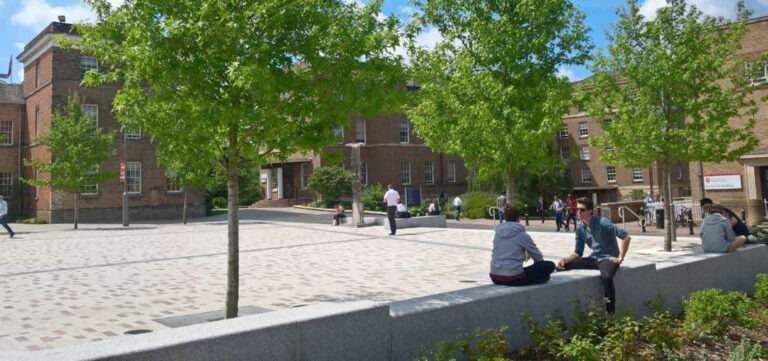
Public spaces are unforgiving places to work. There’s no hiding. No shutting the gate and cracking on quietly. Everything happens in full view, with prams, delivery vans, dog walkers, shop owners, commuters, and that one bloke who always wants to know what’s going on standing just a bit too close.
Utilities repair works in public spaces are necessary. Everyone gets that. Water pipes burst. Cables fail. Drains collapse. But tolerance for disruption is thin. Very thin. Especially when the works drag on, access is unclear, or the surface gets left in a mess.
I’ve watched perfectly reasonable repair jobs turn into local talking points simply because no one thought through how people would get past, where the noise would land, or how long a “temporary” barrier would sit there looking forgotten. It doesn’t take much.
Minimising disruption isn’t about pretending works won’t inconvenience anyone. That’s unrealistic. It’s about planning, behaviour, communication, and reinstatement that doesn’t leave the place looking worse than before. Sorted properly, most people barely remember the works happened. Which is the aim.
What disruption really means in public spaces
Disruption isn’t just noise and holes in the ground. It’s cumulative. Small annoyances stacking up.
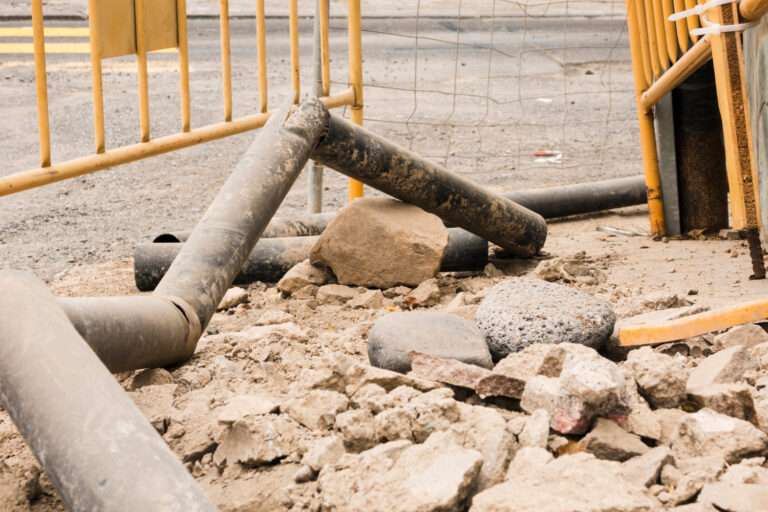
Blocked footpaths. Confusing diversions. Mud dragged across paving. Temporary surfaces that wobble. Access routes that change without warning. Or signage that tells you one thing while the site does another.
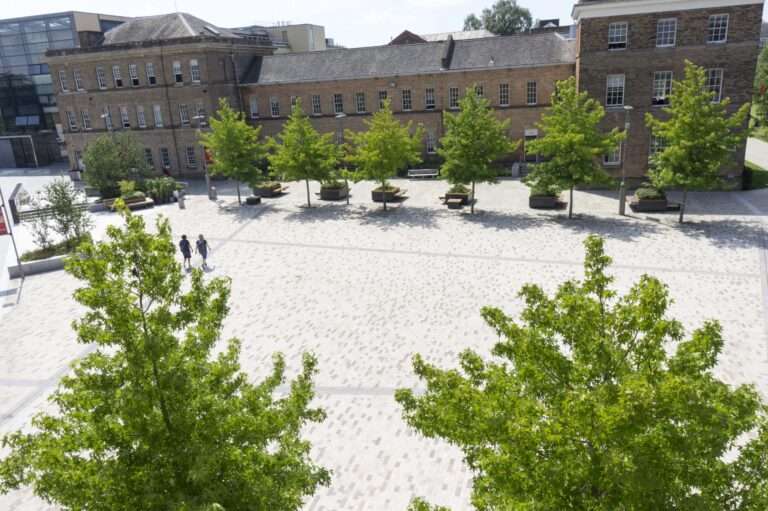
Public spaces amplify these issues because they’re shared. A delay that’s manageable on a private site becomes frustrating when it affects hundreds of people a day. Think town centres, housing estates, school approaches, retail parks, hospital grounds.
People don’t mind works. They mind uncertainty.
The difference between inconvenience and irritation
There’s a line. Everyone knows it when they cross it.
A bit of noise at 9am? Fine. A clear diversion around a trench? Fair enough. But leave that trench half-open for weeks, change access daily, or block a shop entrance without warning and irritation sets in fast.
I find that most complaints aren’t about the works themselves. They’re about how the works feel to live with. Messy. Confusing. Disrespectful, even.
Minimising disruption means thinking about perception as much as logistics.
Start with realistic planning, not optimistic programmes
Anyway, here’s the odd bit. Many disruptions happen because programmes are too optimistic. Timelines that look good on paper but fall apart the moment weather turns or an unexpected service appears.
Public spaces don’t cope well with half-finished works. So planning needs buffers. Real ones. Time for reinstatement. Time for cleaning. Time for adjustments when the inevitable happens.
Over-promising speed often creates more disruption than admitting a job will take a little longer and planning accordingly.
Phasing works to keep routes open
Phasing is one of the simplest ways to reduce disruption. And one of the most underused.
Rather than opening up long stretches at once, works can be broken into manageable sections. Complete one area fully – including reinstatement – before moving on.
This keeps access routes predictable. Limits the visual impact. Makes it easier to maintain safety and cleanliness.
It’s slower on paper. Faster in reality.
Temporary access that feels permanent enough
Temporary access routes don’t have to feel temporary. That’s a choice.
Solid footways. Proper ramps. Clear edges. Non-slip surfaces. Barriers that guide rather than block. These things matter, especially in public spaces with mixed users.
Wheelchairs. Pushchairs. Mobility scooters. Delivery trolleys. If temporary access doesn’t account for them, disruption multiplies.
And yes, it costs a bit more. But the alternative is complaints, risk, and rework.
Clear signage beats clever signage
Signage is one of those things everyone thinks is obvious. Until it isn’t.
Simple works best. Clear directions. Plain language. Consistent placement. Signs that match what’s actually happening on site.
Changing access? Update the signs immediately. Leaving old signs up confuses people and undermines trust. And once trust goes, irritation follows.
I was going to say signage is an art… but no, that’s not quite right. It’s common sense, applied consistently.
Communication before people ask
Public spaces work better when people know what to expect. Advance notices. Clear timeframes. Contact details. Even a laminated A4 sheet can make a difference.
Councils, housing associations, retail site managers – they all benefit from proactive communication. Not long explanations. Just honest ones.
“This path will be closed for five days. Alternative route here.” Simple. Reassuring. Human.
Silence, on the other hand, invites frustration and speculation.
Noise, dust, and timing
Noise is part of utilities repair works. So is dust. But timing makes a huge difference.
Early mornings near housing. School pick-up times. Weekend footfall in town centres. These patterns are predictable.
Adjusting work hours slightly can reduce disruption disproportionately. It won’t eliminate it, but it shows awareness. And awareness goes a long way.
Dust control matters too. Dampening down. Cleaning surfaces. Not tracking mud across finished areas. Little things. Visible effort.
Behaviour on site matters more than people think
Here’s a truth that’s uncomfortable but real. Public perception of disruption is shaped by how the site behaves.
Tidy site? People are patient. Polite operatives? People are forgiving. Clear boundaries? People feel safer.
Messy site, blocked access, operatives smoking by the barriers while people squeeze past? Patience evaporates.
Minimising disruption includes how teams present themselves. It’s part of the job, whether we like it or not.
Reinstatement speed and quality are everything
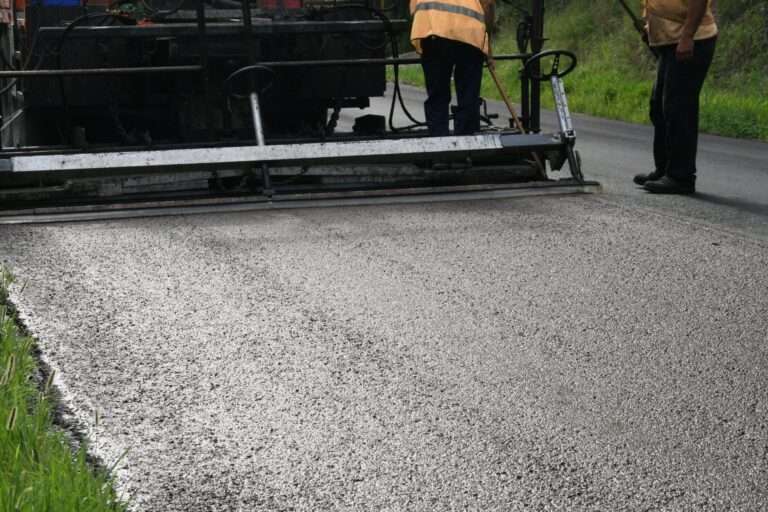
Disruption doesn’t end when the utility repair is done. It ends when the surface is reinstated properly.
Temporary patches that linger become permanent irritants. Uneven paving becomes a daily reminder. Poor finishes look careless.
Fast, high-quality reinstatement closes the loop. It restores confidence. It tells people the disruption had a purpose and an end point.
That’s why experienced teams lean towards professional utilities repair and reinstatement rather than treating surface repairs as an afterthought. It’s not just about compliance. It’s about reputation.
Different public spaces, different sensitivities
Not all public spaces react the same way.
High streets care about footfall and access to shop fronts. Residential estates care about noise and parking. Parks care about visual impact and safety. Hospital sites care about clarity and calm.
Minimising disruption means tailoring the approach. One-size-fits-all doesn’t work here.
A quick look at disruption triggers and mitigation
| Disruption trigger | Practical mitigation approach |
|---|---|
| Blocked pedestrian routes | Phased works with signed diversions |
| Confusing access changes | Consistent, updated signage |
| Extended temporary surfaces | Prompt permanent reinstatement |
| Noise complaints | Adjusted working hours where possible |
| Mess and dust | Regular cleaning and dust suppression |
Not exhaustive. But a solid starting point.
Weather again, because it always comes up
Rain makes everything harder. Slippery surfaces. Mud. Delays.
Public spaces don’t forgive weather-related mess. So planning for wet conditions matters. Mats. Covers. Extra cleaning. Flexibility in sequencing.
Blaming the weather rarely calms people down. Preparing for it sometimes does.
Managing expectations when things go wrong
Because sometimes they will. Services collapse unexpectedly. Materials get delayed. Weather intervenes.
Minimising disruption in those moments comes down to honesty. Acknowledge the delay. Update timeframes. Keep access safe and as tidy as possible.
People are surprisingly reasonable when they feel informed. Less so when they feel ignored.
FAQs that come up time and again
Can disruption be completely avoided?
No. Anyone promising that isn’t being straight. But it can be reduced significantly with planning and care.
Who’s responsible for public safety during works?
Everyone involved. Clear roles help, but shared responsibility matters most.
How long should temporary reinstatement remain?
As short a time as possible. Temporary should never drift into “that’s just how it is now”.
Do people really notice reinstatement quality?
Absolutely. They might not comment when it’s good, but they always notice when it’s bad.
Circling back to the human side
Minimising disruption during utilities repair works in public spaces isn’t just technical. It’s social. It’s about respecting shared places.
Good coordination, clear access, tidy sites, and proper reinstatement don’t just protect programmes. They protect relationships with the people who use those spaces every day.
And when that’s done well, disruption fades quickly from memory. Which is probably the highest compliment a public-facing project can get.

Killingley Insights is the editorial voice of NT Killingley Ltd, drawing on decades of experience in landscaping, environmental enhancements, and civil engineering projects across the UK.