Beauty Under Pressure: Getting Decorative Hard Landscaping to Perform as Well as It Looks

Walk through any regenerated town centre in the Midlands and you’ll notice something straight away. The paving isn’t just there to be walked on. It frames shopfronts, guides you towards cafés, softens the edge of a busy road. It makes the place feel considered.
And yet – under all that pattern and colour – there’s a far less glamorous question ticking away:
Can it take the load?
Because in commercial environments, aesthetics are only half the story. The other half is forklifts at 6am, delivery vans mounting the kerb, winter gritters scraping across the surface, and thousands of pairs of boots every single day. Decorative hard landscaping has to look sharp. It also has to cope.
That tension – visual ambition versus structural reality – is where most schemes either succeed quietly… or unravel within five years.
When Good Looks Aren’t Enough
Here’s something I’ve noticed over the years. Early-stage designs often focus heavily on appearance. Architects and planners explore tone, layout, rhythm. Light granite against darker setts. Linear bands cutting through open squares. Circular features that draw the eye.
All fair enough.
But if load performance isn’t discussed early – properly discussed, not just a line in a specification – problems creep in. You might get settlement along delivery routes. Hairline cracks across large format slabs. Movement at thresholds.
In places like Derby, Sheffield, or even smaller market towns such as Ashbourne, these issues become painfully visible because the surfaces are wide open. There’s nowhere to hide a dip in a plaza.
Commercial schemes don’t forgive cosmetic mistakes.
Decorative Hard Landscaping in Real-World Conditions
Commercial environments are messy. They’re not pristine CGIs.
You’ve got:
- Mixed pedestrian and vehicle loading
- Street furniture bolted through the surface
- Temporary event structures
- Seasonal market stalls
- Drainage channels cutting through layouts
Add the British climate into that mix – freeze–thaw cycles, heavy rain, the odd summer heatwave that softens bedding layers – and decorative paving needs to be more than just decorative.
In my experience, projects that perform well over time share one thing: structural design is treated as seriously as visual design.
It sounds obvious. But it’s often not.
Understanding Load Classes and Traffic Types
Before getting too far into materials and finishes, it’s worth clarifying something that gets glossed over – load categories.
Not every “pedestrianised” area is purely pedestrian.
A typical commercial square might see:
| Area Type | Expected Traffic | Design Consideration |
|---|---|---|
| Retail frontage | High footfall | Slip resistance, wear resistance |
| Service route | Light vehicles | Increased unit thickness |
| Civic plaza | Event loading | Reinforced sub-base |
| Shared surface | Occasional HGV | Structural design to highways standard |
Here’s the thing. One weak link – usually along service routes – can compromise the whole scheme visually. If a delivery vehicle causes rutting in a decorative band, it doesn’t matter how beautiful the rest of it is. People notice the flaw.
And once a surface starts to move, it rarely sorts itself out.
Material Choices – Beauty Versus Strength?
Some materials look fantastic but struggle under repeated vehicle loading. Others are structurally robust but visually bland.
Concrete block paving, for example, has evolved massively. Modern manufacturing techniques mean you can get textured, colour-blended finishes that mimic natural stone yet retain high compressive strength. I find these systems offer a strong balance in commercial settings.
Natural stone? Gorgeous, undeniably. But thickness, bedding, and edge restraint become critical. Too thin, and it can crack under point loads. Poorly detailed edges allow creep. And once movement starts, joint lines widen.
Large format slabs are popular at the moment – clean, contemporary, minimal joints. They work well visually in places like Manchester’s Spinningfields or parts of Nottingham’s business district. But they demand a stable base. Even minor settlement becomes noticeable across a 900mm slab.
Sometimes I think smaller modular units are more forgiving. They distribute load across multiple joints. They flex slightly. They’re easier to lift and reset.
There isn’t one right answer. Context matters.
The Structure Beneath – Where Performance Is Won or Lost
People don’t see the sub-base. Which is ironic, because it’s arguably the most important element.
Decorative hard landscaping in commercial environments typically relies on:
- Compacted granular sub-base
- Correct depth relative to traffic loading
- Stable formation layer
- Suitable edge restraints
Cut corners here and you’ll pay later.
It’s tempting on tight budgets to reduce sub-base thickness. Especially when the finished surface looks fine at handover. But six months of delivery vehicles can expose weaknesses.
So when we talk about decorative paved surfaces for commercial environments, we’re not just referring to what sits on top. We’re talking about an integrated system – surface, bedding, sub-base, and detailing – working together.
That integration is what keeps schemes looking sharp years down the line.
Drainage – The Quiet Performance Factor
Funny how drainage rarely features in glossy design visuals.
Yet water is one of the biggest threats to long-term load performance. Saturated bedding layers weaken. Freeze–thaw cycles widen joints. Surface ponding accelerates wear.
In the UK, average annual rainfall ranges from around 600mm in the East Midlands to well over 1,200mm in parts of the North West. That’s a lot of water moving through paved areas.
Permeable block systems can help in certain commercial settings, especially where sustainable drainage is a planning requirement. But they must be designed correctly – sub-base storage capacity, geotextile separation, proper outfalls.
Half measures create headaches.
Slip Resistance and Safety – Especially in Public-Facing Schemes
Commercial decorative paving must meet slip resistance standards. Particularly near entrances, public transport stops, or areas exposed to rainfall.
Polished finishes might look clean in a showroom. Outside a shopping parade in Chesterfield on a damp November morning? Less appealing.
Textured surfaces, light bush-hammering, or subtle grit finishes tend to perform better. It’s one of those practical decisions that doesn’t grab headlines but makes a huge difference.
I’ve seen schemes where aesthetics were dialled back slightly to maintain safety compliance. It’s a sensible compromise.
Frequently Asked Questions in Decorative Commercial Schemes
Is decorative paving suitable for vehicle traffic?
Yes – if designed appropriately. Unit thickness, bedding type, and sub-base depth must align with expected loads. Shared surfaces need more robust detailing.
How long should a well-installed scheme last?
Properly designed and maintained decorative paving can last 20–30 years or more. Individual units may require replacement, but wholesale failure shouldn’t occur.
What about maintenance costs?
Modular systems often reduce long-term maintenance because damaged areas can be lifted and reinstated locally. Large monolithic slabs are harder to patch discreetly.
Do lighter colours stain easily?
They can show marks more readily, particularly near cafés or food outlets. Regular cleaning helps. Some designers favour mid-tones for that reason.
The Detail That Makes the Difference
Edge restraints rarely get applause. But without solid kerbs or concrete haunching, modular paving creeps outward under load.
Jointing is another overlooked factor. Poorly compacted jointing sand allows movement. In heavy-use commercial settings, polymeric jointing or mortar systems are sometimes preferable.
Then there’s the interface between paving and drainage channels. Uneven transitions create trip hazards. Subtle level differences can channel water towards buildings. It’s all in the detail.
I know – not glamorous. But critical.
Balancing Visual Ambition with Practical Reality
There’s a bit of tension in commercial design teams sometimes. Architects push for cleaner lines, fewer joints, lighter tones. Contractors flag structural risks. Engineers worry about load paths.
The best outcomes come from collaboration, not compromise.
A slightly thicker unit here. A reinforced service strip there. A subtle pattern change that doubles as a structural strengthening zone. These solutions often preserve the visual concept while improving performance.
In other words, the scheme still looks spot on – and it stands up to use.
A Quick Look at Risk Factors
Just to make it tangible, here are some common performance risks and how they’re mitigated:
| Risk | Cause | Mitigation |
|---|---|---|
| Settlement | Inadequate sub-base | Increase depth and compaction |
| Surface cracking | Point loading | Thicker units or reinforced bedding |
| Joint widening | Edge restraint failure | Proper kerbing and haunching |
| Ponding | Poor falls | Adjust levels during installation |
| Slippery surface | Inappropriate finish | Specify higher slip resistance |
Not rocket science. But it needs thinking through.
Circling Back to Aesthetics
All this talk of load performance might make decorative hard landscaping sound overly technical.
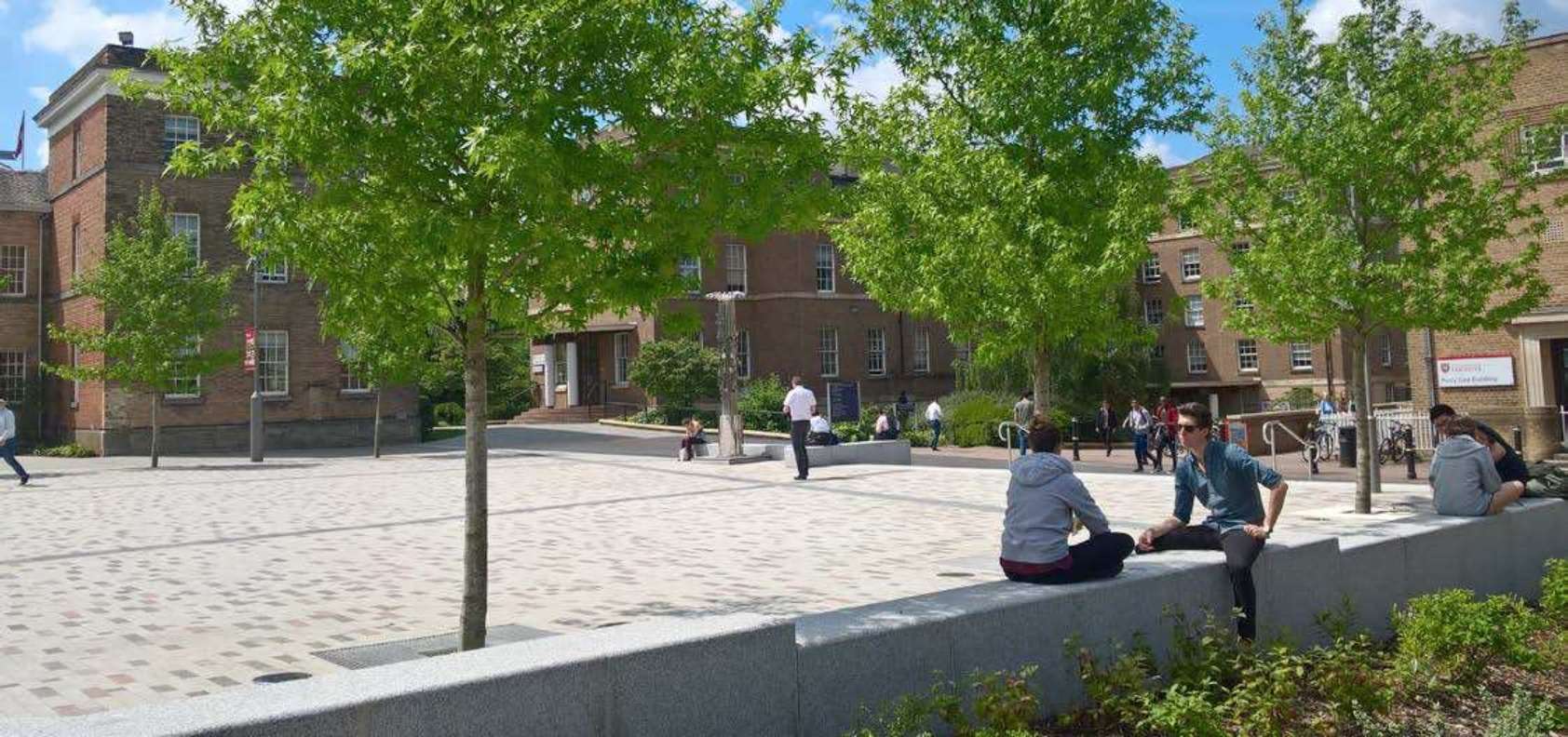
It’s not. At its best, it creates places people enjoy spending time in. Think of a reworked square in Leicester with subtle paving bands guiding foot traffic towards a café terrace. Or a business park in Nottingham using contrasting textures to define pedestrian priority zones.
When structure and design are aligned, the surface feels effortless.
You don’t notice the engineering. You just notice that it works.
And that’s probably the point.
Final Thoughts – It’s Not Either/Or
Balancing aesthetics and load performance isn’t about choosing one over the other. It’s about understanding that they’re intertwined.
A surface that looks fantastic but fails structurally damages reputation. A surface that’s bombproof but visually uninspiring doesn’t add value to commercial spaces.
The sweet spot lies somewhere in between.
Design with intention. Specify with care. Build with discipline.
And remember – in commercial environments, paving doesn’t just carry people. It carries expectation.

Killingley Insights is the editorial voice of NT Killingley Ltd, drawing on decades of experience in landscaping, environmental enhancements, and civil engineering projects across the UK.