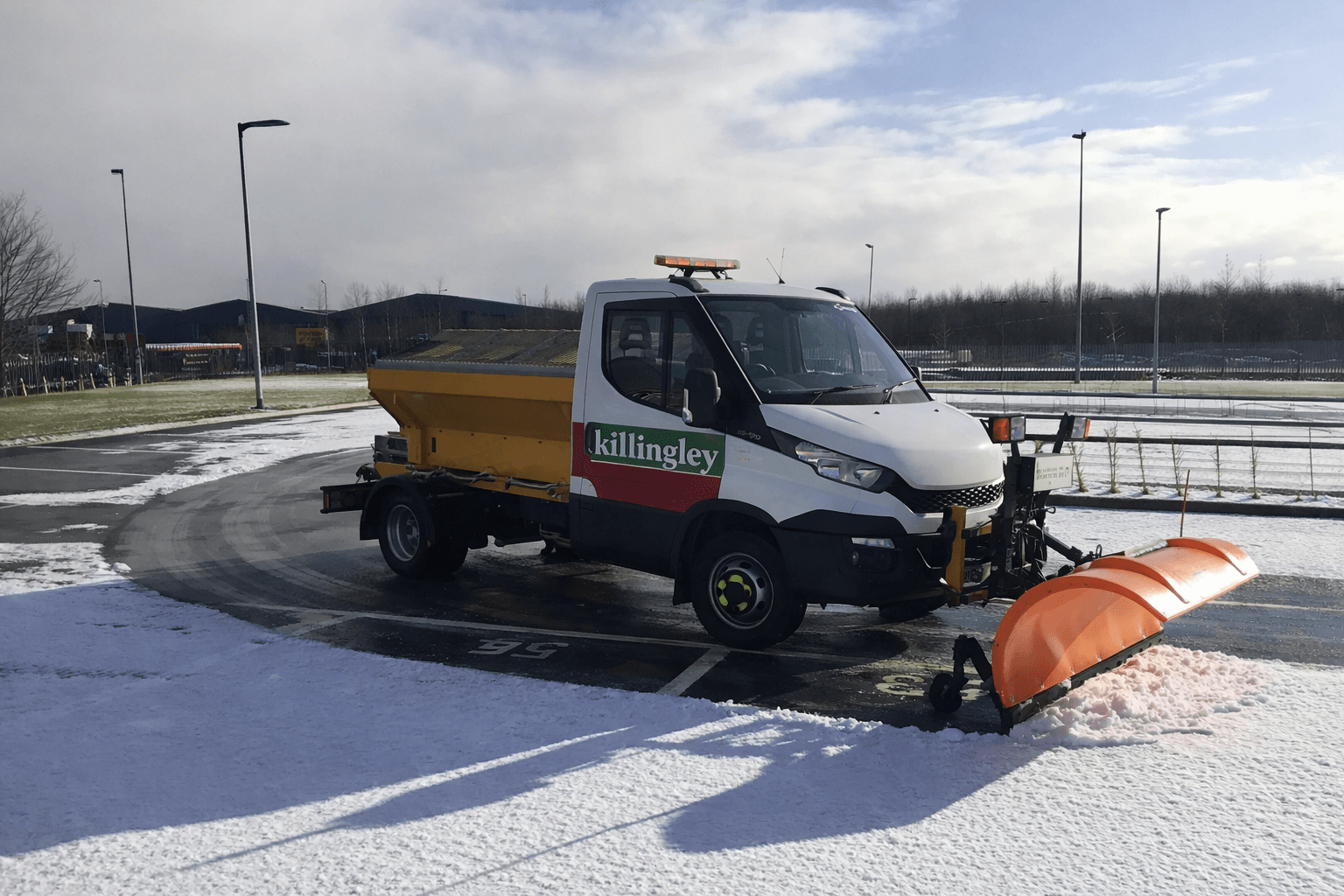
Winter Gritting and Snow Clearance: Best Practice for Commercial and Public Spaces

Winter has a way of exposing weak points. In buildings. In routines. In planning. One sharp frost and suddenly everyone realises how much they rely on a handful of access routes staying clear. Car parks, footpaths, loading bays, steps by the side entrance that nobody thinks about until they’re iced over and treacherous.
I find winter gritting and snow clearance gets talked about in a slightly odd way. Either it’s treated as a box-ticking exercise, or it’s ignored entirely until there’s a problem. Very little in between. And that’s strange, because cold weather risk is one of the more predictable issues site managers face each year.
This article looks at best practice for managing winter conditions across commercial and public spaces. Not theory. Practical stuff. Planning treatments, response times that make sense, and how to prioritise areas where people are most likely to slip, fall, or just give up and turn around.
Because once winter bites, it doesn’t wait for permission.
Cold weather risk isn’t dramatic, just persistent
Snow gets the headlines. Frost does the damage.
Most winter incidents happen on dry-looking surfaces that froze overnight. The sort of morning where the sky’s clear, the sun’s out early, and everything looks fine until someone hits a shaded patch. Black ice near a kerb. A ramp by a fire exit. The footpath between the overflow car park and the main door.
In the UK, especially inland areas, these conditions are common rather than exceptional. The Met Office records dozens of frost days most winters across large parts of England. The Midlands, Yorkshire, the South East away from the coast – all familiar territory for overnight freezes.
And it’s rarely just one bad day. Cold spells drag on. Thawing during the day, refreezing overnight. Slush turning into ice. Grit washed away by rain, then temperatures dropping again. That cycle catches people out every year.
Why best practice matters more than good intentions
Most organisations don’t set out to neglect winter safety. They mean well. There’s often a bag of grit somewhere. A vague plan. Someone who keeps an eye on the forecast.
But best practice is about removing guesswork.
When responsibilities aren’t clear, tasks get missed. When timing is left to chance, treatments happen too late. When priorities aren’t agreed in advance, the wrong areas get attention first.
I’ve seen sites where car parks are spotless while pedestrian routes are lethal. And others where main entrances are clear but delivery areas are chaos. None of it intentional. Just poorly thought through.
Proper winter gritting and snow clearance starts with accepting that cold weather is predictable, even if the exact timing isn’t.
Treatment planning – boring, but essential
Planning is the unglamorous bit. It’s also the part that makes everything else work.
A solid treatment plan looks at:
- Which areas need treatment.
- When treatments should be applied.
- How often repeat visits might be required.
- Who’s responsible for decisions and action.
That sounds tidy written down. In reality, plans tend to be messy. They evolve. Someone adds a note about a new footpath. A loading bay gets extended. A temporary entrance becomes permanent.
That’s fine. Plans should be living documents. What matters is that they exist and are used.
Most professional plans are built around weather forecasts rather than visible conditions. Treatments are applied before temperatures drop below freezing. That’s the key difference between proactive and reactive approaches.
Once ice forms, you’re already dealing with risk rather than preventing it.
Salt, grit, and expectations
There’s a surprising amount of misunderstanding about how grit works.
Salt lowers the freezing point of water. It doesn’t melt thick ice instantly. It doesn’t stop snow falling. And it isn’t magic. Applied too late, it struggles. Applied too early, it can wash away.
Best practice involves calibrated application rates and timing based on forecast temperatures, not guesswork. Over-salting causes its own issues – damage to surfaces, nearby planting, and unnecessary cost. Under-salting leaves patches untreated, which is arguably worse than not gritting at all.
I was going to say balance is everything. But really, consistency matters more.
Snow clearance – different job, different risks
Snow clearance gets lumped in with gritting, but it’s a different challenge.
Snow hides hazards. Kerbs disappear. Uneven paving becomes invisible. People assume traction where there is none. Clearing snow without considering what’s underneath can create new risks, not remove them.
Best practice usually involves a sequence:
- Clear snow mechanically or manually.
- Remove slush to prevent refreezing.
- Apply grit to exposed surfaces.
Miss a step and problems follow. Especially overnight.
Public spaces need particular care here. Ploughing snow into footpaths or blocking dropped kerbs causes accessibility issues. Wheelchair users, pushchairs, anyone with limited mobility – they feel the impact first.
Response times – fast beats perfect
Response time is one of those things people overthink.
There’s a temptation to aim for perfection. To wait until conditions are fully clear before acting. That rarely works. By the time you’re certain ice has formed, someone’s already at risk.
Best practice favours early, timely responses over flawless ones. Acting on forecasts. Treating known cold spots first. Revisiting sites as conditions change.
Commercial sites often benefit from defined response windows. For example, treatment before early morning occupancy, with follow-up visits during prolonged cold spells. Public sites may require earlier starts or more frequent checks, depending on use.
And yes, it costs more to respond quickly. But not as much as dealing with an incident.
Prioritising high-risk areas – not everything matters equally
One mistake I see repeatedly is treating entire sites as equal risk. They aren’t.
High-risk areas tend to share characteristics:
- Heavy footfall.
- Steep gradients.
- Shaded locations.
- Changes in surface material.
- Poor drainage.
Entrances, steps, ramps, pedestrian crossings, bin stores, smoking shelters – these are the danger zones. Car parks matter, but people expect them to be rougher underfoot. They don’t expect a polished entrance slab to be an ice rink.
Best practice maps these areas and treats them first. Every time. Even if that means other areas wait.
It’s a bit like clearing your windscreen before your roof. Priorities.
Commercial sites – keeping businesses open
For commercial properties, winter maintenance is about continuity as much as safety.
Staff need to get in. Customers need to feel confident. Deliveries need access. If any one of those breaks down, the whole operation wobbles.
Retail parks are a good example. A single untreated pedestrian route can undermine the rest of the site. People won’t walk across ice to reach shops, even if the car park looks fine. They’ll go somewhere else.
Industrial estates face different issues. Early starts. Forklift traffic. HGV movements. Ice in loading bays is a serious risk, not just an inconvenience.
This is where having a structured winter gritting and snow clearing service becomes less about convenience and more about risk management. Outsourcing removes the reliance on someone being available, awake, and confident enough to make judgement calls at unsociable hours.
Public spaces – higher stakes, less margin for error
Public spaces operate under tighter scrutiny. Councils, schools, hospitals, transport hubs – they all have heightened duties of care and very little tolerance for failure.
In these environments, best practice often goes further:
- More detailed risk assessments.
- Defined treatment hierarchies.
- Clear records of actions taken.
Documentation matters here. Not because it stops slips, but because it demonstrates reasonable precautions were taken. In the event of a claim, that paperwork can be critical.
Schools are a classic case. Parents dropping children at peak times. Narrow footpaths. Emotional reactions if something goes wrong. Many schools now focus winter treatments almost entirely on arrival and departure routes, accepting that peripheral areas can wait.
It’s pragmatic, if not perfect.
Weather data – use it, but don’t worship it
Forecasting has improved massively. High-resolution models. Site-specific alerts. Real-time data. All useful.
But forecasts aren’t guarantees.
Best practice uses weather data as a guide, not gospel. Local conditions matter. A site near open fields will frost differently to one surrounded by buildings. A north-facing slope behaves nothing like a south-facing one.
I’ve seen mornings where forecasts predicted no frost, yet shaded areas were lethal. And others where dire warnings came to nothing. That uncertainty is part of winter planning. You plan for risk, not certainty.
Cost control without cutting corners
There’s always pressure on budgets. Winter maintenance isn’t immune.
The temptation is to reduce coverage. Skip visits. Delay treatments. On paper, it saves money. In reality, it shifts cost elsewhere.
Claims. Repairs. Lost business. Staff absence. Reputation damage.
Best practice looks for efficiency rather than cuts. Targeted treatments. Clear priorities. Sensible response windows. Avoiding waste without compromising safety.
It’s not about doing more. It’s about doing the right things at the right time.
Common questions, asked every winter
People ask similar questions year after year. Might as well address a few.
Do we need gritting if it hasn’t snowed?
Yes. Frost and ice cause most slips.
Can we just grit when staff arrive?
Sometimes. But by then, risk already exists.
Is grit bad for the environment?
It can be, if misused. Controlled application reduces impact.
How long does grit last?
It depends. Rain washes it away. Traffic moves it. Refreezing changes everything.
None of this is mysterious. It’s just easy to overlook when winter feels far away.
A quick comparison of approaches
To put it plainly:
| Approach | Likely outcome | Overall risk |
|---|---|---|
| Ad hoc response | Delays, missed areas | High |
| Basic reactive gritting | Partial control | Medium |
| Planned proactive maintenance | Consistent coverage | Low |
It’s not foolproof. Nothing is. But it’s a sight better than hoping for the best.
One last thought before wrapping up
Winter gritting and snow clearance rarely get praise when done well. Nobody emails to say the paths were clear this morning. That’s fine. Silence usually means success.
Problems announce themselves loudly. Slips. Complaints. Closures. Best practice is about keeping things quiet. Keeping sites open. Keeping people upright.
Not glamorous. Just necessary.
Conclusion – preparation beats panic, every time
Winter doesn’t surprise us. It arrives on schedule, more or less, every year. Frost, ice, snow. The only real variable is how prepared sites are when it happens.
Best practice in winter gritting and snow clearance comes down to planning, timely response, and clear priorities. Knowing where risk is highest. Acting before conditions deteriorate. Accepting that perfection isn’t the goal – reduction of risk is.
Do that, and winter becomes manageable. Ignore it, and it becomes expensive. And stressful. And avoidable, which is the worst part.

Killingley Insights is the editorial voice of NT Killingley Ltd, drawing on decades of experience in landscaping, environmental enhancements, and civil engineering projects across the UK.