How to Choose Between Tree Felling and Dismantling – And Why Getting It Wrong Is Costly

Picture this. A large oak at the back of a commercial property in Nottingham. It’s been there decades. But it’s got to go – root damage to drainage, council pressure, the usual story. So someone makes a call: just fell it. Drop it in one. Job done by lunch.
Except there’s a greenhouse twelve metres from the base. And a boundary wall. And a set of overhead cables running diagonally above the crown.
That’s where the “fell it and be done” approach gets expensive. Fast.
Choosing between tree felling and tree dismantling isn’t always obvious. Both remove a tree. Both require trained operators, proper equipment, and a decent risk assessment. But they’re not interchangeable – not even close – and using the wrong method for the wrong site can damage property, injure people, or create a legal headache that drags on for months.
Worth understanding the difference properly, then.
What Actually Separates the Two Methods
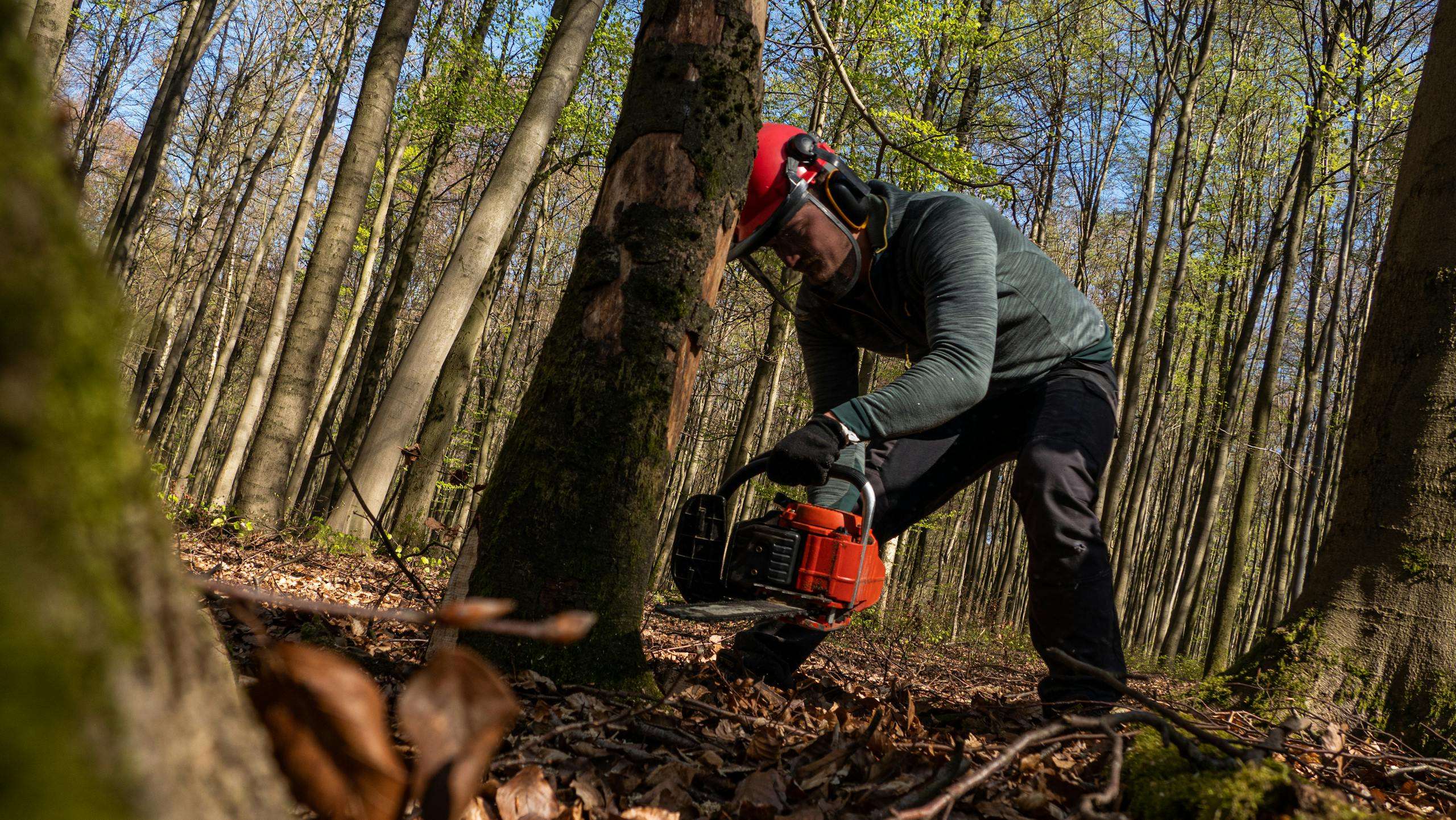
Tree felling – in its purest sense – means cutting the tree at the base and allowing the whole thing to fall in a controlled direction. You assess the lean, make your face cut and back cut, and the tree drops. Done correctly, it’s efficient. Done on the right site, it’s often the most sensible option.
Tree dismantling is a completely different process. Climbers or elevated platforms are used to remove the tree piece by piece, working from the top down. Sections are either lowered on ropes or dropped into a designated clear zone. It’s slower. It’s more labour-intensive. And on the right site, it’s the only realistic choice.
The key word throughout all of this is site. The tree itself – its size, species, condition – matters. But the site around it arguably matters more.
When Felling Makes Sense
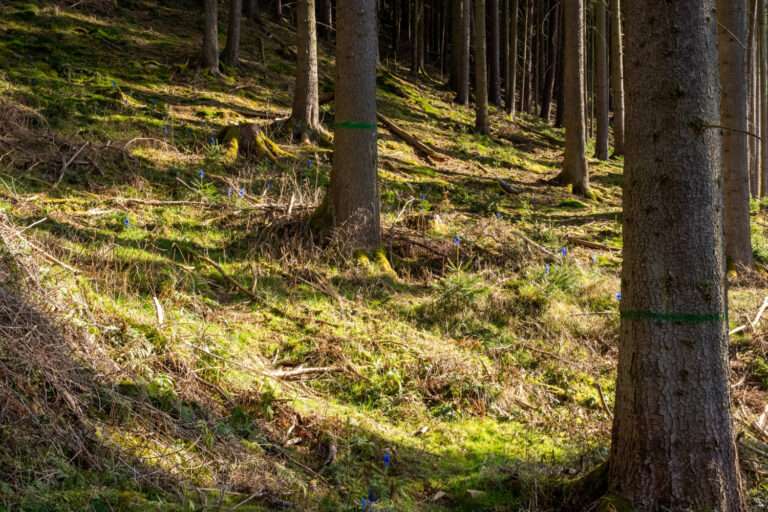
Open space is the obvious prerequisite. Rural settings, farmland, woodland management work, large estate grounds where there’s room to manoeuvre and a clear, unobstructed fall zone. If a tree has sufficient clearance in a predictable fall direction – at least one and a half times the tree’s height, ideally more – felling becomes a practical option.
Forestry operations across the UK rely on felling as standard practice precisely because the conditions allow it. Even then, there’s a whole process: checking wind direction, clearing the escape route, confirming there are no workers in the fall zone. None of this is casual.
Speed is a genuine advantage in the right context. A competent team can fell a large tree in a fraction of the time it takes to dismantle one of equivalent size. On commercial estates where multiple trees need removing across open ground, that efficiency adds up.
What’s the stump situation? Worth mentioning here, because felling leaves a stump at ground level. Depending on the species and what the site’s being used for afterwards, that stump may need grinding out – which is a separate operation. Factor it in at the planning stage, not after.
The Case for Dismantling
Most trees in urban and suburban settings – gardens, commercial premises, housing developments, school grounds – don’t have a clear fall zone. That’s just the reality of how Britain’s built environment works. Streets of Victorian terraces in Sheffield or Derby, office parks in the East Midlands with mature trees hemmed in by car parks and fencing. Felling isn’t an option. Dismantling is.
Proximity to structures is the big one. If any part of the tree’s potential fall path comes within range of a building, wall, vehicle, or overhead line, dismantling is the answer. Full stop. I find that people sometimes underestimate how large a tree’s fall radius actually is – once it’s moving, a mature specimen can cover an unexpected distance and land awkwardly, even when the base cut was clean.
Structural decay changes things too. A tree that looks fine from the outside can have significant internal rot. Sections can fail unpredictably mid-fell – which is a problem even on open ground, but a serious one in a confined space. Dismantling, piece by piece, gives crews much more control over how and where material lands.
Dead or dying trees are probably the category where people get caught out most often. There’s an assumption that a smaller or dead tree is somehow easier to fell. Not always. Brittle deadwood can snap unexpectedly. Root systems on dead trees may be compromised, meaning the tree’s behaviour at the point of the cut isn’t predictable in the usual way. Our tree felling and dismantling services cover both approaches, and part of what that experience brings is knowing which method to apply to which situation – rather than defaulting to whichever is quicker.
Factors That Determine the Right Approach
No two sites are identical. But there’s a fairly consistent set of factors that any competent arborist runs through before recommending an approach. Here’s how the main ones stack up:
| Factor | Favours Felling | Favours Dismantling |
| Available fall zone | Minimum 1.5x tree height clearance | Restricted or obstructed |
| Proximity to structures | None within fall radius | Buildings, walls, or fencing nearby |
| Tree condition | Sound, structurally intact | Decay, rot, or deadwood present |
| Overhead utilities | None present | Power lines or cables above/adjacent |
| Access for machinery | Good vehicle access | Limited or no access for large equipment |
| Ground surface | Open land or grassland | Hard landscaping, paving, or sensitive planting |
| Speed requirement | Efficiency a priority | Safety and precision take precedence |
Worth noting that some jobs sit in the middle – they could go either way depending on how thorough the pre-work assessment is. Borderline cases are exactly where experienced judgement matters most.
Overhead Lines – The One People Overlook
Honestly, this comes up more than you’d expect. Overhead electricity distribution lines run through a surprising number of gardens and commercial sites – especially older properties. They’re not always obviously visible, particularly when a tree has grown around them over the years.
If a tree is anywhere near overhead lines – phone, electricity, or otherwise – the network operator needs to be notified before work begins. UK Power Networks, Western Power Distribution, and similar regional DNOs have processes for this. Work near live lines requires specific safe systems of work, and in some cases, the lines may need to be temporarily isolated. That’s not a quick conversation. Plan ahead.
Felling anywhere near lines is almost always ruled out. Dismantling, carefully, with a clear plan for how each section is lowered, is the standard approach. Even then, it requires proper coordination.
Tree Preservation Orders and Planning Considerations
Before any method is chosen, there’s a prior question: do you have permission to remove the tree at all?
Tree Preservation Orders (TPOs) are issued by local planning authorities and protect specific trees or woodland. Removing, pruning, or carrying out significant work on a TPO tree without consent is a criminal offence – fines can reach £20,000 per tree. Conservation areas add another layer: works to trees in a conservation area require six weeks’ prior notification to the local authority, even without a TPO in place.
England has approximately 200,000 trees covered by TPOs at any given time. It’s not a niche issue. Checking with the relevant local planning authority before work starts is non-negotiable.
Method choice doesn’t influence planning permission – you either have authority to remove the tree or you don’t. But method absolutely affects how the removal is executed safely and legally once consent is confirmed.
What Happens to the Material Afterwards
People often focus on the removal itself and forget to think about what happens to the wood, brash, and debris once the tree’s down. It’s a fair bit of material.
Larger timber sections from felled trees are often suitable for milling, firewood, or log supply – depending on species and condition. Oak, ash, and beech have obvious value. Some clients want to keep sections. Worth agreeing beforehand rather than discovering it once everything’s been chipped.
Dismantled material arrives in smaller sections, which actually makes disposal slightly more straightforward on constrained sites – no need to manhandle entire trunks into a chipper in a tight back garden in Derby. The brash gets chipped on-site in most cases, and timber sections are removed separately if not retained by the client.
Stump grinding is often booked as a follow-on operation. It’s worth confirming whether that’s included at the quoting stage, because different contractors handle it differently. Some quote it as standard, some don’t. Knowing upfront prevents awkward conversations later.
How Costs Compare
Dismantling costs more. That’s not surprising when you consider the additional labour, specialist climbing equipment, rigging systems, and time involved. But cost shouldn’t drive the method choice – site conditions should. Choosing felling because it’s cheaper, on a site that warrants dismantling, is a false economy once you account for potential damage or incident costs.
Broadly speaking, for a medium-to-large tree:
| Tree Size | Felling (approx.) | Dismantling (approx.) |
| Small (up to 6m) | £150 – £350 | £250 – £500 |
| Medium (6m – 15m) | £350 – £800 | £600 – £1,500 |
| Large (15m+) | £800 – £1,500 | £1,500 – £3,500+ |
Prices vary significantly by region, access, species, and condition. These figures give a rough sense of the differential rather than precise quotes. Always get a site-specific assessment.
Frequently Asked Questions
Can I decide myself which method to use?
You can express a preference, but the method should ultimately be determined by a qualified arborist following a proper site assessment. Contractors who allow clients to dictate method without an independent assessment aren’t doing their job properly – or they’re not carrying adequate insurance.
Does the season matter?
For the removal method, not hugely. For wildlife reasons, it matters considerably. Nesting birds are protected under the Wildlife and Countryside Act 1981 – work that disturbs active nests can result in prosecution. Between roughly March and August, a pre-work survey is strongly advisable. Outside nesting season, most removal work can proceed without that constraint, though a check is always good practice.
What qualifications should I look for?
NPTC (City & Guilds) certificates for chainsaw use and aerial tree work are the benchmark. CS30 and CS31 cover chainsaw operation and maintenance. CS38 is the aerial rescue certificate. For climbing, CS38 and CS39 cover the relevant competencies. Public liability insurance of at least £5 million is standard for commercial work.
How long does a typical removal take?
Felling a medium tree with good access might take two to three hours including clearing up. Dismantling one of equivalent size in a constrained garden could take a full day, sometimes more depending on complexity. Larger specimens extend that considerably.
Getting the Assessment Right from the Start
Here’s the bit that gets skipped more than it should. A proper site assessment before quoting isn’t a formality – it’s the foundation of a safe, efficient job. An arborist walking the site, assessing the tree’s condition, identifying hazards, checking for TPOs, noting access constraints, looking at the ground surface, considering what’s above and around the tree. All of that feeds directly into which method is appropriate and how the work will be planned.
Phone quotes for tree removal should be a red flag. The information needed to quote accurately and choose the right method cannot be gathered over the phone. I know that sounds obvious. But it’s still surprisingly common.
On commercial sites – schools, local authority land, business premises – there’s also the matter of documentation. Method statements, risk assessments, proof of insurance, and confirmation of permissions are all reasonable things to ask for before work begins. Reputable contractors expect those questions.
Final Thoughts
Felling and dismantling are both legitimate, professional methods of tree removal. Neither is inherently better. The right one is the one that suits the site.
Open ground, clear fall zone, sound tree? Felling is usually the right call – efficient, cost-effective, and perfectly safe when done properly. Tight garden, nearby structures, overhead lines, or a tree in questionable condition? Dismantling. Every time.
The problem arises when method choice is driven by convenience or cost rather than site conditions. That’s where incidents happen, damage occurs, and what looked like a simple job becomes considerably more complicated. Getting it right at the assessment stage – before a saw is anywhere near the tree – is what separates a smooth job from a difficult one.

Killingley Insights is the editorial voice of NT Killingley Ltd, drawing on decades of experience in landscaping, environmental enhancements, and civil engineering projects across the UK.