Why Proactive Winter Gritting Keeps Sites Open and Reduces Risk

Cold snaps have a habit of sneaking up on people. One day it’s drizzle and grey skies, the next you’re skidding across a car park at half seven in the morning wondering who thought smooth block paving was a good idea. We’ve all been there. And if you’re responsible for a workplace, a retail site, a school, or even a modest business park, those moments matter more than you might think.
Proactive winter gritting is one of those unglamorous services that only gets noticed when it isn’t done. No ribbon cutting. No praise. Just fewer accidents, fewer angry phone calls, and sites that stay open when others grind to a halt. In my experience, that’s precisely why it’s worth talking about properly, rather than as a last-minute add-on when snow is already falling.
This piece looks at why planning ahead with winter gritting reduces risk, supports your duty of care, and keeps access routes usable during cold weather. Not the sales pitch version. The real, on-the-ground reasons that matter when temperatures drop and things get slippery.
Winter risk isn’t rare – it’s routine
People often talk about “extreme weather” as if ice and frost are freak events. In the UK, they’re not. They’re seasonal. Predictable. Boring, even. The Met Office records dozens of air frost days across much of England every year, with inland areas seeing it more often than coastal ones. The East Midlands in particular gets a fair share of overnight freezes, especially in rural and semi-rural spots.
And here’s the thing. It doesn’t need to snow.
A thin frost at dawn can be worse than a proper snowfall. Snow gets noticed. Ice doesn’t. Black ice on access roads, shaded footpaths, loading bays tucked behind buildings – those are the danger zones. The places people assume will be fine until they’re suddenly not.
I was going to say it catches people out. But really, we all know it happens. We just hope it won’t be our site this time.
Duty of care isn’t optional, even when it’s cold
Let’s talk about responsibility, because this is where things get serious.
Under UK health and safety law, those who control premises have a duty to take reasonable steps to keep people safe. That includes employees, visitors, contractors, delivery drivers, parents doing the school run – the lot. Weather doesn’t cancel that obligation. Frost doesn’t give you a free pass.
If someone slips on untreated ice and gets injured, the question won’t be “was it cold?” It’ll be “what did you do about it?”
Courts and insurers look for evidence of reasonable precautions. Risk assessments. Maintenance plans. Clear actions taken when conditions are known to be hazardous. Proactive gritting fits neatly into that framework. It shows foresight rather than reaction. Planning rather than panic.
And no, a bag of grit leaning against a wall doesn’t count if nobody used it.
Slips, trips and falls – the quiet cost of winter
Here’s a statistic that often gets overlooked. According to the Health and Safety Executive, slips, trips and falls are the most common cause of non-fatal workplace injuries in the UK. Ice and snow play a big role in winter spikes.
Most of these incidents aren’t dramatic. No viral videos. No headlines. Just someone off work for weeks with a broken wrist. Or a sore back that never quite comes right. Or a delivery driver who decides your site isn’t worth the hassle anymore.
The costs add up quietly.
Lost working days. Increased insurance premiums. Management time spent filling in reports. And that awkward atmosphere afterwards, when everyone’s a bit jumpy walking across the yard.
Preventing that with timely gritting feels, frankly, like common sense.
Proactive versus reactive – there’s a difference
It’s tempting to deal with winter conditions as they arise. Check the weather. See what happens. Then react. On paper, that sounds sensible. In practice, it often means being too late.
Proactive gritting works on forecasts rather than hindsight. Treatments are applied before temperatures drop below freezing, stopping ice from bonding to surfaces in the first place. Once ice has formed, you’re already on the back foot.
There’s also the human factor. If someone has to make a decision at 5am, half-awake, staring at a thermometer, things get missed. Automated or scheduled gritting plans remove that uncertainty. The work gets done whether someone remembered or not.
Funny thing is, people rarely complain about proactive gritting. They complain when it wasn’t done.
Keeping sites operational isn’t just about convenience
Access matters. Not in a vague, nice-to-have way. In a practical, business-critical way.
If staff can’t get into the car park safely, they won’t come in. If customers feel nervous walking from their car to your entrance, they’ll go elsewhere. If emergency vehicles struggle to access a site, you’ve got a far bigger problem than a bit of lost trade.
Warehouses, care homes, schools, retail parks – they all rely on clear routes. Gritted roads, paths, steps, and loading areas keep things moving. Without them, operations slow down or stop altogether.
And once a site closes, reopening isn’t always straightforward. Deliveries get rescheduled. Appointments are missed. Parents scramble for childcare. All because a few millimetres of ice were left untreated.
The East Midlands problem – frost loves flat land
The East Midlands has its own quirks when it comes to winter weather. Flat terrain, open countryside, and lots of exposed industrial estates mean cold air settles easily overnight. Add in clear skies and low winds, and you’ve got perfect frost conditions.
Urban heat islands help a bit in city centres like Nottingham or Derby. Step a mile or two out, though, and temperatures can drop sharply. Business parks on the edge of town are particularly vulnerable. Shaded areas near trees or buildings stay icy long after the sun comes up.
That’s why local knowledge matters. A one-size-fits-all approach rarely works. Sites need treatment plans that reflect how and where frost forms, not just what the weather app says.
It’s also why many organisations turn to professional services for Winter Gritting in the East Midlands rather than trying to manage it ad hoc with a couple of shovels and some salt.
Timing is everything with grit
There’s a myth that gritting is about dumping as much salt as possible on the ground. It isn’t. Timing and dosage matter far more.
Too early, and rain can wash treatments away. Too late, and ice has already formed. Over-application wastes material and can damage surfaces or nearby planting. Under-application leaves patches untreated, which might be worse than doing nothing at all.
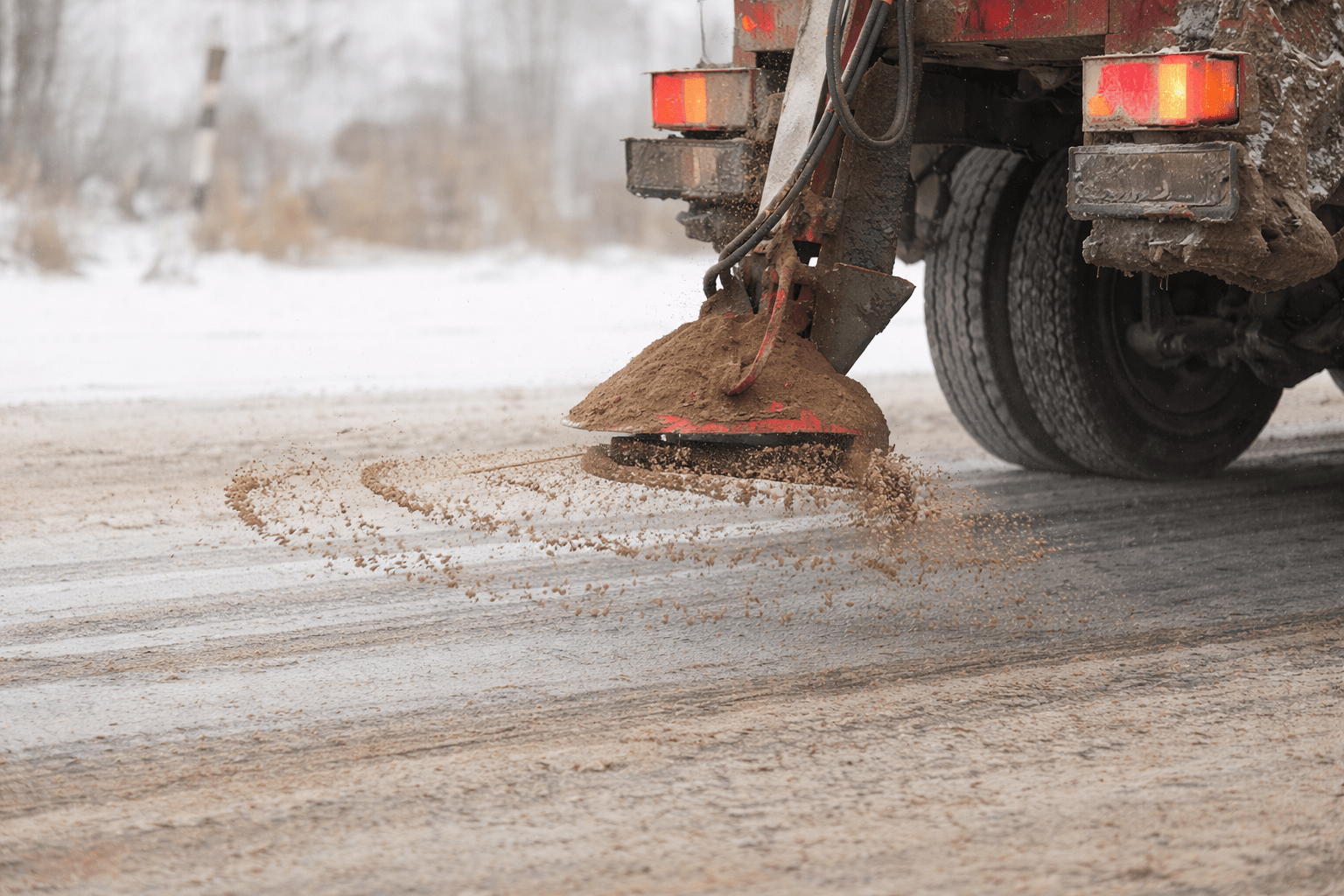
Professional gritting uses calibrated spreaders and weather data to apply the right amount at the right time. That consistency is hard to achieve manually, especially across larger sites.
And before someone says it, yes, rock salt works at low temperatures. But below around -7°C, its effectiveness drops off. In prolonged cold spells, alternative treatments or repeat applications may be needed. Planning for that in advance makes a big difference.
Footpaths get forgotten. Until they don’t.
Car parks usually get attention first. Big open spaces. Obvious risk. Footpaths, steps, ramps, and building entrances often come second. Or third. Or not at all.
Yet most slip incidents happen on footways, not roads.
Think about the routes people take. From car to door. From reception to the smoking shelter. From the back entrance to the bins. Those narrow, shaded paths are prime spots for ice. Especially early in the morning or late in the evening.
A proper winter maintenance plan maps these routes and treats them as priorities, not afterthoughts. Because when someone slips near a doorway, there’s no arguing it was unexpected.
Schools, care homes, and public sites – zero tolerance for risk
Some environments simply can’t afford disruption.
Schools need safe drop-off areas and playground access. Care homes require clear paths for staff, visitors, and emergency services. Hospitals and clinics deal with vulnerable people who can’t afford a fall.
In these settings, proactive gritting isn’t about protecting profits. It’s about safeguarding people. The standards are higher. The tolerance for risk is lower. And rightly so.
I’ve noticed these sites often lead the way with winter planning. Not because they enjoy spending money, but because the consequences of getting it wrong are too serious to ignore.
Environmental concerns – yes, they matter too
There’s sometimes a worry about the environmental impact of gritting. Salt runoff, damage to planting, corrosion. These are valid concerns. They shouldn’t be brushed aside.
Modern gritting plans take them into account. Targeted application reduces waste. Alternative de-icing materials can be used in sensitive areas. Storage and handling practices minimise spillages.
In other words, being proactive doesn’t mean being heavy-handed. Done properly, winter gritting balances safety with environmental responsibility. It’s a bit more thought upfront for fewer problems later.
Common questions that crop up every winter
People tend to ask the same things year after year. Fair enough.
Do we need gritting if it hasn’t snowed?
Yes. Frost and ice are the main hazards. Snow is just more visible.
Can’t staff just grit when they arrive?
They can try. But ice often forms overnight. By the time someone gets in, it’s already risky.
Is gritting expensive?
Compared to the cost of an injury claim or a site closure? Not really.
What about liability if we do nothing?
That’s where things get uncomfortable. Doing nothing is rarely defensible if conditions were foreseeable.
People sometimes ask about insurance. Insurers like proactive measures. They don’t like surprises.
A quick look at risk reduction in practice
Here’s a simple comparison that sums things up.
| Approach | Likely outcome | Risk level |
|---|---|---|
| No planned gritting | Ice forms unnoticed | High |
| Reactive manual gritting | Partial coverage, delays | Medium |
| Proactive scheduled gritting | Treated before freezing | Low |
It’s not complicated. But it is effective.
Winter doesn’t wait for permission
One of the odd things about winter maintenance is how often it’s treated as optional until it suddenly isn’t. Budgets get tight. Plans get postponed. Then temperatures drop, and everyone scrambles.
The weather doesn’t care about procurement cycles or internal approvals. Frost forms when conditions allow it. That’s it.
Sites that stay operational through winter usually aren’t doing anything clever. They’re just prepared. Gritting schedules in place. Clear responsibilities. No last-minute decisions at dawn.
Sorted, as people say.
Conclusion – quiet preparation beats noisy problems
Proactive winter gritting isn’t exciting. It doesn’t make for glossy brochures or clever slogans. What it does is prevent problems before they happen. Slips that never occur. Closures that never happen. Complaints that never get made.
In cold weather, that kind of quiet success is worth a lot.
From a duty of care point of view, it shows responsibility. From an operational point of view, it keeps sites open and accessible. And from a human point of view, it stops people getting hurt on icy mornings when they’re just trying to get on with their day.
Winter will do what winter does. The choice is whether you’re ready for it or reacting after the fact. I know which approach I’d rather take.

Killingley Insights is the editorial voice of NT Killingley Ltd, drawing on decades of experience in landscaping, environmental enhancements, and civil engineering projects across the UK.