Full Tree Surveys
Understanding trees before decisions are made
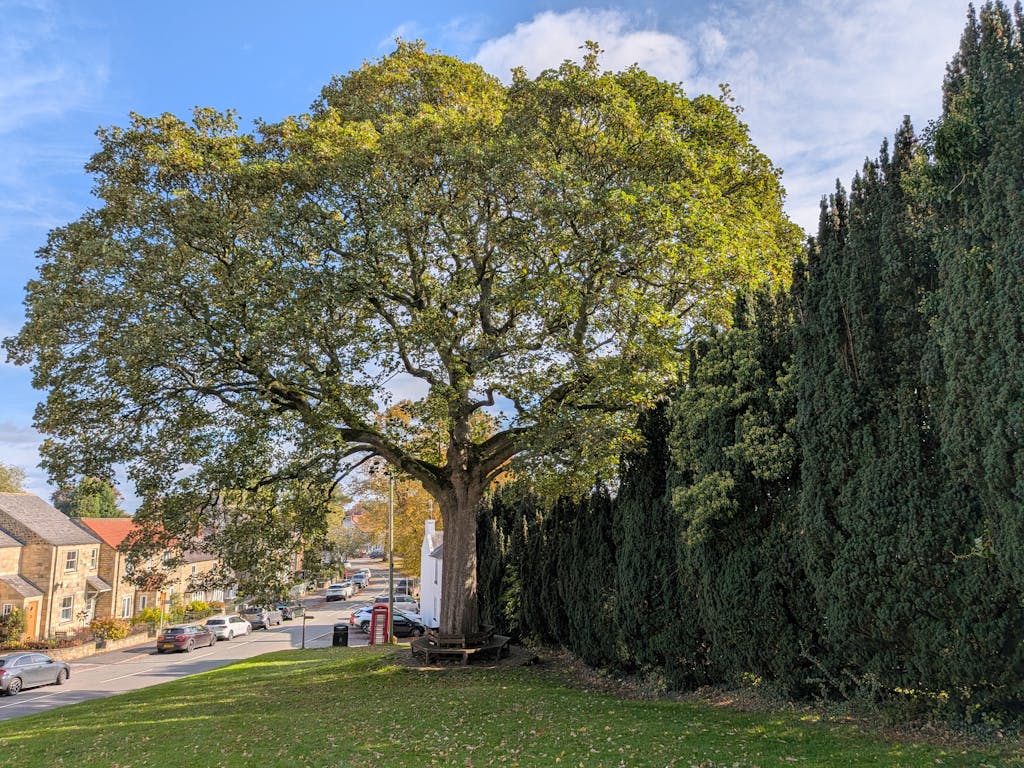
Effective tree management starts with understanding what is present, how it is performing, and what risks or opportunities it presents. Full tree surveys provide a detailed, professional assessment of trees within a site, forming the basis for informed decisions around safety, development, maintenance, and long-term landscape planning. They are not simply a snapshot in time, but a structured record that supports responsible land and asset management.
At Killingley, full tree surveys are delivered as part of our wider grounds maintenance capability, ensuring assessments are grounded in practical site experience rather than theory alone. Our teams work across complex environments, from active construction sites to established estates, balancing ecological value with operational and regulatory requirements. This makes our surveys directly usable, not just compliant.
A full tree survey is a systematic inspection and recording of trees to assess species, condition, dimensions, and risk, supporting planning, safety, and management decisions within the wider Grounds Maintenance framework.

Our approach to full tree surveys
Our full tree surveys follow a structured and consistent methodology, designed to meet industry standards while remaining clear and practical for clients and stakeholders.
By integrating full tree surveys into active land management, we ensure findings translate directly into action rather than remaining as isolated reports.
Initial site appraisal
We begin by understanding the site context, including land use, access constraints, nearby structures, and intended future works. This ensures the survey is proportionate and focused on relevant outcomes.
Tree identification and measurement
Each tree is recorded by species, height, stem diameter, crown spread, and age class. These metrics allow us to assess both current condition and future growth implications.
Condition and risk assessment
Trees are inspected for structural integrity, signs of disease, decay, or damage, and potential interaction with people, property, or infrastructure. Risk is assessed using established arboricultural principles rather than assumption.
Mapping and reporting
Survey data is clearly mapped and presented in a format suitable for planning submissions, asset registers, or maintenance planning. Recommendations are practical, prioritised, and aligned with site objectives.
Why full tree surveys matter
Full tree surveys play a critical role in balancing safety, compliance, and environmental responsibility. Trees are valuable assets, but unmanaged or poorly understood trees can present significant risk to people, buildings, and operations.
From a regulatory perspective, full tree surveys support planning applications, development feasibility studies, and duty of care obligations. They provide evidence-based justification for retention, protection, or removal, reducing delays and disputes.
Environmentally, surveys help identify trees of high ecological or amenity value, allowing them to be protected and integrated into long-term landscape strategies. This supports biodiversity objectives while avoiding unnecessary loss.
Practically, full tree surveys allow organisations to plan maintenance budgets more effectively, address issues before they escalate, and demonstrate responsible stewardship of land and green infrastructure.
Applications of full tree surveys
Full tree surveys are used across a wide range of settings where informed tree management is required:
- Development sites prior to planning or construction
- Commercial and industrial estates
- Public open spaces and highways land
- Schools, healthcare sites, and education campuses
- Private estates and large residential grounds
- Infrastructure corridors and utility land
In each case, the survey provides a clear understanding of constraints, opportunities, and responsibilities associated with existing trees.
Benefits of professional full tree surveys
Commissioning professional full tree surveys delivers clear advantages beyond basic inspection.
They reduce risk by identifying defects early and prioritising action. They support compliance by aligning with planning and health and safety requirements. They protect valuable trees by providing evidence-based management rather than reactive decisions. Finally, they save time and cost by giving stakeholders confidence to proceed with works or long-term maintenance plans without uncertainty.
For clients managing complex or high-value sites, this clarity is essential.

Working with Killingley on full tree surveys
Killingley brings over five decades of land management and landscaping experience to every full tree survey we undertake. Our surveys are carried out by qualified professionals who understand both arboriculture and the realities of working sites.
We work closely with planners, ecologists, engineers, and clients to ensure survey outputs integrate smoothly into wider project programmes. All work is undertaken with a strong focus on safety, environmental responsibility, and regulatory compliance.
Sustainability underpins our approach. Where possible, surveys inform strategies that retain and enhance existing tree stock rather than defaulting to removal. Our experience across grounds maintenance, landscaping, and environmental works means recommendations are practical, achievable, and aligned with long-term site objectives.