From Planning to Spades in the Ground: Getting Ecological Enhancements Delivered Properly

Everyone loves an ecological enhancement at concept stage. It sits neatly on a plan, looks great in a glossy visual, and makes the planning statement read like a responsible adult wrote it. Then reality turns up. Subcontractors change, levels move, a temporary access becomes “temporary for 18 months”, and the planting window slips because it’s rained for three weeks straight. Standard UK site life, really.
And that’s the point. Ecological enhancement isn’t hard to promise. It’s hard to deliver, keep alive, and prove later. Doing it well means translating good intentions into buildable details, sensible sequencing, and long-term management that doesn’t rely on someone having a sudden moral awakening during handover week.
I’ve seen schemes where the ecology was genuinely spot on, and I’ve seen others where it was… optimistic. Same policies. Similar budgets. The difference was process. Planning to delivery, without dropping the baton.
So, let’s talk about how effective ecological enhancement measures get implemented on real UK projects. Not theoretical. Not “wouldn’t it be lovely if”. Just the practical way through, warts and all.
Why ecological enhancements fall apart between planning and delivery
A lot of the failures aren’t dramatic. They’re quiet. Death by a thousand tiny decisions.
A drainage detail gets value-engineered. A “species-rich” mix becomes “general purpose grass seed” because someone found a cheaper bag. Topsoil gets stripped and stored badly. Planting goes in during a dry snap and nobody waters it because, well, nobody’s been instructed to. Or the instruction existed but got buried in an email chain that disappeared into the void.
Then there’s the classic: ecology sits in a report, while the people building the thing only ever see the engineering drawings. If the ecological measures aren’t in the same drawing set, in the same coordination meetings, and in the same programme logic, they’re basically optional. And optional never survives a pressured programme.
BNG has helped here, because it forces accountability. In England, the biodiversity gain objective is set at a minimum 10% uplift, measured using the statutory metric, and habitats generally need securing for at least 30 years. That’s not a vibe. It’s a requirement.
Still, requirements don’t build habitats. People do.
Start with the baseline, or you’re guessing
Before you design enhancements, you need to know what you’re enhancing from. Sounds obvious. Often skipped.
Baseline isn’t just a Phase 1 map and a list of species that might be present. It’s the condition of existing habitats, how water moves, what soils you’re dealing with, and what’s realistically achievable on that site.
Brownfield sites around Sheffield, for example, can have surprisingly valuable ruderal habitat. (Not pretty, but valuable.) On the other hand, a heavily improved grass field on the edge of Nottingham might score low in distinctiveness but be linked to hedgerows that act as corridors. Those two baselines lead to different strategies.
A useful early check is simply asking:
- What’s genuinely worth retaining?
- What can be improved with minimal intervention?
- What new habitats are credible given soils, hydrology, and management appetite?
If you can’t answer those without hand-waving, you’re not ready to lock in “enhancement measures”. You’re still in the ideas phase.
Design measures that fit infrastructure, not fight it
This is where a lot of schemes go wrong, mainly because ecology gets treated like a separate layer. Something you add on top.
Infrastructure and landscape elements can do double duty if you plan for it early:
SuDS
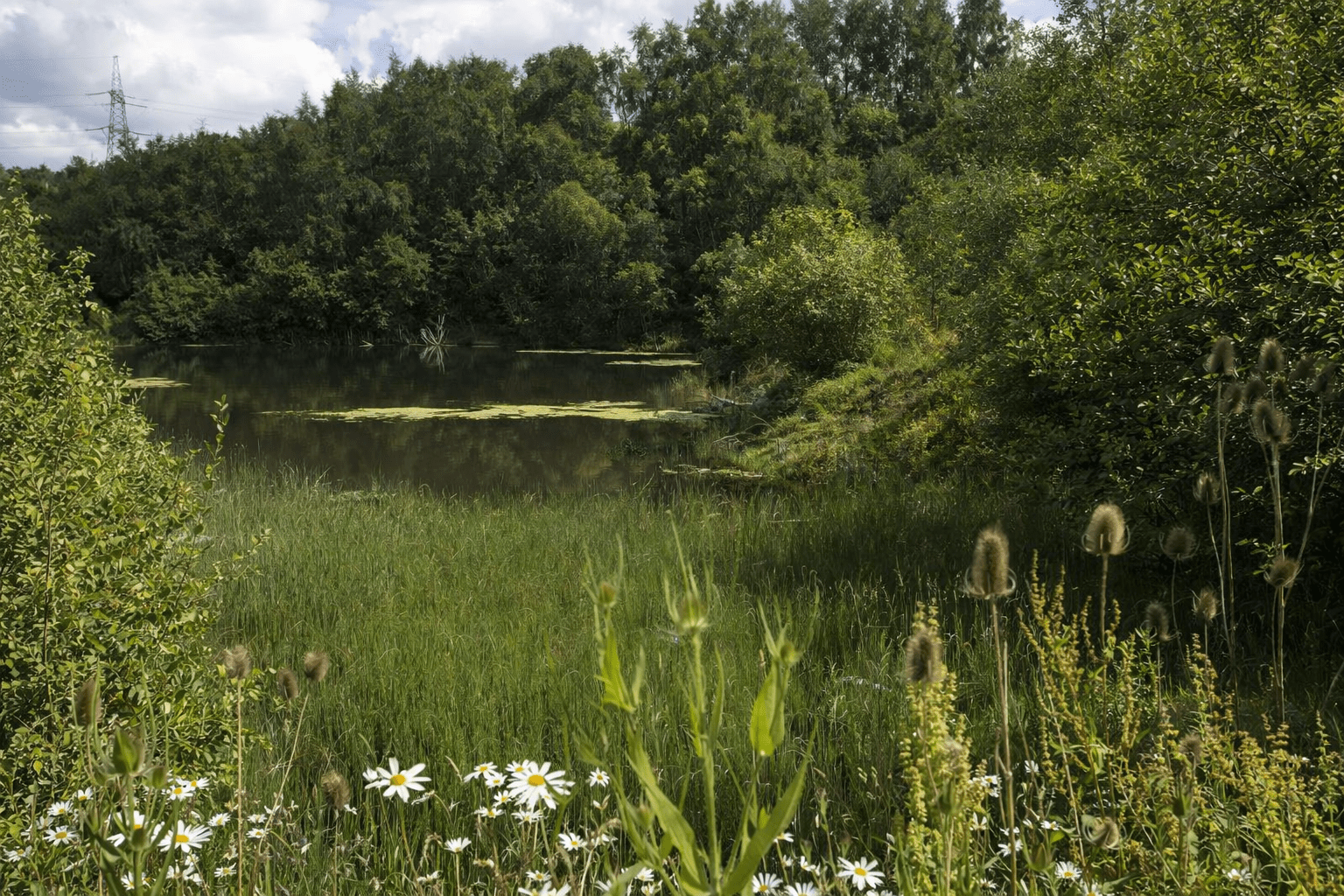
Swales, basins, and attenuation features can be wetland habitat rather than sterile bowls. Side slopes, shelves, and planting palettes are the difference between “pond feature” and functioning ecosystem. And yes, it still drains.
Road corridors and verges
You don’t need acres of land. A verge seeded properly, managed as meadow rather than mown strip, can act as a pollinator corridor. Linear habitat is underrated.
Utilities easements
They don’t have to be dead space. Low-growing grassland, scrub mosaics, and managed edges can work while keeping access and safety intact.
Public realm and housing layouts
Pocket greens, boundary treatments, and buffer zones can be stitched into a coherent network instead of isolated scraps.
If it feels like a bolt-on, it probably is. And bolt-ons tend to get value-engineered out when the QS is having a day.
The delivery mindset shift: “What gets drawn gets built”
A practical rule I’ve learned to stick to (and I’m boring about it, sorry) is this:
If a measure isn’t on the coordinated drawing set, it won’t happen reliably.
That means ecological measures must appear in:
- GA and setting out drawings where relevant
- Earthworks plans
- Drainage drawings (with ecological intent embedded, not just hydraulic performance)
- Landscape construction details
- Specifications that procurement can’t quietly “interpret”
Also, call things what they are. “Native planting” is vague. “Species-rich calcareous grassland, sown at X rate with Y management regime” is harder to mess up.
Not impossible, but harder.
A simple planning-to-delivery workflow that works
No, it’s not glamorous. But it’s what keeps schemes from drifting.
| Project Stage | What to lock in | Common failure point | What fixes it |
|---|---|---|---|
| Feasibility / concept | Baseline, retention areas, high-level habitat targets | Ecology arrives after layout fixed | Early ecology input in layout + drainage options |
| Planning submission | Clear measures, measurable outcomes, realistic management outline | Measures described but not buildable | Draft outline details + constraints noted |
| Technical design | Coordinated details across civils, SuDS, landscape | “Value engineering” removes ecological function | Tie measures to requirements + approvals |
| Procurement | Correct specs, approved mixes, defined substitutions process | Wrong seed/plant stock ordered | Named products/mixes + substitution sign-off |
| Construction | Protection, sequencing, soil handling, supervision | Soil compaction, storage failures | Toolbox talks + inspection points |
| Completion / handover | Aftercare plan, responsibilities, monitoring schedule | Nobody owns maintenance | Written handover + funded management |
| Post-completion | Monitoring, remedial works if needed | Habitats degrade quietly | Trigger points for intervention |
You’ll notice most fixes are boring admin and coordination. That’s because ecological delivery is mostly coordination. The nature bit comes later.
Soil handling: the unsexy difference-maker
I bang on about soils because I’ve watched too many schemes fail for lack of basic soil care.
Topsoil is not just “dirt”. It’s structure, biology, seedbank, drainage behaviour. If you strip it when it’s too wet, store it badly, and spread it compacted, you’ve created a hostile medium for anything subtle like meadow or woodland edge.
Good practice (in plain English):
- Strip and move soils in suitable conditions, not “whenever the machine is free”
- Keep topsoil and subsoil separate
- Don’t store soil heaps like mini mountains for months if you can avoid it
- De-compact before spreading and planting
- Specify soil depths that match the habitat, not a generic number
Meadow establishment on heavily compacted soil is misery. You get coarse grasses and weeds, then everyone says “wildflowers don’t work here”. They do. You just didn’t give them a chance.
Get the sequencing right, or it becomes a faff
Ecological measures have timing needs. Not preferences. Needs.
Planting windows, seed sowing periods, amphibian seasons, bird nesting constraints, and weather risk all matter. The UK doesn’t politely give you a dry spring just because the programme says so.
A few sequencing realities:
- Meadows are often best sown in late summer or autumn, depending on mix and conditions.
- Woodland planting wants dormant season conditions for bare-root stock.
- Wetland and marginal planting needs the right water levels, not a flooded hole one month and a cracked pan the next.
Programme teams don’t love hearing this. Fair. But ignoring it leads to failure, then rework, then arguments about whose fault it is. Nobody wins.
Make measures buildable for the people on site
This is where plain speaking helps. You can have the best ecological plan in the world, but if the site team can’t translate it into action, it’ll drift.
A few tactics I’ve seen work well:
- Toolbox talks that aren’t waffle: 10 minutes, show the drawing, show what “good” looks like.
- Site signage: basic, but it stops accidental damage. “Do not store materials here” saves habitats.
- Hold points: agreed inspection points before key steps (soil spread, seed sow, planting).
- Mock-ups: for tricky details, build a small sample area first. Yes, it feels like extra work. Then it saves you days of redoing.
I was going to say “keep it simple”, but that’s not quite right. Keep it clear. Complexity is fine if it’s communicated properly.
Where the internal link belongs
Somewhere in the middle of the process discussion, you’ll want a sentence that points readers to the service page without making it feel bolted on. This is that moment.
On schemes with multiple packages and moving parts, it helps to have one team owning the join between ecology, civils and landscape, rather than leaving it to chance. That’s why we focus on strategic ecological enhancement solutions that are designed to be built, maintained, and evidenced long after the handover photos are taken.
Monitoring and management: the bit everyone forgets
You can’t just install ecology and walk away. Not if you want measurable gains.
Monitoring doesn’t need to be painful. It does need to be planned.
A basic, workable approach:
- Establishment checks at 3, 6, and 12 months
- Annual reviews for a few years (or as required by agreements)
- Clear “trigger points” for intervention (e.g., meadow dominated by undesirable species beyond a threshold)
And management must be realistic. If a housing estate management company is doing the work, don’t specify specialist operations that require kit they’ll never have. Match the habitat ambition to the long-term operator.
This is where a little honesty saves grief. “We can manage this well” is not the same as “we can afford to manage this well”.
Practical examples in a UK context
A few scenarios that crop up all the time.
New housing on former arable land
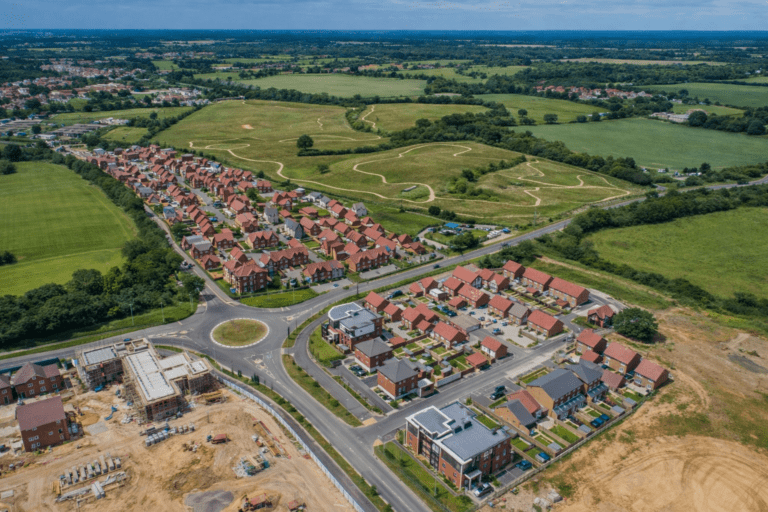
Think Midlands edge-of-town sites, where you’ve got standard house types, play areas, access roads, and SuDS. Enhancement tends to succeed when SuDS is treated as habitat, hedgerows are retained and strengthened, and open spaces are connected rather than scattered.
Infrastructure upgrades near existing settlements
Road widening, new junctions, drainage upgrades. Usually constrained corridors. Here, small changes matter: verge treatment, underpass ledges, retaining edge habitat, smart planting on embankments.
Commercial / industrial schemes
Big roofs, hardstanding, service yards. It’s tempting to accept “ecology is limited here”. But you can still create meaningful green corridors, rain gardens, tree pits with real soil volume, and edge habitats that connect to the wider landscape.
None of these are fairy tales. They’re just projects where people didn’t leave ecology until the end.
FAQs
Do ecological enhancements always mean extra land take?
No. Often the best gains come from making existing land do more – especially SuDS corridors, verges, embankments, and boundary buffers. It’s more about design decisions than acreage.
How do you stop “value engineering” killing ecological function?
Tie measures to measurable outcomes and approvals. If a substitution affects habitat condition or distinctiveness, it’s not a like-for-like swap. Make substitution sign-off explicit in the spec, not informal.
What’s the biggest cause of failure after installation?
Maintenance confusion. Either nobody owns it, or the owner doesn’t understand the management regime. Aftercare plans need named responsibilities, budgets, and timings. Otherwise habitats decline quietly.
Are wildflower meadows reliable on development sites?
They can be, but soil handling and management are everything. Meadows on compacted, nutrient-rich soils often fail. Get soils right, choose appropriate mixes, and manage cutting and arisings properly – then they can be dead good.
How does Biodiversity Net Gain change delivery expectations?
It forces evidence. A 10% uplift objective measured through the statutory metric means you need defendable baseline data, credible habitat creation, and long-term securing and management.
What if weather throws the programme off?
It will. Build contingency into planting and sowing windows where possible, and avoid forcing ecological installs into unsuitable conditions. Rushed installs often cost more later in remedial works.
Conclusion: good ecology is mostly good project management
Effective ecological enhancement measures aren’t mysterious. They’re just easy to mess up when programme pressure, budget pressure, and coordination gaps collide.
The projects that get it right tend to do a few things consistently:
- Treat ecology as part of the design, not decoration
- Translate measures into coordinated drawings and buildable details
- Handle soils like they matter (because they do)
- Sequence works around real-world seasons and site conditions
- Fund and assign long-term management properly
And, yes, they accept that a bit of adaptation will be needed. Nature doesn’t read your programme. It barely reads your spec. But if you set it up well, it usually responds.
Not perfectly. Not instantly.
But properly.

Killingley Insights is the editorial voice of NT Killingley Ltd, drawing on decades of experience in landscaping, environmental enhancements, and civil engineering projects across the UK.