Heritage Conservation
Protecting heritage assets while enabling responsible change
Heritage conservation is about safeguarding historic landscapes, structures, and features so they can continue to tell their story while remaining functional, safe, and compliant in a modern context. At its core, it balances preservation with practicality. Sites evolve, infrastructure is upgraded, and land use changes, but heritage value must be respected at every stage.
For landowners, developers, and public bodies, this often means working within tight constraints. Listed status, conservation areas, scheduled monuments, or archaeological sensitivity can all influence what is possible. Heritage conservation provides a structured, informed way to manage those constraints without stalling progress or compromising long-term site value.
As part of Killingley’s Environmental Enhancements offering, heritage conservation sits alongside ecological restoration, biodiversity gain, and landscape-led design. It ensures that cultural and historic significance is protected as an integral part of sustainable land management, not treated as an afterthought.

Heritage conservation methods and delivery
Effective heritage conservation starts with understanding what matters and why. Killingley’s approach is rooted in careful assessment, collaboration with specialists, and a clear methodology that aligns heritage requirements with wider project objectives.
Site assessment and historic context
Every heritage conservation project begins with a detailed appraisal of the site. This may include desk-based research, historic mapping, and consultation with conservation officers or archaeologists. The aim is to identify assets of significance and define appropriate levels of protection or enhancement.
Sensitive construction and groundworks
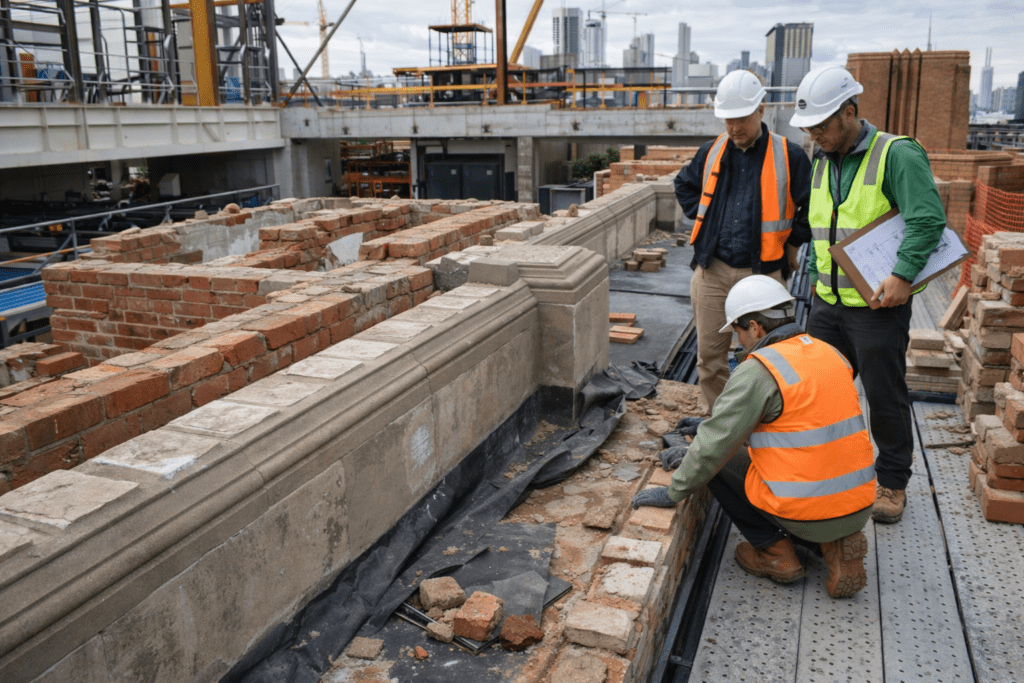
Where works are required, methods are selected to minimise disturbance. This might involve low-impact excavation, hand-led works around sensitive features, or adapted machinery choices. Materials are chosen to complement existing fabric and setting rather than overpower it.
Integration with modern requirements
Heritage conservation does not mean freezing a site in time. Drainage upgrades, access improvements, or landscape works are carefully integrated so they meet current standards while respecting historic character. Clear documentation supports planning conditions and ongoing asset management.
Why heritage conservation matters
Heritage conservation plays a vital role in maintaining a sense of place. Historic environments give communities identity and continuity, linking past use of the land with its future purpose. When handled well, conservation strengthens local character rather than restricting development.
From a practical perspective, robust heritage conservation reduces risk. Early, informed intervention helps avoid delays, enforcement action, or costly redesign later in a project. It also supports smoother engagement with planning authorities and statutory consultees.
Economically, heritage assets that are well conserved tend to retain or increase value. Whether a rural estate, infrastructure corridor, or urban redevelopment site, respecting heritage significance enhances credibility and long-term usability. Heritage conservation therefore underpins sustainable development in the fullest sense, balancing protection, compliance, and progress.
Heritage conservation applications
Heritage conservation is applied across a wide range of settings where historic value and modern land use intersect. Typical applications include:
Typical applications include:
- Infrastructure schemes passing through historically sensitive landscapes
- Developments within conservation areas or adjacent to listed structures
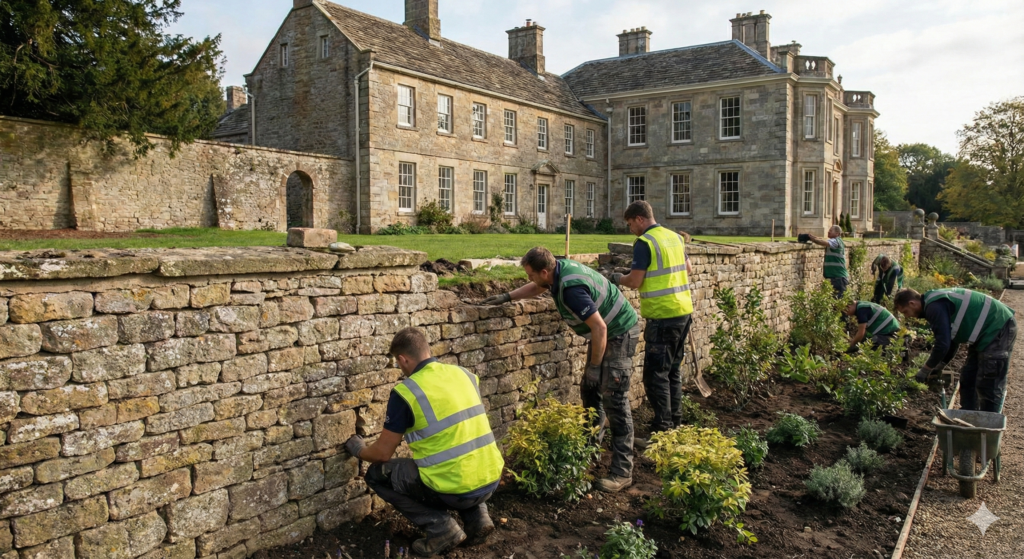
- Estate management projects involving historic boundaries, walls, or features
- Flood alleviation or drainage works near heritage assets
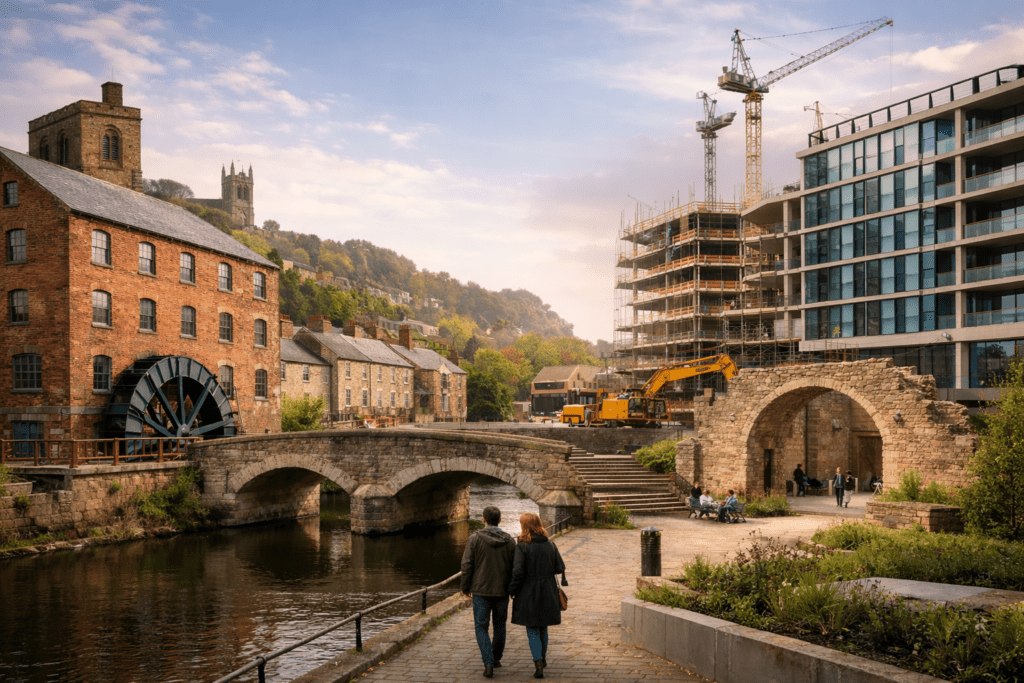
- Public realm and landscape improvements in historic towns or villages
- Restoration of traditional landforms, paths, or water features
Each application requires a tailored approach, informed by the site’s significance and the practical demands of the project.
Benefits of heritage conservation
Heritage conservation delivers clear, tangible benefits when embedded properly into project planning and delivery. It protects irreplaceable assets while allowing land to function effectively in the present day.
It provides confidence to stakeholders, demonstrating that heritage responsibilities are being taken seriously and managed professionally. This can ease planning discussions and build trust with local authorities and communities.
From a delivery perspective, heritage conservation helps avoid reactive decision-making. Clear strategies, agreed methods, and informed sequencing reduce disruption and improve cost certainty. Ultimately, it supports projects that are respectful, compliant, and resilient over the long term.

Working with Killingley on heritage conservation
Killingley brings practical experience to heritage conservation, grounded in an understanding of both environmental and construction-led projects. The team works closely with planners, ecologists, archaeologists, and engineers to ensure heritage considerations are integrated rather than isolated.
Compliance is central to this approach. Works are aligned with planning conditions, heritage consents, and relevant guidance, with clear records maintained throughout delivery. Sustainability underpins decision-making, ensuring interventions support long-term stewardship of historic environments.
Clients value Killingley’s reliability and clarity. Heritage conservation projects are managed with realistic programming, transparent communication, and an emphasis on doing the work properly first time. The result is a collaborative process that protects heritage assets while keeping projects moving.