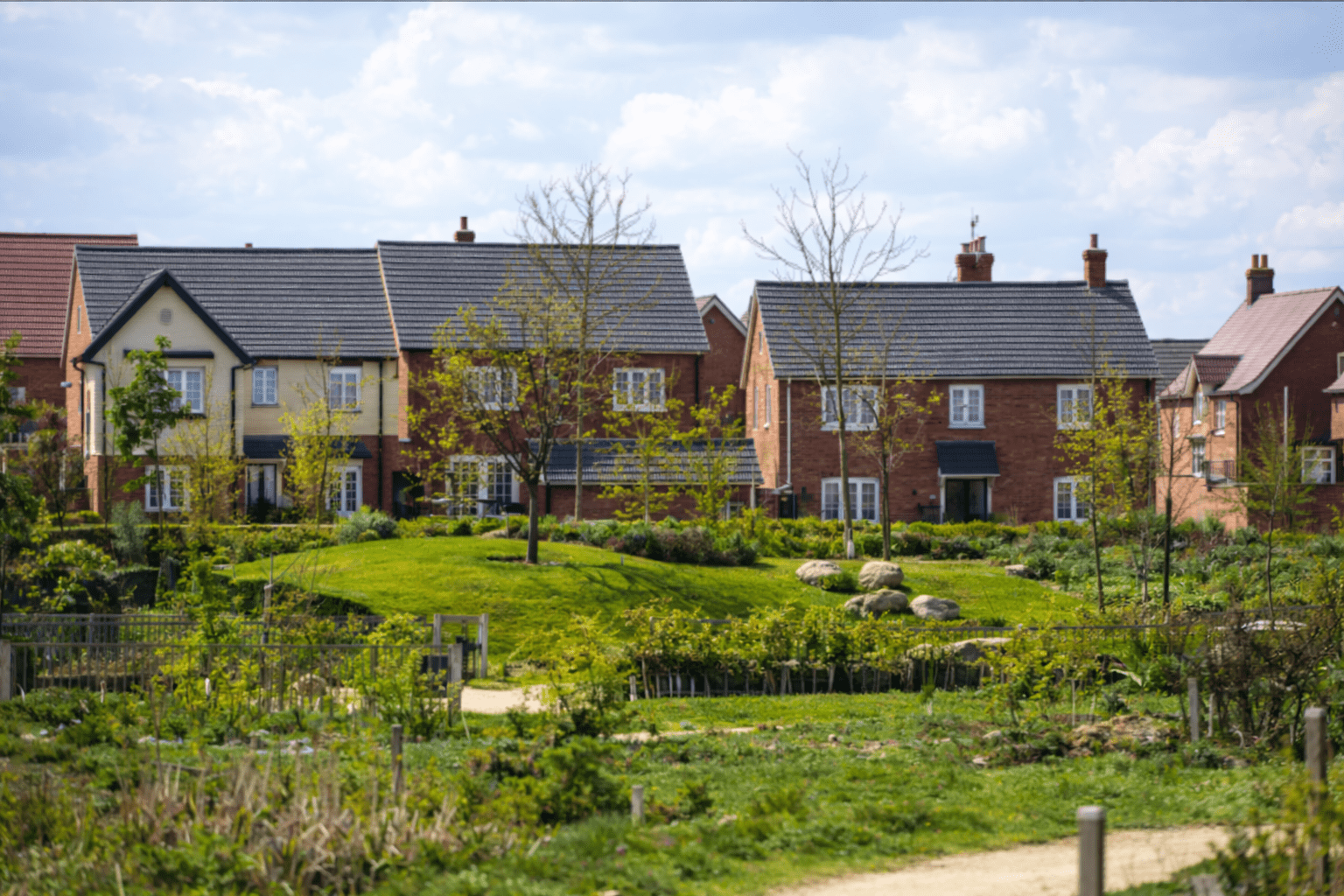
Ecological Enhancements in Development Projects: How Real Environmental Gains Are Properly Delivered

Walk past almost any new housing estate or commercial park in the UK and you’ll see the signs. A few saplings in plastic guards. A strip of wildflower seed that looked hopeful for about six weeks. A pond that’s more puddle than habitat. On paper, it all ticks boxes. In reality… well. You know.
Ecological enhancements in development projects are meant to do more than keep planners happy. Done properly, they should leave land in a better state than before. Not just “less bad”. Better. More resilient. More alive. And, crucially these days, measurable.
That’s the bit that tends to unravel. Because delivering real, defensible environmental gains isn’t about sprinkling biodiversity on top at the end. It’s a design problem, a sequencing problem, a long-term management problem. And sometimes, if we’re being honest, it’s a mindset problem too.
I’ve been around enough sites to see the full range. From genuinely thoughtful schemes that quietly outperform expectations, to last-minute bolt-ons that everyone involved knows won’t last past the first winter. This piece digs into the difference between those two extremes, and why ecological enhancement is slowly becoming less optional than some developers still hope.
What do we really mean by ecological enhancement?
Before anything else, let’s straighten this out. Ecological enhancement isn’t the same thing as mitigation. Or compensation. Or “doing a bit of landscaping”.
Mitigation reduces harm. Compensation offsets damage elsewhere. Enhancement goes further. It actively improves ecological value on site compared to the baseline condition.
That baseline matters, by the way. A scraped agricultural field, a brownfield site full of ruderal species, an unmanaged verge – all very different starting points. And yet, they’re often treated as interchangeable in early planning conversations. Which is odd, when you think about it.
In practical terms, ecological enhancements might include:
- Creating new habitats that weren’t there before.
- Improving connectivity between existing habitats.
- Increasing species diversity, not just plant count.
- Designing features that function long after the diggers leave.
But that’s still vague, isn’t it? The sharper definition is this: ecological enhancement delivers quantifiable uplift that can be evidenced, monitored, and defended years later.
If you can’t measure it, you can’t really claim it.
Why “nice ideas” aren’t enough anymore
There was a time when good intentions carried a lot of weight. A planting plan with the right words. A consultant’s report full of Latin names. Everyone nods, signs it off, moves on.
Those days are fading. Fast.
Between Biodiversity Net Gain requirements, local authority scrutiny, and increasing public awareness, enhancements are expected to perform. Not symbolically. Practically.
And here’s the uncomfortable bit for some projects: a poorly thought-out ecological scheme can actively undermine planning confidence. I’ve seen developments delayed because the proposed “enhancements” were so generic they raised more questions than answers.
Funny thing is, it’s rarely malicious. It’s usually rushed. Or siloed. Ecology dealt with late, after layouts are locked, services are routed, levels are fixed. At that point, options narrow quickly.
You end up with awkward leftovers. Thin margins. Marginal gains, if any.
Designing ecology in, not around
This is where the best projects quietly pull ahead. They treat ecology as part of the design process, not an appendix.
Early-stage ecological thinking influences:
- Where built form sits.
- How surface water is handled.
- Which boundaries are softened, strengthened, or left alone.
- How people move through a site.
Once those decisions are made, everything else flows more easily. You stop forcing habitats into corners they can’t survive in. You stop pretending that a metre-wide strip between a fence and a car park is “valuable habitat”.
I was going to say “common sense”, but actually… it’s more about discipline. Ecology competes with programme pressure, budget pressure, land pressure. Without someone holding the line early on, it gets squeezed.
That’s why proper ecological enhancement design and implementation works best when it’s integrated into the wider construction and landscape strategy, rather than handed off as a standalone exercise.
On live schemes, this is where specialist input earns its keep. Good outcomes don’t come from generic planting plans bolted on at the end, but from early-stage thinking that ties habitat creation, drainage, landform and long-term management together. That joined-up approach is what turns policy compliance into genuine uplift, and it’s why experienced teams focus on ecological enhancement design and implementation as a practical delivery process, not just a planning exercise.
The measurable bit: proving environmental gain
Here’s where things either get interesting or uncomfortable, depending on how confident the scheme really is.
Measurable environmental gain means you can demonstrate uplift using accepted metrics. In England, that often means the Defra Biodiversity Metric. Love it or hate it, it’s now the language planners speak.
At a basic level, metrics look at:
- Habitat type.
- Condition.
- Area.
- Strategic significance.
Improve those variables, and your biodiversity units go up. Simple in theory. Trickier on site.
Because improving “condition” isn’t just about planting. It’s about establishment, management, and resilience. A wildflower meadow that turns into ryegrass after two seasons doesn’t stay in good condition. A pond that dries out every summer isn’t a functional aquatic habitat.
This is where long-term thinking pays off. And where a lot of schemes quietly fail.
Common enhancement types that genuinely deliver
Not everything needs to be exotic or experimental. Some of the most reliable ecological enhancements are also the least flashy.
Habitat creation that matches the landscape
Creating habitats that make sense for the local area is far more effective than importing something trendy. Lowland meadow in Derbyshire. Wet woodland in flood-prone valleys. Hedgerows that actually link existing features, not just decorate boundaries.
When habitats reflect local character, they establish faster, support more species, and require less intervention later. Less faff. Better outcomes.
SuDS that double as habitat
Sustainable drainage systems are often treated as engineering features first, ecology second. Which is a missed opportunity.
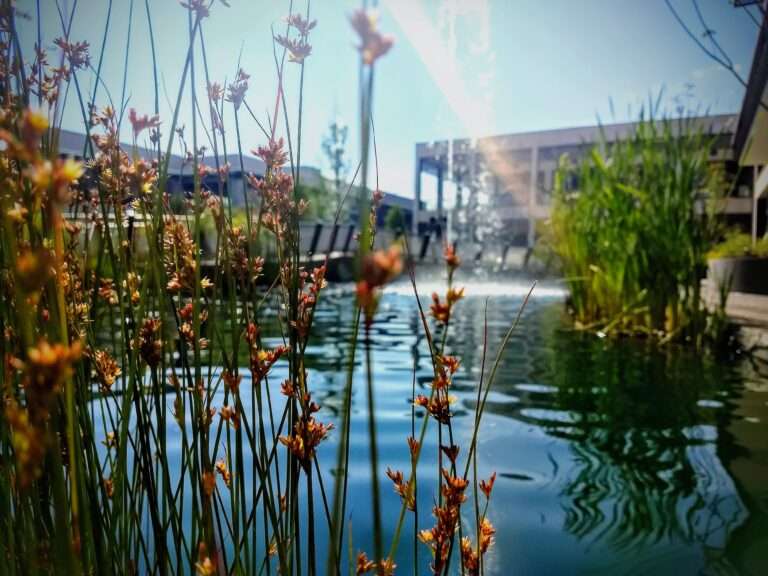
Properly designed swales, basins, and attenuation ponds can support amphibians, invertebrates, birds, even mammals. And they still manage water effectively. Win-win.
The trick is in profiles, planting palettes, and avoiding the temptation to over-engineer. Flat-bottomed, steep-sided basins might drain well, but they’re ecological dead zones.
Connectivity over isolation
One decent wildlife corridor often delivers more benefit than several isolated “features”. Connectivity allows species to move, adapt, and recolonise. Especially important as climate patterns shift.
Think hedgerows that link to woodland blocks. Ditches that connect wetlands. Green routes that cut through developments instead of skirting them.
I find this is where good site layout quietly earns its keep.
The management question nobody wants to answer
Here’s the awkward pause in most meetings. Who’s maintaining this? And for how long?
Because ecological enhancements don’t look after themselves. At least not at first. Establishment periods matter. Aftercare matters. Miss a couple of seasons and gains can unravel quickly.
Management plans don’t need to be complex, but they do need to be realistic. There’s no point specifying specialist meadow cuts if the managing party has neither the equipment nor the budget to do it.
I’ve seen beautifully designed habitats slowly decline because responsibility was vague. Or worse, handed to someone who never signed up for it.
Clear ownership. Clear funding. Clear expectations. Boring, maybe. Essential, definitely.
Addressing the usual developer concerns
Let’s not pretend there aren’t objections. They come up again and again.
“It costs too much”
Sometimes. Not always.
Early integration often reduces cost overall by avoiding retrofits and redesign. And many enhancements double up functionally – drainage, screening, amenity, biodiversity all in one.
Late-stage ecology is expensive. Planned ecology is often surprisingly efficient.
“It delays the programme”
Rushed ecology delays programmes more reliably than considered ecology does. Surveys missed. Conditions not discharged. Redesigns late in the day.
Front-load the thinking and it usually smooths things out, rather than slowing them down.
“Planners keep changing the goalposts”
Occasionally true. But more often, vague proposals invite scrutiny. Clear, measurable enhancements with evidence behind them tend to pass through with far less friction.
UK-specific pressures shaping ecological enhancement
This isn’t happening in a vacuum. UK development has its own particular constraints and drivers.
Housing density is rising. Brownfield regeneration is prioritised. Climate resilience is no longer optional. Flood risk, heat stress, water quality – all tied back to how land is treated.
Add Biodiversity Net Gain into the mix, and suddenly ecological enhancement shifts from “nice to have” to “non-negotiable”.
Local authorities differ in how they apply it, but the direction of travel is clear. And it’s not reversing.
When enhancements go wrong
Worth touching on this, briefly. Because failures are instructive.
- Over-planting without regard for soil or hydrology.
- Token features that look good in visuals but fail on site.
- Ignoring invasive species until they dominate.
- Designing habitats no one can access or manage.
None of these are rare. And most are preventable.
The common thread? Disconnection. Between designers and contractors. Between ecology and construction. Between intention and delivery.
Pulling it together on live projects
On well-run developments, ecological enhancement isn’t a single moment. It’s a process.
Baseline assessment. Early design input. Metric modelling. Construction-phase protection. Post-installation management. Monitoring. Adjustments when needed.
Messy? Sometimes. Linear? Rarely. But effective.
If you’re serious about delivering measurable environmental gains, that process needs to be owned, not outsourced and forgotten.
So, does it really make a difference?
Short answer: yes. Longer answer: when it’s done properly.
I’ve revisited sites years later where enhancements have matured into genuine assets. Not just ecologically, but socially. Places people enjoy. Places that function better in heavy rain. Places that feel settled rather than imposed.
And I’ve revisited others where everything promised quietly disappeared.
The difference is rarely money alone. It’s thinking, timing, and commitment.
Final thoughts
Ecological enhancement in development projects isn’t about perfection. It’s about intent backed by competence.
A bit of humility helps too. Nature doesn’t always behave as predicted. Schemes need room to adapt. To be tweaked. To respond to what actually happens on the ground.
Get that right, and environmental gains stop being theoretical. They become visible. Defensible. And, over time, valuable in ways that spreadsheets don’t always capture.
Properly sorted, in other words.

Killingley Insights is the editorial voice of NT Killingley Ltd, drawing on decades of experience in landscaping, environmental enhancements, and civil engineering projects across the UK.