Cut Waste, Cut Costs: Why Reusing Materials On Site Just Makes Sense

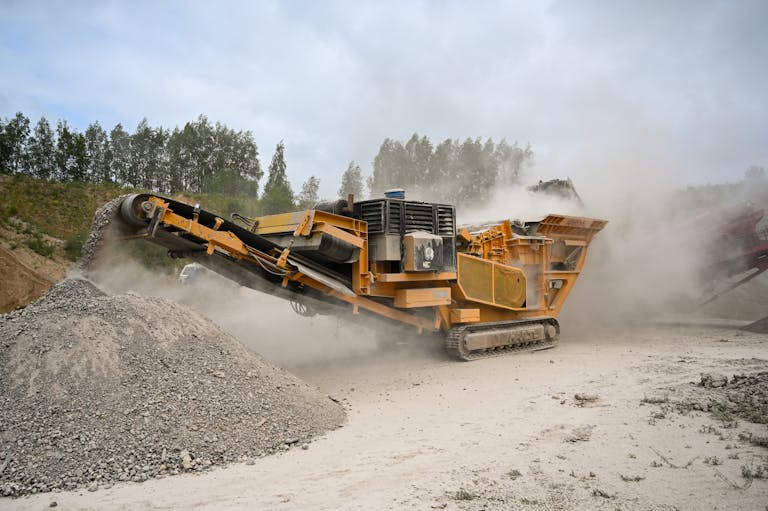
There’s something oddly satisfying about watching a crusher chew through old concrete on a live site. Dust in the air, steady rhythm, material going in as “waste” and coming out as usable aggregate. It feels… sensible.
Because it is.
Material reuse on site isn’t some fashionable sustainability add-on. It’s practical. It’s cost-aware. And in plenty of UK schemes – from Derbyshire housing developments to flood alleviation works in Yorkshire – it’s becoming the default approach rather than the exception.
But here’s the thing. It only works if it’s planned properly. Done badly, it becomes a logistical headache. Done well, it changes the economics of the entire job.
Let’s unpack it.
Construction Waste in the UK – The Scale of It
A quick reality check.
The UK produces over 60 million tonnes of construction, demolition and excavation waste every year. It’s one of the largest waste streams in the country. Some of it is reused. A fair bit still travels off site.
Every lorry movement costs money. Fuel. Driver time. Gate fees. Traffic management. Not to mention carbon.
So when we talk about reusing materials on site, we’re not discussing a niche tactic. We’re talking about addressing one of the biggest cost and environmental levers in infrastructure.
And it’s not theoretical. It’s happening daily on real projects.
What Do We Mean by Material Reuse?
Strip back the jargon.
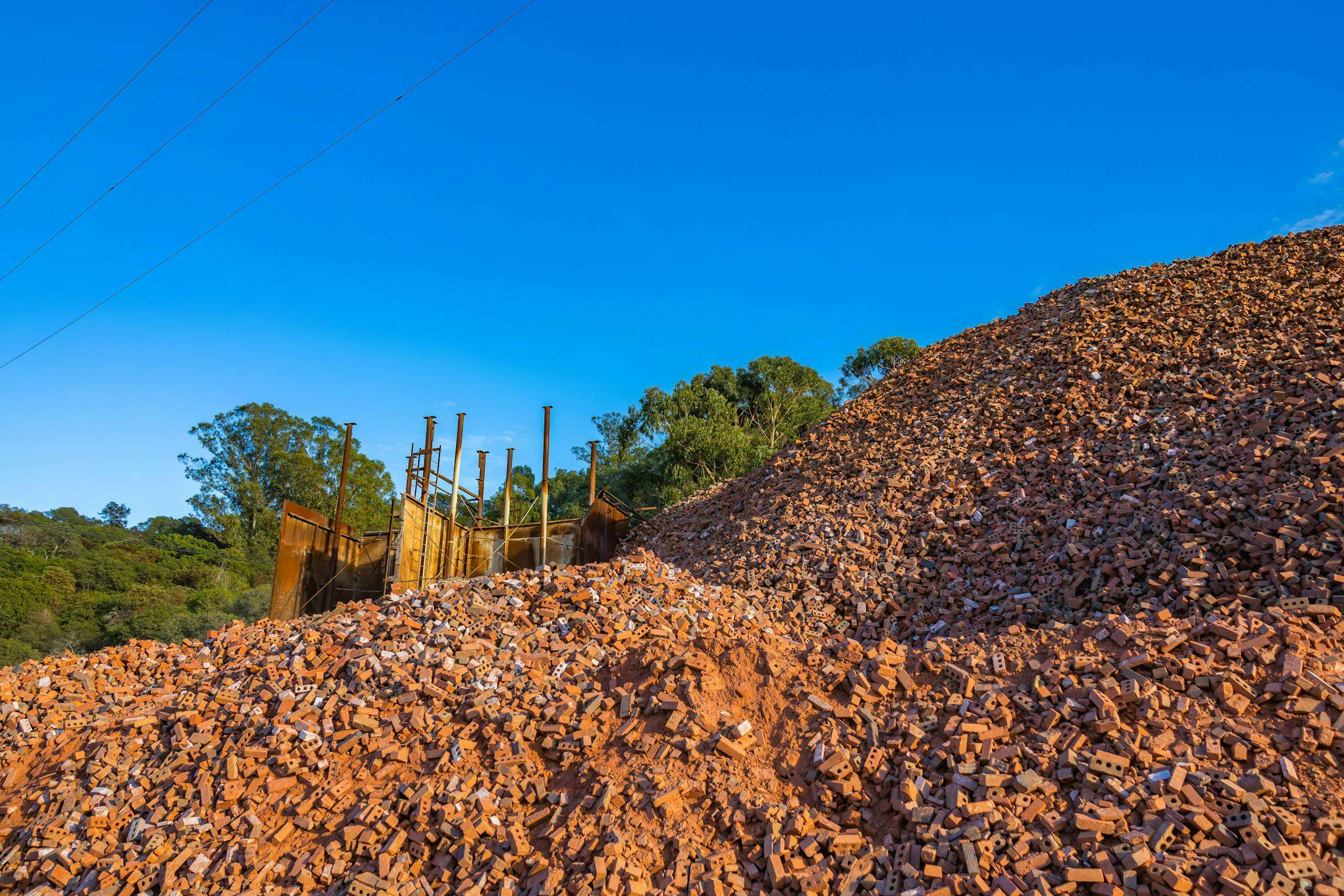
Material reuse on site means processing what’s already there – excavated soil, demolished concrete, old hardstanding, brick arisings – and turning it into usable fill, sub-base or structural layers within the same scheme.
Instead of:
- Dig it out
- Load it up
- Send it away
- Buy new material
- Bring it back
You compress that loop.
Dig. Process. Reuse.
Sounds obvious when you write it down like that.
Cost Control – Where the Real Gains Show Up
Let’s talk money first, because whether we like it or not, that drives decision-making.
Disposal isn’t cheap. Haulage alone can be a killer on tight sites. Then you’ve got tipping fees, which fluctuate depending on classification and contamination risk.
On the flip side, buying imported aggregate isn’t exactly pocket change either.
Reusing material reduces both outgoing waste costs and incoming material costs. It shortens supply chains. It simplifies programme sequencing.
On a medium-sized housing site – say 80 to 120 homes on the outskirts of Mansfield or Chesterfield – aggregate requirements run into thousands of tonnes. If even half of that can be sourced from processed site material, you’re looking at significant savings.
Not pennies. Proper savings.
And those savings compound over the programme.
Sustainability – Beyond the Brochure Claims
It’s easy to throw around phrases about carbon reduction. But what does reuse genuinely achieve?
First, it reduces quarry demand. That means fewer extraction activities, less blasting, less transport from remote sources.
Second, it cuts down on lorry movements. Anyone who’s sat behind a convoy of tipper trucks on a narrow Derbyshire lane will appreciate that one.
Third, it keeps materials in productive use rather than pushing them towards landfill or low-grade backfill elsewhere.
But sustainability isn’t just environmental. There’s a resilience angle too.
When you’re less reliant on external aggregate supply, you’re less exposed to price spikes and material shortages. Remember the supply chain crunch a couple of years back? Those sites that could reuse their own materials were far less stressed.
On-Site Crushing and Screening – The Practical Bit
Right, so how does it work in real terms?
Mobile crushers and screeners are brought onto site. Concrete arisings are processed to create graded aggregate. Soil is screened to remove oversized fragments and contaminants.
Material is stockpiled in controlled areas, tested where necessary, then reincorporated into sub-base, capping layers or landscaping build-ups.
I’ve seen projects where the entire site road network was constructed from processed demolition material generated during the first phase of clearance. Efficient. Clean. Sorted.
And when teams implement on-site aggregate processing and reuse solutions effectively, it becomes part of the programme strategy rather than an afterthought.
That distinction matters.
Not Every Material Is Reusable – And That’s Fine
Let’s not pretend everything dug up can be crushed and reused.
Clay-heavy soils might need stabilisation. Contaminated ground requires proper remediation. Mixed demolition waste with timber and plastics needs careful sorting.
Reuse isn’t about blindly recycling everything. It’s about intelligent selection.
And sometimes – yes – importing primary aggregate remains the correct call. There’s no badge of honour for forcing reuse where it compromises performance.
The key is assessment early in the design phase. Ground investigations. Material sampling. Realistic planning.
Programme Benefits – Often Overlooked
Here’s something that doesn’t get enough attention.
When you reuse materials on site, you reduce dependency on external deliveries. Fewer lorry bookings. Fewer delays waiting for supply slots. Fewer weather-related hold-ups on regional transport routes.
It smooths the programme.
I find that projects with planned reuse tend to feel calmer. Less frantic coordination. Less last-minute chasing of aggregate loads at 7am on a wet Tuesday.
It’s subtle. But noticeable.
A Simple Cost Comparison
Here’s a rough illustrative example. Numbers will vary, obviously, but it gives a flavour.
| Item | Import & Dispose Approach | On-Site Reuse Approach |
|---|---|---|
| Disposal haulage & tipping | High | Low |
| Imported aggregate cost | High | Reduced |
| Fuel & transport emissions | Higher | Lower |
| Programme risk | Moderate | Lower (if planned) |
| Upfront processing cost | Minimal | Moderate (crusher hire) |
The upfront cost of mobile processing equipment often worries people. But when balanced against avoided disposal and import costs, it frequently works out favourably.
You’ve just got to run the numbers honestly.
Regulatory and Compliance Considerations
Environmental regulations in the UK aren’t exactly relaxed. Waste classification, duty of care, environmental permits – it’s not a free-for-all.
However, when material is processed and reused within the same site under the correct permits and waste exemptions, compliance is entirely achievable.
The Environment Agency framework supports beneficial reuse. It just requires documentation and proper handling.
Skipping paperwork? Bad idea.
Done properly? Straightforward.
Frequently Asked Questions
Is on-site reuse always cheaper?
Not always. Small projects with limited material volumes might not justify crusher mobilisation. It tends to work best on medium to large schemes.
Does reused aggregate meet engineering standards?
If processed and tested correctly, yes. Grading, compaction, CBR values – all can be verified through standard testing.
What about contamination risks?
Early testing is critical. If contamination is present, targeted remediation may still allow partial reuse. Blanket disposal isn’t always required.
Does reuse slow the job down?
Initially, planning takes effort. But once set up, reuse can speed the programme by reducing reliance on external supply.
Housing Developments – A Perfect Example
Think about a typical UK estate build. Detached houses. Semi-detached plots. Maybe a row of terraces tucked along one boundary. Standard stuff.
Ground clearance produces concrete slabs, old access roads, surplus soils.
Instead of exporting it all, many developers now crush concrete to form sub-base for internal roads and driveways. Screened soils shape landscaped bunds. It keeps the material narrative within the boundary.
Less traffic through nearby villages. Fewer complaints. Lower costs.
Neighbours tend to appreciate that.
Infrastructure and Flood Schemes
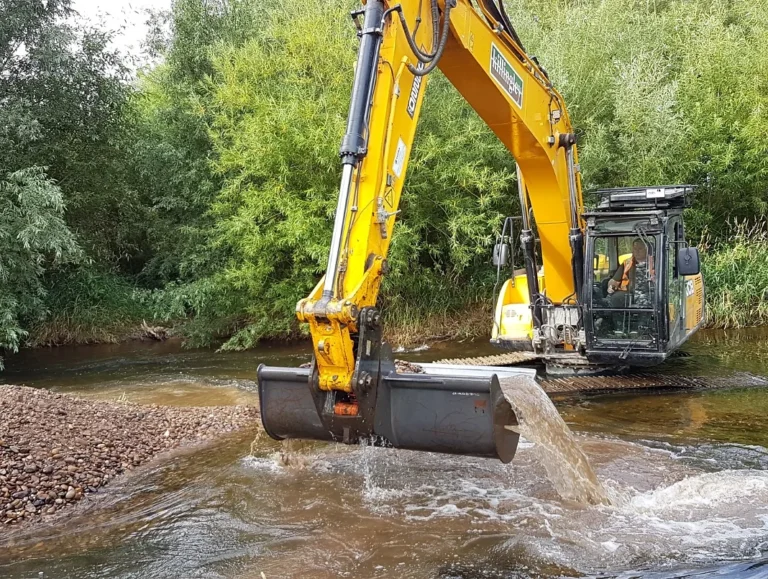
Flood alleviation projects around rivers – say along the Derwent or smaller tributaries – often generate excavated material during channel re-profiling.
Reusable soils can form embankments. Crushed concrete can stabilise access tracks.
It becomes a closed-loop system.
I was going to say it’s elegant… but that sounds grand. It’s just sensible engineering.
The Human Factor
Let’s be honest for a moment.
Some resistance to reuse comes from habit. Engineers comfortable with primary quarry stone sometimes hesitate to rely on processed site material.
That’s understandable. Risk aversion isn’t a flaw.
But experience shows that, with proper testing and oversight, reused material performs reliably in many contexts.
Confidence grows with exposure.
Weather, Again
British weather loves to complicate things.
Wet winters can affect soil screening operations. Frost conditions can delay compaction.
But here’s the irony – importing material during heavy rain can be even more disruptive. Lorries stuck. Delivery slots missed. Site entrances churned up.
Reuse reduces some of that vulnerability.
It doesn’t eliminate it. Nothing does. But it helps.
When Reuse Goes Wrong
Worth mentioning.
Poor stockpile management. Inadequate separation of clean and contaminated materials. Lack of testing. Overconfidence.
Those are the pitfalls.
Material reuse isn’t automatic success. It demands supervision, quality control and realistic planning.
Cutting corners here is a false economy.
Long-Term Performance – The Bit That Really Matters
All cost savings mean nothing if the finished infrastructure fails.
Reused aggregates, when properly graded and compacted, perform comparably to imported materials in many applications. Sub-base layers, haul roads, capping – proven use cases exist across the UK.
Monitoring settlement and load performance provides reassurance.
And once buried beneath tarmac or paving, no one distinguishes between “recycled” and “primary” – they only care that it holds up.
Which it should.
Bringing It Together
So where does that leave us?
Material reuse on site improves sustainability by reducing extraction and transport. It improves cost control by trimming disposal and import expenses. It improves programme stability by lowering supply chain dependency.
But – and this is important – it requires forethought. Early assessment. Technical oversight. Willingness to test rather than assume.
It’s not a magic switch. It’s a strategy.
On projects where volumes justify mobilisation and engineering constraints allow it, reuse isn’t just environmentally responsible. It’s commercially sensible.
And in a sector under constant pressure to deliver more for less, that matters.
A lot.

Killingley Insights is the editorial voice of NT Killingley Ltd, drawing on decades of experience in landscaping, environmental enhancements, and civil engineering projects across the UK.