In-Situ vs Ex-Situ Recycling: How to Choose the Right Approach for Your Earthworks Project

There’s a moment on most earthworks projects where someone looks at the material coming out of the ground and asks the obvious question: can we use this again? And the answer is almost always yes – sort of. The more useful question, though, is how. Because the method you choose for recycling excavated material has a significant knock-on effect on programme, cost, haulage movements, and what you end up with at the end of it.
In-situ and ex-situ recycling are the two main routes, and they’re genuinely different in approach. Not just technically, but in terms of when they’re viable, what equipment they need, and what kind of sites they suit. Getting that decision right at the start can save a project a considerable amount of money and a fair bit of time. Get it wrong and you’ve committed plant, programme, and budget to a method that wasn’t right for the ground conditions you’ve actually got.
Worth unpacking both properly.
What In-Situ Recycling Actually Means
In-situ recycling – sometimes called in-place stabilisation – is where you treat the material where it sits, without excavating and moving it. Binders are introduced directly into the ground, mixed with the existing material, and the result is a stabilised or improved layer that can carry load, accept compaction, or serve as a working platform.
Lime stabilisation is probably the most common form in UK earthworks. Clay-heavy soils – and there’s plenty of those across the Midlands, Yorkshire, and large parts of the South East – can be rendered workable and load-bearing by introducing hydraulic lime or quicklime into the upper layers. The lime reacts with the clay minerals, reduces plasticity, and produces a material that behaves more like a granular fill than a sticky, unworkable mess. Which is quite useful when you’ve got a housing development in Derbyshire that’s sat on a wet-weather access problem for three weeks.
Cement and fly ash can also be used, depending on the material type and the strength requirements. Recycled binders derived from industrial by-products are increasingly specified on projects with sustainability targets – which is most of them now, to be fair.
The process itself tends to involve a purpose-built stabilising machine – a soil stabiliser or reclaimers – that makes multiple passes over the area, pulverising the material and mixing in the binder to a specified depth. It’s a relatively rapid process on suitable ground and produces a consistent treated layer across a large area without the faff of excavating and stockpiling material beforehand.
And Ex-Situ?
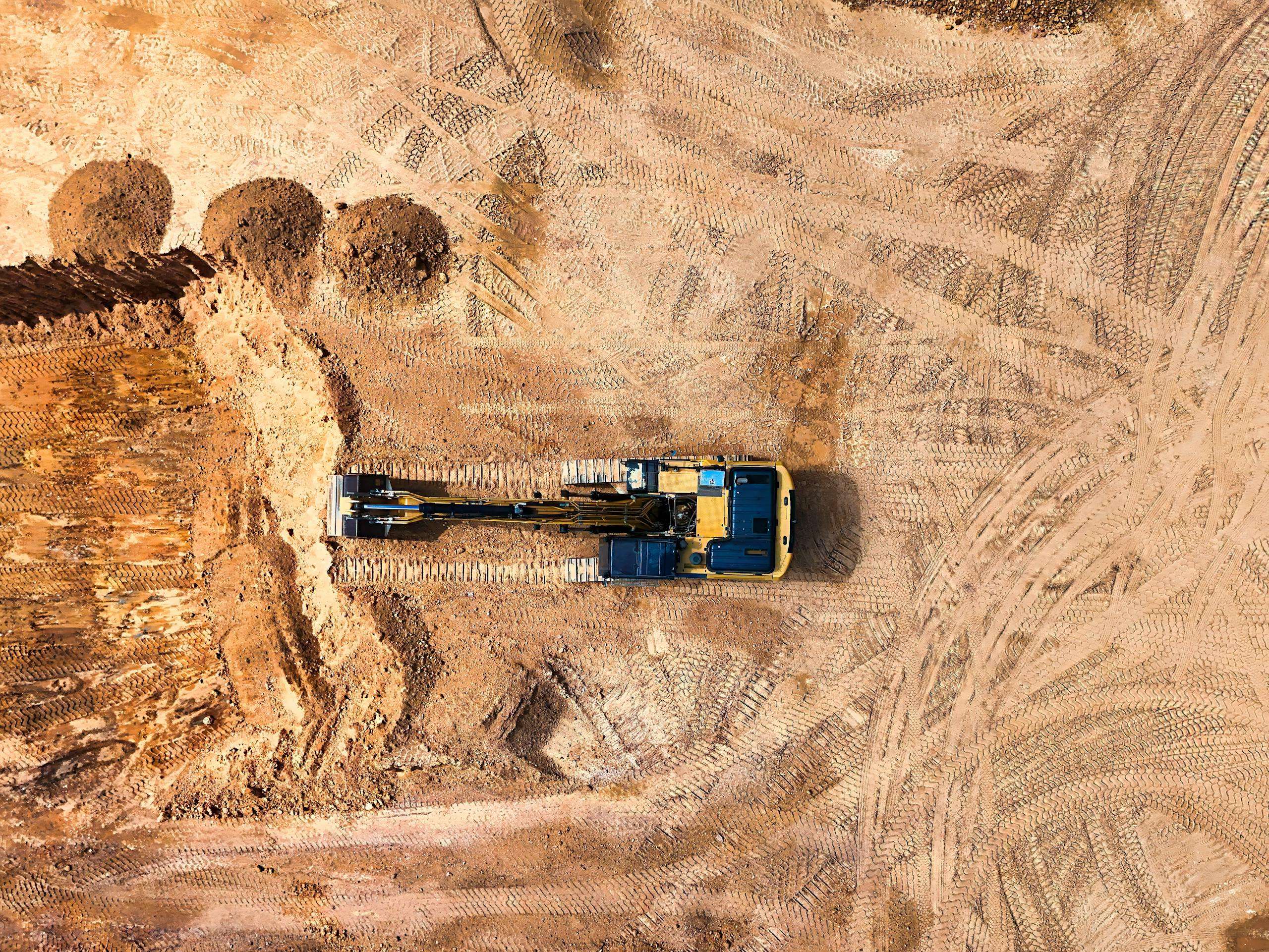
Ex-situ recycling works the other way around. Material is excavated, moved – either to a designated area on-site or occasionally off-site – processed or treated, and then placed back. It’s more flexible in some respects because you have more control over the treatment process when the material is out of the ground and in a stockpile or processing rig.
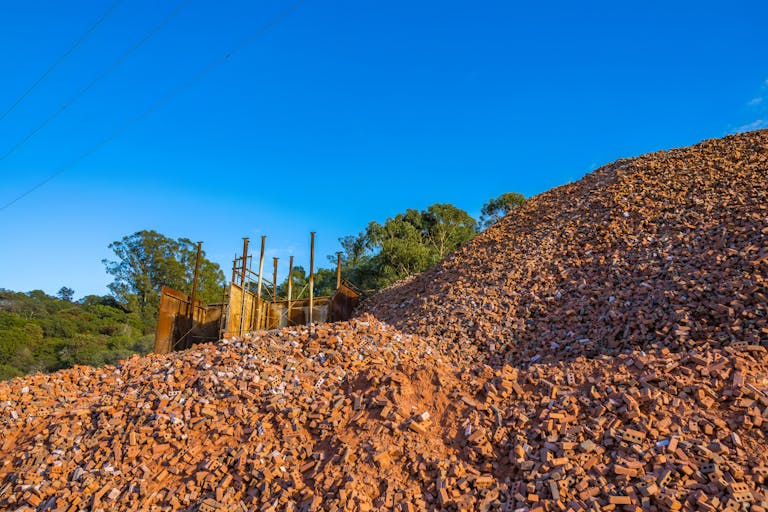
Screening and crushing of excavated material to produce secondary aggregate is probably the most familiar version. Concrete arisings, hardcore, demolition rubble – all of this can be processed through a mobile crusher or screener to produce usable sub-base or capping material. On larger sites, that material might otherwise have to be disposed of as waste and replaced with bought-in aggregate. The saving on both the disposal cost and the incoming material cost can be substantial.
Soil washing is another ex-situ route, though it’s more specialist and tends to be reserved for contaminated material where the contamination needs to be removed rather than just the material improved. And lime or cement stabilisation can be done ex-situ too – in a pugmill or similar mixing plant – where the material characteristics are highly variable and consistent mixing is difficult to achieve in-place.
Anyway. The point is that ex-situ gives you more treatment options but comes with the logistical overhead of actually moving the material, which adds time, plant, and usually haulage cost.
The Factors That Actually Drive the Decision
I find that this choice gets oversimplified in early-stage project discussions. Someone decides in-situ is cheaper and that becomes the assumed approach before anyone’s looked properly at the ground investigation data. Or ex-situ gets specified because it’s what was used on the last similar project, without checking whether the ground conditions are comparable.
Ground conditions are the starting point. Moisture content is critical for in-situ stabilisation – if the material is already at or beyond its optimum moisture content for the proposed treatment, getting it to respond correctly to binder addition is difficult. Highly variable strata – layers of clay interbedded with granular material, say – can make consistent in-situ treatment harder to achieve. Those are situations where ex-situ starts to look more attractive.
Site geometry matters too. A large, open platform – a new employment site or a distribution warehouse footprint – lends itself to in-situ treatment by large stabilising machinery making systematic passes. A site that’s broken up by existing structures, underground services, awkward levels, or constrained access is more difficult to treat in-situ efficiently. The machine needs room to work.
Programme is another factor that doesn’t always get the weight it deserves. In-situ stabilisation of a large platform can be completed quickly once the plant is mobilised – significantly quicker, in many cases, than excavating the same area, stockpiling material, processing it ex-situ, and reinstating. But if curing time is required before the treated layer can be loaded – and with some binder types, it is – that affects programme in a way that needs to be planned for.
Our in-situ and ex-situ materials recycling work covers both approaches, and part of what that experience brings is being able to look at a set of ground investigation results and a site layout and make a genuinely informed recommendation rather than defaulting to whatever’s most familiar.
Comparing the Two Approaches
Here’s a rough side-by-side. Real decisions are more nuanced, but this gives a sense of where each method tends to perform better:
| Consideration | In-Situ | Ex-Situ |
|---|---|---|
| Material movement | Minimal – treated in place | Excavation and replacement required |
| Haulage movements | Low | Higher, depending on processing location |
| Site geometry | Suits open, unobstructed platforms | More flexible on constrained sites |
| Variable ground conditions | Can be problematic | Better control over treatment consistency |
| Contaminated material | Limited applicability | Wider treatment options available |
| Speed on large areas | Often faster once plant is mobilised | Slower due to excavation and reinstatement |
| Carbon footprint | Generally lower | Higher due to haulage and processing plant |
| Cost on large uniform sites | Typically lower | Can be higher depending on disposal costs |
None of those comparisons is absolute. A site with very low haulage distances and excellent on-site processing facilities might make ex-situ look more competitive than the table suggests. Ground conditions that make in-situ treatment uncertain might swing the decision the other way.
Regulatory and Waste Classification Questions
Funny thing is, the regulatory angle on this catches people out more often than the technical side does. Excavated soil is classified as waste under UK waste legislation the moment it leaves the site boundary – unless it meets the criteria for the Excavated Materials Protocol or is transferred under an appropriate exemption. That classification has cost implications and environmental permit implications that need to be resolved before material starts moving.
In-situ treatment neatly sidesteps a lot of that. If the material stays on site and is treated in place, the waste classification question either doesn’t arise or is considerably simpler to manage. Ex-situ processing – especially where material is stockpiled before treatment – requires more careful waste management planning.
The Environment Agency’s position on this has evolved over the years and there are a few routes through the regulatory framework depending on what the material is, where it’s going, and what treatment it’s receiving. It’s not impossibly complicated, but it does need to be sorted out properly at the planning stage rather than improvised during earthworks. Environmental consultants and experienced contractors both tend to have well-worn paths through this, which is reassuring.
Worth noting: the Contaminated Land Regulations and site-specific planning conditions can also affect which recycling route is permissible. Some planning consents specifically require material to be handled in a certain way, particularly on brownfield sites where contamination management is part of the planning approval.
What Happens to Carbon Reporting
More and more clients – particularly local authorities, housing associations, and larger developers – are requiring whole-life carbon assessments on earthworks. Both methods have different carbon profiles, and it’s worth understanding them.
In-situ stabilisation typically involves fewer HGV movements, less heavy plant operating for extended periods, and no imported aggregate to account for. Against that, the binder itself carries an embodied carbon value – quicklime in particular has a reasonably high carbon intensity in production. Cement is similar. Ground granulated blast furnace slag (GGBS) and fly ash – secondary binders derived from industrial processes – are considerably lower.
Ex-situ processing generates HGV movements for both the outgoing arisings and any incoming replacement material. Processing plant on-site runs on diesel. But if the output of the processing replaces what would otherwise have been bought-in primary aggregate, the net embodied carbon picture changes – you’re avoiding the quarrying, processing, and transport of virgin material.
Neither approach automatically wins on carbon. The right answer depends on the specifics. Which is, I know, not a particularly satisfying conclusion – but it’s the honest one.
Frequently Asked Questions
Can both methods be used on the same project?
Yes, and it’s reasonably common on larger or more complex sites. In-situ stabilisation might be used across the main building platform area where conditions are suitable, while ex-situ processing handles demolition arisings or material from areas with more variable ground. Designing the two approaches to work together without creating conflicts on haulage routes or site layout takes some planning, but it’s manageable.
Does in-situ stabilisation work on all soil types?
Not all, no. Highly organic soils – peats and soft alluvial clays with high organic content – don’t respond well to lime or cement stabilisation. Very granular, free-draining soils may not need it. The sweet spot is cohesive, clay-bearing material with manageable moisture content – which describes a significant proportion of the subsoil across the English Midlands and much of the North.
How do I know which approach will be more cost-effective?
Properly only through a site-specific assessment. That means ground investigation data, a clear understanding of the volumes involved, disposal cost assumptions, programme requirements, and the availability of suitable recycled outputs on-site. Contractors with earthworks recycling experience can usually produce a comparative appraisal relatively quickly once that information is available. Trying to decide without it tends to produce the wrong answer.
What’s the minimum site size where these approaches become viable?
In-situ stabilisation becomes genuinely cost-competitive from around 2,000 to 3,000 square metres upwards – the mobilisation cost of specialist plant needs enough area to amortise against. Smaller areas can still be treated, but the economics are less compelling. Ex-situ processing through mobile crushing or screening equipment similarly suits medium-to-large volumes – there’s not much point mobilising a crusher for a hundred tonnes of hardcore.
Making the Call
Both methods have genuine merit, and both get used on UK earthworks projects every day. The decision shouldn’t be driven by habit, by what was specified on the last job, or by which subcontractor is already on the framework.
Ground conditions, site geometry, programme requirements, regulatory obligations, and carbon targets all feed into the right answer – and that answer is different on every project. Getting a proper appraisal done early, before procurement is locked in, is consistently the approach that produces better outcomes. It’s not always done that way, but it should be.
And for what it’s worth – I reckon the projects that get this right at the front end spend a lot less time firefighting it during earthworks. Which is probably how most things work, isn’t it.

Killingley Insights is the editorial voice of NT Killingley Ltd, drawing on decades of experience in landscaping, environmental enhancements, and civil engineering projects across the UK.