Ecological Surveys and Reports
See what’s on site – and what your project needs to protect
Ecological surveys and reports give you a clear, defensible picture of what habitats and species are present, how sensitive they are, and what that means for design, programme, and compliance. They’re the difference between making assumptions and making decisions with evidence.
Within our Biodiversity & Woodland Creation work, ecological surveys and reports help clients plan habitat creation, mitigation, and long-term land management with confidence, backed by site-specific findings.
At their core, ecological surveys and reports identify constraints and opportunities early, then set out practical actions to protect biodiversity, reduce risk, and keep projects moving.
Methods – Ecological Surveys and Reports done properly, from scoping to sign-off
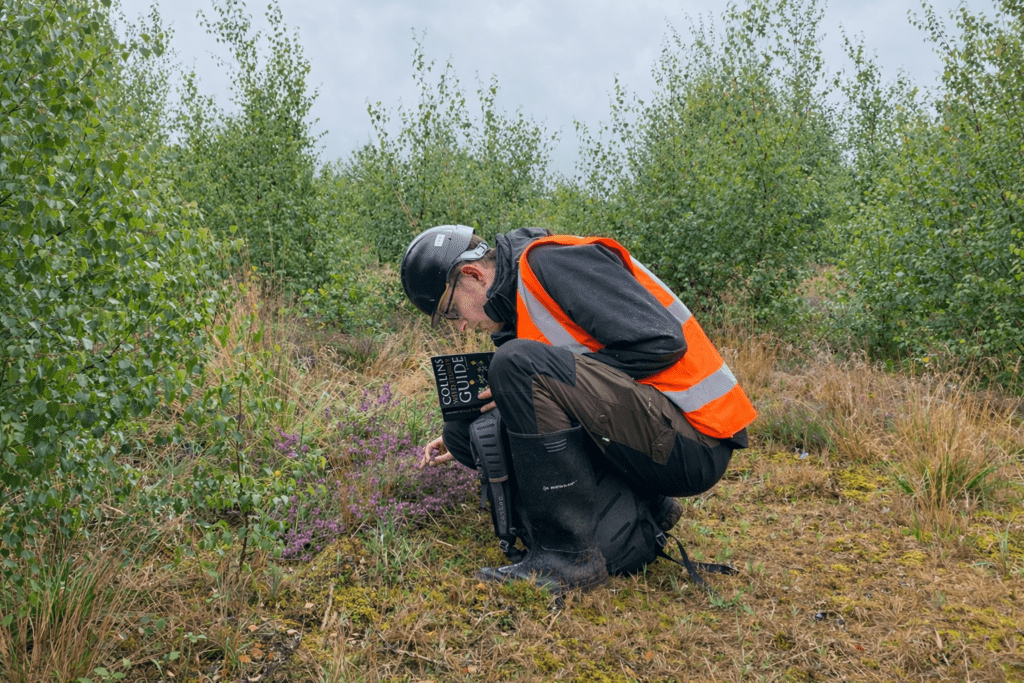
Every site is different, so our ecological surveys and reports begin with clear scoping. We confirm the project footprint, likely receptors, site access, and the level of detail required for planning, discharge of conditions, or internal governance.
We then follow a structured field approach, combining walkover assessment with targeted checks where needed. That can include habitat mapping, evidence of protected species, and careful recording of features such as watercourses, hedgerows, veteran trees, scrub margins, and potential roosting or nesting areas. Timing matters, so we plan surveys around appropriate seasonal windows and site constraints, aiming to avoid repeat visits and programme drift.
Back in the office, we translate findings into usable outputs. Reports set out baseline conditions, constraints, and recommended measures in plain language, supported by mapping and site photography where helpful. Importantly, we keep the focus on what the client needs next – design considerations, mitigation options, and practical steps that can be built into method statements and site controls.
Why It Matters – Ecological Surveys and Reports that reduce risk and protect value
Ecological surveys and reports protect more than wildlife – they protect your programme and budget. Early visibility of ecological constraints helps avoid late design changes, unexpected restrictions on working methods, and delays during approvals or site mobilisation.
They also provide a strong evidence base for planning and stakeholder scrutiny. When a project is under pressure, a clear report helps teams agree priorities quickly – what must be avoided, what can be managed, and where there’s genuine opportunity to deliver measurable improvements.
For landowners and asset managers, surveys can support long-term decisions too – identifying areas suitable for habitat enhancement, woodland creation, or ecological land management that strengthens resilience and value over time.
Applications – Ecological Surveys and Reports across a wide range of sites
Ecological surveys and reports are used wherever land works might affect habitats, water, or species – from early feasibility to pre-construction and handover. Typical applications include:
- Infrastructure and transport schemes – compounds, haul routes, embankments, and land take
- Housing and commercial development – enabling works, drainage, landscaping, and open space
- Utilities and water environments – watercourse works, SuDS, outfalls, and riparian margins
- Estate and land management – woodland creation, habitat restoration, and stewardship planning
- Brownfield and constrained sites – phasing, remediation interfaces, and biodiversity enhancement
Benefits – what you gain from Ecological Surveys and Reports
Ecological surveys and reports provide:
- Clarity: a site-specific baseline that informs decisions and reduces assumptions.
- Control: practical recommendations that can be embedded into programme, methods, and procurement.
- Compliance: evidence-led support for planning, conditions, and responsible environmental management.
- Opportunity: identification of habitat creation and enhancement measures that align with wider project goals.

Working With Killingley – Ecological Surveys and Reports integrated with delivery
Killingley’s approach is collaborative and delivery-minded. We understand that surveys are only valuable if they help the project team act – so we communicate clearly, keep documentation usable, and align recommendations with how work is carried out on site.
We support compliance by ensuring ecological surveys and reports are proportionate, site-led, and grounded in practical controls. Where mitigation or enhancement is required, our wider in-house capabilities help bridge the gap between recommendations and implementation – particularly within biodiversity, habitat creation, and land management programmes.
Sustainability is treated as part of the method, not a bolt-on. That means planning works to minimise disturbance, protecting retained features properly, and identifying realistic enhancement measures that can be maintained and evidenced over time.
Why Choose Killingley for Ecological Surveys and Reports
Ecological surveys and reports should make a project easier to deliver – clearer risks, clearer actions, fewer surprises. Killingley brings practical site knowledge, a structured reporting process, and a focus on workable solutions that protect both biodiversity and programme.