Creating Artificial Badger Setts: Techniques for Ecological Mitigation

Some topics feel oddly grounded in the everyday British landscape, even though most people never see them. Artificial badger setts fall into that category. You might walk past a hedgerow on a dull Wednesday morning and have no idea that a purpose built sett sits beneath your feet, tucked away, doing its quiet job. Anyway, that’s the idea behind them: subtle, unseen, functional. And a bit more complicated than they sound.
I’ve always found there’s something reassuring about work that supports wildlife while keeping projects on track. A kind of nudge saying both nature and development can coexist if you plan it properly. Although, I was about to claim it’s straightforward, but it isn’t. There’s planning, timing, licensing, specialist techniques, and a bit of trial and error that no one likes to admit.
Introduction
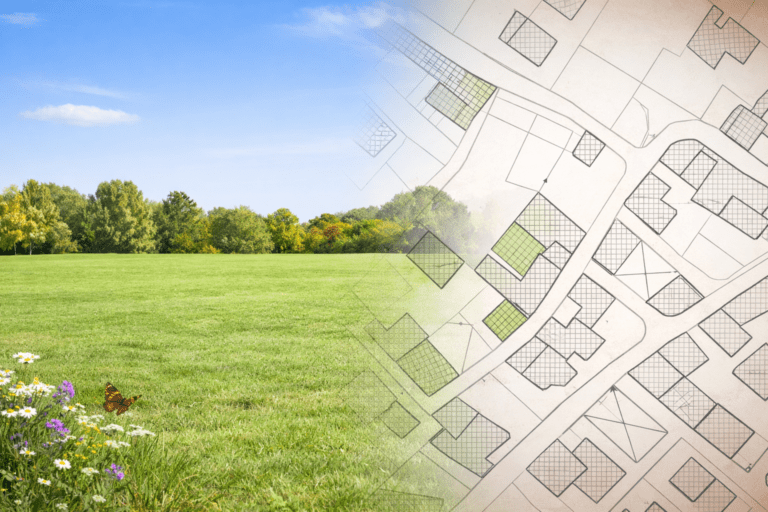
Creating artificial badger setts tends to come up whenever a site is earmarked for construction or infrastructure upgrades, often long before any diggers even arrive. Badgers are protected in the UK, and rightly so. They’ve been here longer than any of us, shaping the landscape in their own slow, determined way. Their setts are protected too, which means you can’t disturb them without specific permissions.
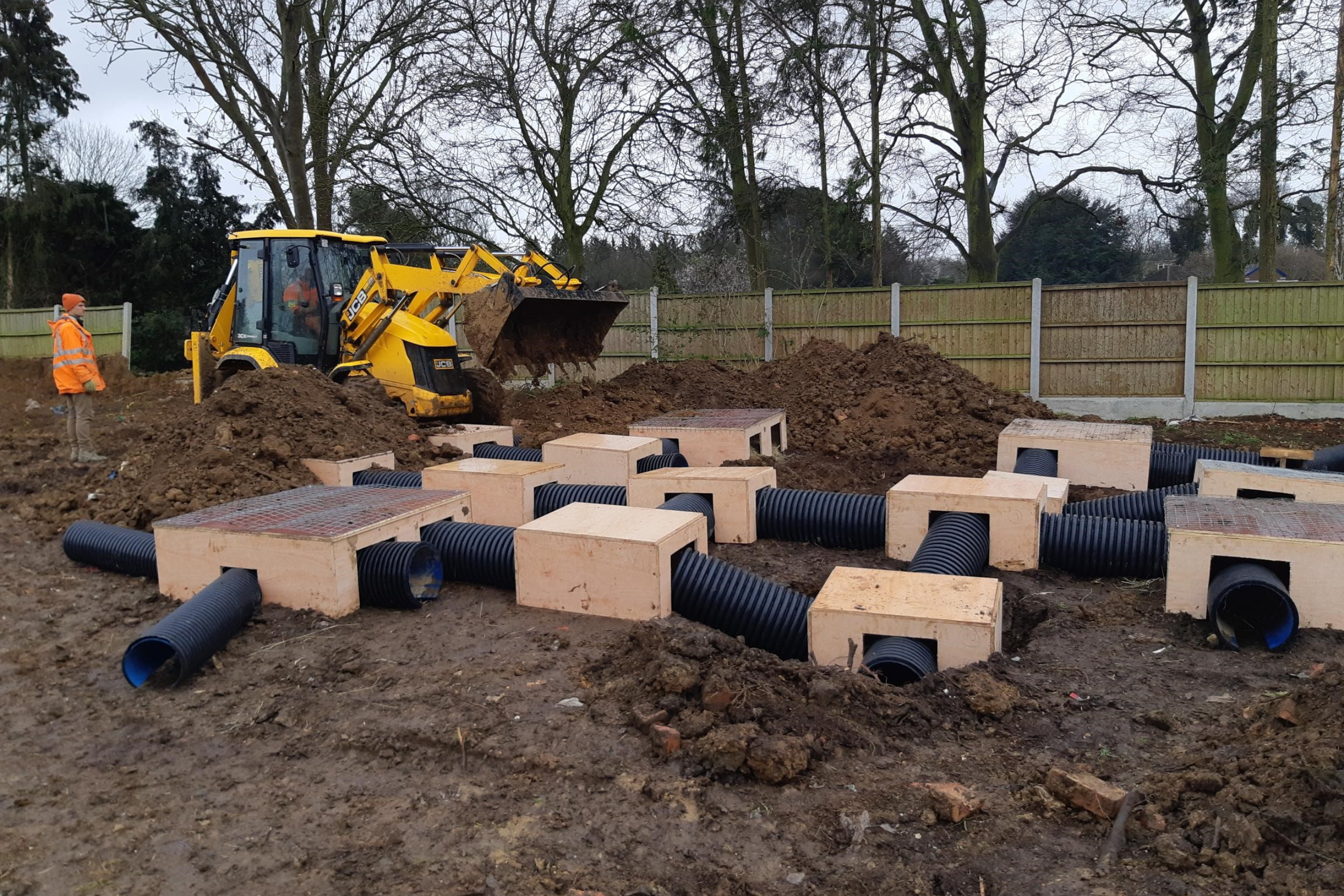
Artificial setts are built to give badgers a safe, alternative place to move into when their original homes are at risk. Sounds simple. Isn’t. It’s more like building a small subterranean housing estate that needs to feel familiar enough for a wild animal that’s very fussy about real estate.
There’s a wider ecological angle at play. These structures help maintain population stability when development threatens established territories. And in many cases, they’re needed under licence, especially where active setts must be closed. If you want the bigger picture, you can always see our page on badger sett creation, which covers how this forms part of broader biodiversity work within complex schemes.
A funny thing: developers often worry the badgers won’t use the artificial spaces, but in practice, when the design’s right and the timing’s spot on, they settle in quicker than expected. Last thought here, slightly off topic, but I once saw a sett entrance hidden in brambles so thick you’d swear it was just another overgrown patch.
Why artificial setts are needed
Licensing isn’t optional. If a project risks disturbing an active sett, Natural England can require strict mitigation steps. Artificial setts serve two main purposes. One is providing a safe alternative roost before a legitimate closure. The other is long term territory support when habitat edges shift because of new infrastructure.
Badgers rely on several chambers and routes. So if you interrupt those, even unintentionally, the disruption can push them into conflict with roads or nearby farms. That sort of secondary issue is exactly what these structures help avoid.
On some projects in the Midlands you even get a cluster of small outlier setts rather than one main one. Those still count, and sometimes they need replicating too. Oddly enough, the outlier setts are often trickier because badgers use them unpredictably.
Understanding the basic structure
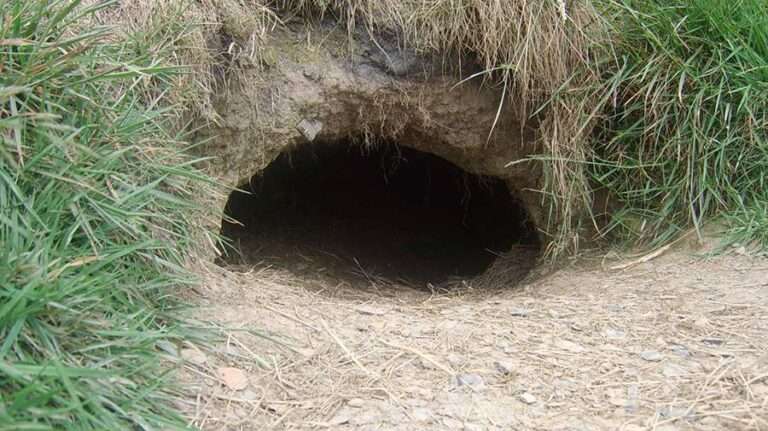
Setts aren’t just holes. They’re networks of tunnels with resting chambers, air pockets, nesting spots, and escape routes. Artificial versions mirror this, though never perfectly. And maybe that’s fine, because badgers tend to modify them anyway.
Core components
| Element | Purpose |
|---|---|
| Entrance tunnels | Familiar access points that encourage exploration |
| Main chamber | Resting space, usually deeper and slightly wider |
| Spoil heaps | Makes the site look natural and reduces human scent |
| Air holes | Reduce condensation and keep chambers habitable |
| Escape routes | Provides security for stress prone animals |
People often overbuild these. Too neat, too engineered. Badgers prefer rough, naturalistic layouts. Soil type matters a lot. Clay soils hold shape, sandy soils collapse unless reinforced. You sometimes see teams stabilising sandy sections with timber or pipework, though opinions vary on whether pipes feel too artificial.
Designing artificial setts that work in real life
Starting anywhere is fine, but most designers begin with mapping the original sett. You don’t copy it like for like. You get a sense of scale and branching instead. If the existing sett has three well used entrances, the artificial one won’t succeed with a single narrow pipe.
Placement is crucial. A sett too close to heavy machinery will be rejected. One too far from the original territory risks abandonment. I reckon the sweet spot tends to be 20 to 50 metres away, though the terrain dictates everything.
Wildlife contractors often build in winter because badger activity slows a little, although weather can be a bit of a faff. Mud everywhere, short daylight, awkward access tracks. But the timing matters for licensing windows, so there isn’t much choice.
Borrowing from natural behaviours
Badgers do a lot of scent marking, digging, reshaping. Artificial setts need loose substrate at the entrance so the animals can personalise their new space. Sounds daft, but giving them a bit of soil they can shift around helps them take ownership.
I was going to say the layout must mimic the slope and orientation, but that’s not quite right. It helps, but what they really respond to is cover. Bramble patches, hedgerow cover, or woodland edges all provide that sense of security.
Construction techniques
It’s not glamorous. Dig a trench, build the chambers, backfill, shape the land, tidy up. Except each stage has its quirks.
1. Excavation
Machines start the shaping, but the last part usually falls to hand tools. Contractors avoid creating big voids that could collapse, and the whole thing must be compacted properly.
2. Chamber construction
You sometimes see timber, sometimes brick, sometimes pre formed chambers. All work, provided they’re stable and breathable. Timber can rot, but that’s part of what makes it feel natural.
3. Tunnel materials
Pipes made from clay or concrete are common. Plastic pipes get mixed reviews. They’re lighter and cheaper but can trap condensation. Clay pipes breathe better.
4. Backfilling and landscaping
This is the bit where everything either looks convincingly wild or like a half finished building site. The best results usually come from blending spoil heaps, adding leaf litter, and letting vegetation regrow naturally.
When licences are required
This is one of those areas people try to muddle through, then realise it’s far more technical. Any closure, modification, or disturbance of an active sett requires a licence. No way around it.
Mitigation licences look at timing. Most closures happen between July and November, avoiding the breeding season. Artificial setts need to be finished and available beforehand so badgers have time to explore them.
Worth noting: on rail projects or road realignments, the licensing conditions can require monitoring for up to a year. Trail cameras, prints, even occasional sniff tests for bedding changes.
Choosing the right site location
Some sites seem perfect until you notice small problems. A drainage ditch that floods in February. A tree root mass that blocks tunnel alignment. A bridleway with heavy footfall. You learn to read the land a bit like a badger would, or at least try.
Vegetation offers privacy. Humans underestimate how exposed a sett can feel in winter when the leaves drop. A location that’s sheltered in August might be wide open in January.
Water tables matter. A chamber sitting in saturated soil won’t last. In Derbyshire clay belts you get perched water tables after long rain spells. Badgers hate damp chambers.
Making artificial setts attractive to badgers
Odd phrase, but it’s true. You’re trying to make something appealing to an animal that already has a home. Or had.
Loose soil, familiar scents, and quiet surroundings all help. Food availability nearby can tip the decision too. Earthworms make up much of their diet, so compacted ground isn’t ideal. Grassland edges usually do well.
I’ve seen people add a bit of used bedding from the original sett. It’s not required, but sometimes it does make the transition smoother. Others prefer to let the badgers bring their own. Both approaches seem to work.
Monitoring occupation
Trail cameras tell you a fair bit. Prints in soft soil tell you more. Bedding pulled through the tunnels is usually the best sign. It’s ordinary, but you feel oddly relieved seeing that first bundle of dried grass disappearing inside.
Monitoring isn’t always tidy. Badgers might explore then ignore the place for weeks before returning. Or they might move in within days. Hard to predict.
Typical signs of success
| Indicator | Meaning |
|---|---|
| Fresh spoil outside entrances | Digging and remodelling |
| Bedding dragged in | Chamber use |
| Regular prints | Territory acceptance |
| Sett smells earthy, warm | Active nesting |
I once walked onto a site in late March, expecting a quiet spot, and the artificial sett had more activity than the original ever did. Weather was mild, worms near the surface, everything aligned nicely.
Common problems and how teams deal with them
Flooding pops up a lot. Chambers need to sit above known flood levels. If tunnels clog with silt, they become unusable.
Human disturbance is another issue. Footpaths shift over time. People are curious. They see a mound and poke about. Contractors sometimes add dead hedging for visual screening.
Dogs cause chaos if they catch a scent. Not malicious, just instinctive. Fencing can help where public routes are too close.
Sometimes badgers just don’t move in. Wrong location, too exposed, not enough cover, or they simply prefer a different outlier sett. It happens.
Regional considerations
Up north, soils are heavier and wetter. You often need more drainage. Down south, chalky slopes can collapse if handled too aggressively. In Wales, rocky terrain limits excavation depth. Each project feels slightly different, shaped by local conditions.
I remember a site near Leicester where the artificial sett had to be built into a bank beside an old hawthorn hedge. Perfect cover in summer, too open in winter, so the team planted some quick growing shrubs around it. Looked a bit sparse at first, but by year two the badgers were living there full time.
Frequently asked questions
Do badgers always move into artificial setts?
Not always. But if the timing, design, and siting are right, the success rate is high enough that they’re a standard part of mitigation strategies.
How long does construction take?
Anywhere from a day to a week. Depends on soil, weather, and how complex the design is.
Are artificial setts permanent?
Yes, usually. Though badgers might alter them over years. Timber parts can soften or rot, which tends to make them feel more natural.
Can anyone build one?
No. Because of licensing, the work must be handled by specialists. It’s easy to get things wrong.
Are artificial setts used only for development projects?
Mostly, but not exclusively. Occasionally they’re used on conservation sites to support local populations.
Conclusion
Artificial badger setts sit quietly at the intersection of ecology and construction. They’re not flashy, and they rarely get noticed, but they matter. They reduce conflict, protect established territories, and allow essential projects to move forward without sidelining local wildlife.
There’s something very British about them. A kind of compromise that keeps the countryside functioning while still getting the roads, houses, or flood defences built. It’s not perfect, but it’s workable.
I find the craft of it oddly satisfying. Dig, build, shape, blend, step back, wait. Then one morning, after a run of wet nights, you spot fresh spoil outside an entrance and know it’s worked. A small thing, but it means a lot.

Killingley Insights is the editorial voice of NT Killingley Ltd, drawing on decades of experience in landscaping, environmental enhancements, and civil engineering projects across the UK.